Revolution Books: 146 W. 26th St., NYC, NY
212-691-3345 * www.revolutionbooksnyc.org

from POPSCI.com via BoingBoing
"BacillaFilla," is the pet-name given by University of Newcastle researchers to a gengineered bacterium based on Bacillus subtilis that has been modified to fill and bond cracks in cement caused by earthquakes and other violence. The bacteria burrow into the concrete until they have filled all its cracks, then they politely turn into calcium carbonate and die.The researchers have tweaked it's genetic properties such that it only begins to germinate when it comes in contact with the highly-specific pH of concrete. Once the cells germinate, they are programmed to crawl as deep as they can into cracks in the concrete, where quorum sensing lets them know when enough bacteria have accumulated.
That accumulation lets the bacteria know they've reached the deepest part of the crack, at which point the cells begin to develop into bacterial filaments, cells that produce calcium carbonate, and cells that secrete a kind of bacterial glue that binds everything together. Once hardened, the bacteria is essentially as strong as the concrete itself, restoring structural strength and adding life to the surrounding concrete.
The bacteria also contains a self-destruct gene that keeps it from wildly proliferating away from its concrete target, because a runaway patch of bacterial concrete that continued to grow despite all efforts to stop it would be somewhat annoying

Directed, written and acted by teenagers Charlie Davis, David Williams and Jimmy Robinson, 1967’s The Jungle chronicles the exploits of Philadelphia’s 12th and Oxford street gang. It is amateur film making that transcends its limitations and achieves a certain rough artfulness.
With its starkly poetic black and white cinematography, urban rhythm and streetwise jargon The Jungle recalls Shirley Clarke’s The Cool World and the Beat-era improvs of Cassavetes’ Shadows. The fact that theThe Jungle holds its own against some of the sixties more legendary indie films makes it somewhat disappointing that none of the people involved with the production of the film went on to make more movies.
There’s little info on the internet regarding The Jungle, but the I found the following comment from Youtube compelling:This film (The Jungle) was shown along with slide shows of dead teens on slabs in the 70’s in schools around Philly to try to stop the gang violence at that time. In the early ‘70s, Philly led the nation in gang-related deaths at around 40 a year.Death Row inmate, Philly gang member and writer Reginald S. Lewis recalls the Oxford Street gangs:I saw the 70’s usher in the era of blackploitation flicks such as Superfly, The Mack, Come Back, Charleston Blue, and even slickly packaged Hollywood gangster movies like The Godfather. This was also an era that bred hustlers-turned-authors IceBerg Slim and Donald Goines, and some of the most ruthless true-life gangsters this country has ever seen.Teenage wasteland, Philly-style.
In my hometown, Philadelphia, Pennsylvania, vicious black street gangs seemingly ruled every inch of the black community, and it was a dangerous time to be a young black teenager living in the treacherous terrain of the urban wilds. My parents did all they could to keep my two older brothers and me from being drafted into the notorious “12th & Oxford Street Gang,” one of the largest, fiercest black youth gangs in the history of Philadelphia.
The Oxford Street gang had well over 500 members, divided into gradations and ranks, according to age. There were the “Pee Wees,” “The Midgets,” “The Juniors,” and “The Seniors,” and “The Old Heads.” There was also 8th & Oxford, 15 & Oxford, and “Uptown Oxford Street,” which was 20th Street, and beyond. These divisions boosted the ranks into thousands.”
National Geographic Channel’s Explorer: Born to Rage? investigates the discovery behind a single “warrior gene” directly associated with violent behavior. With bullying and violent crime making headlines, this controversial finding stirs up the nature-versus-nurture debate. Now, Henry Rollins goes in search of carriers from diverse, sometimes violent backgrounds who agree to be tested for the genetic mutation. Who has the warrior gene? And are all violent people carriers? The results turn assumptions upside down.”‘Born To Rage’ airs on December 14. Here’s some of what you can look forward to.
I’ll be so sad to see Rep. Alan Grayson (D-FL) go, but I suspect we haven’t seen the last of him. Grayson is one of the few Democrats to show any kind of a spine against the GOP. He’s practically the only Democrat to say the worlds “class war” because he’s not a pussy and he doesn’t mince words. This clip, of Grayson comically flaying the millionaires on Fox News shilling for the continuation of the Bush tax cuts, is Grayson at his straight-talking best. After all, if something saved you six or even seven figures in taxes, you’d probably be for it, too…They want tax cuts for the rich because they want a tax cut for themselves. What do I mean by that? Let’s take a look at the people who are really in charge, the ones who actually run the Republican party.
Let’s start with this gentleman here, the man with the cigar, Rush Limbaugh. Doesn’t he look happy? According according to Newsweek, he makes $58.7 million a year, and extending the tax cuts means he’ll have another $2.7 million. Mega dittos, Rush, and mega money. Let’s look at the next one.
Here’s Glenn Beck, according to Newsweek Glenn Beck makes $33 million a year as a pundit and extending the Bush Tax Cuts means a cool $1.5 million for Glenn bBeck’s ongoing imitation of Howard Beale from Network. Now let’s look at the next one.
Sean Hannity. Newsweek says that Sean Hannity, this man of the people makes $22 million a year from his act on Fox. And that means the Bush Tax cuts mean an extra $1 million. $1 million for Sean Hannity. Maybe he can afford some anger management classes. Let’s take a look at the next one.
Bill O’Reilly. He makes a modest $20 million a year from his gig on Fox. That means that the Bush tax cuts give him not quite seven figures, nearly $914,000 of extra cash. It’s easy to see why Bill O’Reilly wants to see the Bush tax cuts extended. And I have to say, he’s no pinhead when it comes to that.
And Now, Sarah Palin. Sarah Palin has made $14 million this year from cashing in on her fame. In fact, she’s done a better job of turning fame into cash than anyone in American history. $14 million. So she wants the Bush tax cuts extended so she can make an extra cool $638,000. As she was—as she would gesture (shoulder shrug.)

Dec. 12's issue of Time casts Wikileaks in a positive light, echoing a classic image of American censorship and pointing out that harm is not yet evident in the candor forced upon an unwilling government. Imagine how sad it would be for Fareed Zakaria's lovely smile to be covered thus! America's mainstream media often seems resentful of Wikileaks' beating it, bullying it and spoon-feeding it, but has perhaps rediscovered something it loathes far more: Joementum. Here's the cover story, by Massimo Calabresi.From BoingBoing [via @kaepora]


Instead in 2011 I will follow a million people to see what's inside the minds of the world. I always do more listening than talking. PEace
Lstpt. I don't look to be followed.I only tweet from my iPad.I'm deeper than 140 and refuse to do it from phone like it's some human remote
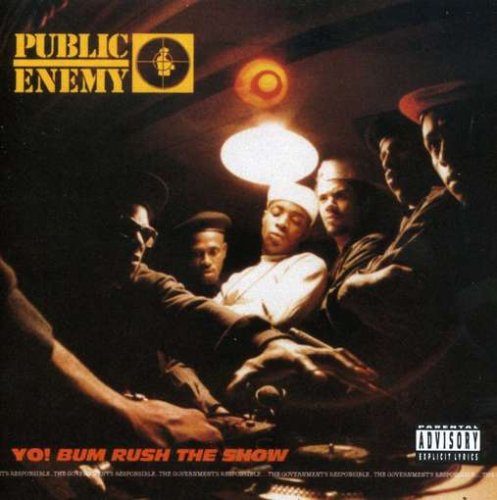
@rolfmohr thus I became a twitiot tonight Goodnight and great morning from beautiful Johannesburg South Africa Chuckd@publicenemy.com
@rolfmohr I in turn will use Twitter tofollow people instead ofthe other way around.I rather have 200 focused people than 3 million twitiots
@rolfmohr Simple I don't tweet. I'm deeper than 140 characters And I only do it from my iPad not my phone I'm am not to be followed.
When I get back to NYC in a week to turn over some desks..oh Yeah ,like said I come from a people who will tell folk to keep their FKN money
But ill be damn if I'm allowing that bullshit to infiltrate Africa into Amerfrica . Nope. So Glen Friedman tell Russell to join me when I ..
.. true HipHop generation led by the love of it behind an unknown door. 20 years since the PE anti Semitic charges we now see your results
..Had ourselves.. Soul is a bullish repellant. Without esteem and self confidence it's easy to image inject a mass. This is 35 and under ..
..Seem like you are wasting your lifetime being normal. I say this in closing. In my day black people could fight off bullsht because we..
A city block. Nervous. There are plenty of people who happy nobody knows them , so they can continue to FK peoples esteem up and make folk..
But your word sometimes must help and inspire. So I damn their exploiters who wait for their piece inthe back. LA Reid probably can't walk
Even if we talk Rick Ross or Nicki Minaj their obligation is to somehow give sometime not TAKE, and realize how to be around more than a min
I waited to be 50 so I could brag about it. And witnessing the mass debris of artists the past 20 years who now know that their word is bond
..Black celebrity must know that no one owns a culture they only borrow it because it comes from the people thus must return in high spirit
These are the people behind the barrage of image who some of them believe they are celebrities themselves. But a celebrity especially a
They take car service from point to point rather than a cab or a train. I'm talking entertainment execs usually the black ones in charge.
When a MF sits their ass up in a Viacom office they have little idea of the power emitted. It goes beyond their Job. You never know them.
I traveled the world to 76 countries in person not to have projected holograms make human beings feel inferior to the guise of celebrity.
I speak when I recognize crucial turning points.Africa can be the center of the hip hop planet on it's own terms it can't be steered from NY
I say all this tonight because a potential image and cultural poison has been planted inAfrica to create Amerfrica the nerve of businessmen
I tell Lyor Cohen at Warner don't be hidden and not so invisible when it comes down to being in charge of artists look but hate black folk
Clive Davis behind lives in some high rise , Jimmy Iovine lives in Malibu he's behind 50 EM Dre and made a lotta green off black bloodshed
Again I carry nothing but my head and heart , people should keep their jobs but I'm here to put FEAR into their bosses again people you dt C
He's gotta keep his job and satify his bosses in NYC HQ . So my goals are to fk his bosses up. We cannot afford Africa to become Amerfrica
But they are invited into the homes and heads.I'm trying to tell the bro here in AfricaMTV that turning Africa into Amerfrica Is not the way
Hot 97 broadcasts to millions but no one knows where the DJs live If somebody knocks on their home with that BS they the first to call cops
Something young heads can feel good about. If a so called celebrity is only looking for money from the people without even giving real talk
Radio DJs say zero for the people thus they are responsible for the condition. If you 40 talking to 20 year olds, your old asses should say.
Be accountable to the people and stop making young people feel inferior. They have the artists afraid by threatening to cut off their money
Start hiding when I'm in their building. It's funny I won't Nothing from them but to be accountable oh yeah just lil ol me no bodyguards..
MTV BET radio conglomerates , usually the men who pay the people you know and sometimes love. I'm 5-9 don't have a weapon and those fools ..
I don't blame people, I tell them don't be alarmed when I kick the gatekeepers asses Corporations and executives you don't know or ever see
Clubs are louder than ever because people ain't saying sht Can't look eye to eye And rather text than talk to someone a foot away. Lastly.
You have to one day think of yourself as better than an image thrown at you. It's ok to tell a person bragging about their $ Yeah. ..so ?
It's not a rant it's the clear and obvious truth never have we looked so good and been so hollow. Black americans are becoming mannequins
Thus I am done being a twitiot and picking Electronic cotton and diggin digital ditches tonight from SA where a nation of millions are movin

Last point Black america gotta nerve to say what work we ain't gonna do, claiming we picked sht..WE ain't did sht our people did it w skill
Trust me Jay Z Beyonce Diddy probably run from their family. Can you imagine them at a cookout?... probably got security and bodyguards
The fakeness of black celebrity is this. They are a sliver away from the poverty and drama of their own family.It's not the blue blood elite
@sunspotjonz Multi tasking like hit beats in a club time in your own business but fly the plane dude, cmon.
@sunspotjonz yup make yourself a tool I come here and the amount of people WORKing at skill areas is boggling. Men and women doing work
In the unitedstates continued genocide is backed by the LAW.Protecting the hood is considered taking the LAW into your own hands =violation
There are places in this world that taken THUGs who took the hood for granted and had their heads chopped off and put on posts in town..
What kind of country makes smart people wanna reduce and dumb themselves down? I don't want a FKN pilot who comes an tells me he makes beats
And I'm a knick fan but cmon money ain't everything . And in real life it's a tool remember make yourselves valuable and money will come
The USA is like the NY Knicks last 10 years a lot a hype swollen pockets lazy as f"k and not got the nerve to swing on old championships
@BrazenWords well I just got of the stage in South Africa I clearly see how far black people have fallen off from black people home a
Take the dollar just don't believe it , they got the nerve to print in God We Trust . Americas god is a dog just ask my man Mike Vick
@MsTrinaAquarian personal substance usually ends up in the garbage or yard sales within a year. Salvation Army andvPAWN shops are loaded!
I always encouraged THUG mcs to stop BS in and their companies and Mgt to do prison tours ...but many were scared. It's not a place for lies
....knowledge wisdom and understanding qualities of life you can't but or get from a microwave Technology can teach the nxt generations But
No offense to the homeless , but I know people who live in a big ass house who are homeless like a MF. Inside designers are ....
Now that we are allowed to buy designer gear , the question is who designs our insides. Bling on the outside homeless on the inside.
Trust me black people I come from were skilled but they had their soul. Bold enough to tell fools I don't want your FKN money keep that sht!
Nothing worse than a person that knows better and does worse ..no one takes Sht to the grave. YOU are measured by word and deed ..MCs heed
@rappinhood PEace my brother from Brazil
I come from a legacy of people bold enough to tell a drug dealer pimp or govt we don't want your FKN money and not the least impressed ethr
That was to some peeps from Johannesburg South africa
@MrChuckD thank you for representing we are grateful for you your city and country PEace and luvout
@TDdaPG7 thank you sir AND your city and country we are humbled Mr T

Alan on Youtube has taken the ‘Strawberry Fields’ episode of the Beatles cartoon television series and added a stereo mix of the song to the video. Quite niceFrom 1967, with the song dubbed in a new stereo remix I made to expand the orchestral section! (...unlike the newly remastered “Magical Mystery Tour” CD!) This episode was inspired by the fact that the “Strawberry Field” of the song had been based on a real-life Salvation Army orphanage in Liverpool. When the Beatles stop by a dilapidated orphanage, the hostile attitude of the children (who are drawn in muted colors like the downtrodden Pepperlanders in “Yellow Submarine”) is explained by the Beatles’ driver, James, as being being due to their “sociological environment”. So the Beatles set about to create an Elysian playground with song! John’s “Musketeer Gripweed”, of his film “How I Won the War”, has a cameo!
In a national broadcast exclusive interview, we speak with world-renowned political dissident and linguist Noam Chomsky about the release of more than 250,000 secret U.S. State Department cables by WikiLeaks. In 1971, Chomsky helped government whistleblower Daniel Ellsberg release the Pentagon Papers, a top-secret internal U.S. account of the Vietnam War. Commenting on the revelations that several Arab leaders are urging the United States to attack Iran, Chomsky says, "latest polls show] Arab opinion holds that the major threat in the region is Israel, that’s 80 percent; the second threat is the United States, that’s 77 percent. Iran is listed as a threat by 10 percent," Chomsky says. "This may not be reported in the newspapers, but it’s certainly familiar to the Israeli and U.S. governments and the ambassadors. What this reveals is the profound hatred for democracy on the part of our political leadership."
Noam Chomsky on the Economy, US Midterm Elections,
Climate Change, Haiti, and More...
"This documentary provides a vivid look at the life, music and travails of Fela Anikulapo Kuti pre-1982 (when the movie was shot). A musical genius, Fela depicts the true image Nigeria,a country flowing with milk and honey, with the majority of its citizens living in poverty. A critic of the national government, he was a victim injustice - numerous beatings, false imprisonment, destruction of property(including but not limited to the burning of his houses and master recordings), and he always rose again! Needless to say that all of what he ranted about, then, are even more prevalent today. This is a 'must-watch' piece by all people who value freedom."


TIME TO REFLECT Chitchat is not the president’s specialty, and he does not relish glad-handing.
By PETER BAKER
On a busy afternoon in the West Wing late last month, President Barack Obama seemed relaxed and unhurried as he sat down in a newly reupholstered brown leather chair in the Oval Office. He had just returned from the East Room, where he signed the Small Business Jobs Act of 2010 — using eight pens so he could give away as many as possible. The act will be his administration’s last piece of significant economic legislation before voters deliver their verdict on his first two years in office. For all intents and purposes, the first chapter of Obama’s presidency has ended. On Election Day, the next chapter will begin.
As he welcomed me, I told him I liked what he had done with the place. Gone was George W. Bush’s yellow sunburst carpet (it says “optimistic person,” Bush would tell practically anyone who visited), and in its place was a much-derided earth-tone rug with inspirational quotations. The curved walls now had striped tan wallpaper, and the coffee table had been replaced by a walnut-and-mica table that, Obama noted, would resist stains from water glasses. The bust of Winston Churchill was replaced by one of Martin Luther King Jr. The couches were new. He told me he was happy with the redecorating of the office. “I know Arianna doesn’t like it,” he said lightly. “But I like taupe.”
If there was something incongruous about the president of the United States checking out reviews of his décor by Arianna Huffington, well, let’s face it, he has endured worse reviews lately. The president who muscled through Congress perhaps the most ambitious domestic agenda in a generation finds himself vilified by the right, castigated by the left and abandoned by the middle. He heads into the final stretch of the midterm campaign season facing likely repudiation, with voters preparing to give him a Congress that, even if Democrats maintain control, will almost certainly be less friendly to the president than the one he has spent the last two years mud wrestling.
While proud of his record, Obama has already begun thinking about what went wrong — and what he needs to do to change course for the next two years. He has spent what one aide called “a lot of time talking about Obama 2.0” with his new interim chief of staff, Pete Rouse, and his deputy chief of staff, Jim Messina. During our hour together, Obama told me he had no regrets about the broad direction of his presidency. But he did identify what he called “tactical lessons.” He let himself look too much like “the same old tax-and-spend liberal Democrat.” He realized too late that “there’s no such thing as shovel-ready projects” when it comes to public works. Perhaps he should not have proposed tax breaks as part of his stimulus and instead “let the Republicans insist on the tax cuts” so it could be seen as a bipartisan compromise.
Most of all, he has learned that, for all his anti-Washington rhetoric, he has to play by Washington rules if he wants to win in Washington. It is not enough to be supremely sure that he is right if no one else agrees with him. “Given how much stuff was coming at us,” Obama told me, “we probably spent much more time trying to get the policy right than trying to get the politics right. There is probably a perverse pride in my administration — and I take responsibility for this; this was blowing from the top — that we were going to do the right thing, even if short-term it was unpopular. And I think anybody who’s occupied this office has to remember that success is determined by an intersection in policy and politics and that you can’t be neglecting of marketing and P.R. and public opinion.”
That presumes that what he did was the right thing, a matter of considerable debate. The left thinks he did too little; the right too much. But what is striking about Obama’s self-diagnosis is that by his own rendering, the figure of inspiration from 2008 neglected the inspiration after his election. He didn’t stay connected to the people who put him in office in the first place. Instead, he simultaneously disappointed those who considered him the embodiment of a new progressive movement and those who expected him to reach across the aisle to usher in a postpartisan age. On the campaign trail lately, Obama has been confronted by disillusionment — the woman who was “exhausted” defending him, the mother whose son campaigned for him but was now looking for work. Even Shepard Fairey, the artist who made the iconic multihued “Hope” poster, says he’s losing hope.
Perhaps that should have come as no surprise. When Obama secured the Democratic nomination in June 2008, he told an admiring crowd that someday “we will be able to look back and tell our children that this was the moment when we began to provide care for the sick and good jobs to the jobless; this was the moment when the rise of the oceans began to slow and our planet began to heal; this was the moment when we ended a war and secured our nation and restored our image as the last, best hope on earth.”
I read that line to Obama and asked how his high-flying rhetoric sounded in these days of low-flying governance. “It sounds ambitious,” he agreed. “But you know what? We’ve made progress on each of those fronts.” He quoted Mario Cuomo’s line about campaigning in poetry and governing in prose. “But the prose and the poetry match up,” he said. “It would be very hard for people to look back and say, You know what, Obama didn’t do what he’s promised. I think they could say, On a bunch of fronts he still has an incomplete. But I keep a checklist of what we committed to doing, and we’ve probably accomplished 70 percent of the things that we talked about during the campaign. And I hope as long as I’m president, I’ve got a chance to work on the other 30 percent.”
But save the planet? If you promise to save the planet, might people think you would, you know, actually save the planet? He laughed, before shifting back to hope and inspiration. “I make no apologies for having set high expectations for myself and for the country, because I think we can meet those expectations,” he said. “Now, the one thing that I will say — which I anticipated and can be tough — is the fact that in a big, messy democracy like this, everything takes time. And we’re not a culture that’s built on patience.”
These days, Obama has been seeking guidance in presidential biographies. He is reading, among others, “The Clinton Tapes,” Taylor Branch’s account of his secret interviews with Bill Clinton during the eight years of his presidency. “I was looking over some chronicles of the Clinton years,” Obama told me, “and was reminded that in ’94 — when President Clinton’s poll numbers were lower than mine, and obviously the election ended up being bad for Democrats — unemployment was only 6.6 percent. And I don’t think anybody would suggest that Bill Clinton wasn’t a good communicator or was somebody who couldn’t connect with the American people or didn’t show empathy.”
In the fall of 1994, things were even better than Obama recalls: unemployment was in fact 5.6 percent. If the feel-your-pain president had trouble when the economy was not nearly as bad as it is now, with 9.6 percent unemployment, then maybe the issue for Obama is not that he is too cool or detached, as some pundits say. When the economy is bad, even the most talented of presidents suffer at the polls. “There is an anti-establishment mood,” Rahm Emanuel, the former Clinton aide who served as Obama’s first White House chief of staff, told me before he stepped down this month. “We just happen to be here when the music is stopping.”
It would be bad form for the president to anticipate an election result before it happens, but clearly Obama hopes that just as Clinton recovered from his party’s midterm shellacking in 1994 to win re-election two years later, so can he. There was something odd in hearing Obama invoke Clinton. Two years ago, Obama scorned the 42nd president, deriding the small-ball politics and triangulation maneuvers and comparing him unfavorably with Ronald Reagan. Running against Clinton’s wife, Obama was the anti-Clinton. Now he hopes, in a way, to be the second coming of Bill Clinton. Because, in the end, it’s better than being Jimmy Carter.
Last month, I made my way through the West Wing talking not only with Obama but also with nearly two dozen of his advisers — some of whom spoke with permission, others without — hoping to understand how the situation looks to them. The view from inside the administration starts with a basic mantra: Obama inherited the worst problems of any president in years. Or in generations. Or in American history. He prevented another Great Depression while putting in place the foundation for a more stable future. But it required him to do unpopular things that would inevitably cost him.
“He got here, and the expectations for what he could accomplish were very high and probably unrealistic,” Pete Rouse told me. Indeed, David Axelrod and David Plouffe, the masterminds of the 2008 presidential campaign, said they cautioned Obama after his victory to brace himself for a precipitous drop in his popularity given the severity of his challenges. “I told him at some point that at the end of ’10, his approval rating could be low- to mid-30s,” Plouffe told me.
Yet even if the White House saw it coming, this is an administration that feels shellshocked. Many officials worry, they say, that the best days of the Obama presidency are behind them. They talk about whether it is time to move on. While not in the 30s, Obama’s approval rating in surveys conducted by The New York Times and CBS News had fallen to 45 percent last month from 62 percent when he took office — just a point above where Clinton was before losing Congress in 1994 and three points above where Reagan was before the Republicans lost a couple dozen House seats in 1982. Joel Benenson, Obama’s pollster, pointed out that even at 45 percent, the president’s popularity eclipses that of Congress, the news media, the banks and other forces in American life. “We are in a time when the American public is highly suspect of any institution,” he said, “and President Obama still stands above that.” Obama’s team takes pride that he has fulfilled three of the five major promises he laid out as pillars of his “new foundation” in an April 2009 speech at Georgetown University — health care, education reform and financial reregulation. And they point to decisions to end the combat mission in Iraq while escalating the war in Afghanistan. “History will judge Obama that the first two years were very productive,” Rouse says.
But it is possible to win the inside game and lose the outside game. In their darkest moments, White House aides wonder aloud whether it is even possible for a modern president to succeed, no matter how many bills he signs. Everything seems to conspire against the idea: an implacable opposition with little if any real interest in collaboration, a news media saturated with triviality and conflict, a culture that demands solutions yesterday, a societal cynicism that holds leadership in low regard. Some White House aides who were ready to carve a new spot on Mount Rushmore for their boss two years ago privately concede now that he cannot be another Abraham Lincoln after all. In this environment, they have increasingly concluded, it may be that every modern president is going to be, at best, average.
“We’re all a lot more cynical now,” one aide told me. The easy answer is to blame the Republicans, and White House aides do that with exuberance. But they are also looking at their own misjudgments, the hubris that led them to think they really could defy the laws of politics. “It’s not that we believed our own press or press releases, but there was definitely a sense at the beginning that we could really change Washington,” another White House official told me. “ ‘Arrogance’ isn’t the right word, but we were overconfident.”
The biggest miscalculation in the minds of most Obama advisers was the assumption that he could bridge a polarized capital and forge genuinely bipartisan coalitions. While Republican leaders resolved to stand against Obama, his early efforts to woo the opposition also struck many as halfhearted. “If anybody thought the Republicans were just going to roll over, we were just terribly mistaken,” former Senator Tom Daschle, a mentor and an outside adviser to Obama, told me. “I’m not sure anybody really thought that, but I think we kind of hoped the Republicans would go away. And obviously they didn’t do that.”
Senator Dick Durbin, the No. 2 Democrat in the upper chamber and Obama’s ally from Illinois, said the Republicans were to blame for the absence of bipartisanship. “I think his fate was sealed,” Durbin said. “Once the Republicans decided they would close ranks to defeat him, that just made it extremely difficult and dragged it out for a longer period of time. The American people have a limited attention span. Once you convince them there’s a problem, they want a solution.”
Gov. Ed Rendell of Pennsylvania, though, is among the Democrats who grade Obama harshly for not being more nimble in the face of opposition. “B-plus, A-minus on substantive accomplishments,” he told me, “and a D-plus or C-minus on communication.” The health care legislation is “an incredible achievement” and the stimulus program was “absolutely, unqualifiedly, enormously successful,” in Rendell’s judgment, yet Obama allowed them to be tarnished by critics. “They lost the communications battle on both major initiatives, and they lost it early,” said Rendell, an ardent Hillary Clinton backer who later became an Obama supporter. “We didn’t use the president in either stimulus or health care until we had lost the spin battle.”
That’s a refrain heard inside the White House as well: it’s a communication problem. The first refuge of any politician in trouble is that it’s a communication problem, not a policy problem. If only I explained what I was doing better, the people would be more supportive. Which roughly translates to If only you people paid attention, you wouldn’t be kicking me upside the head. Robert Gibbs, the White House press secretary, laughed at the ever-ready assumption that all problems stem from poor communication. “I haven’t been at a policy-problem meeting in 20 months,” he noted.
The policy criticism of Obama can be confusing and deeply contradictory — he is a liberal zealot, in the view of the right; a weak accommodationist, in the view of the left. He is an anticapitalist socialist who is too cozy with Wall Street, a weak-on-defense apologist for America who adopted Bush’s unrelenting antiterror tactics at the expense of civil liberties.
“When he talked about being a transformational president, it was about restoring the faith of the American people in our governing institutions,” says Ken Duberstein, the former Reagan White House chief of staff who voted for Obama in 2008. “What we now know is that that did not work. If anything, people are even more dubious about all of our institutions, especially government. So to that extent, the transformational side has not worked. And frankly I would settle these days — forget about transformational, how about a transactional president, somebody people could do business with? It seems there’s an ideological rigidity that the American people did not sense.”
The other side would like more ideological rigidity. Norman Solomon, a leading progressive activist and the president of the Institute for Public Accuracy, said Obama has “totally blown this great opportunity” to reinvent America by being more aggressive on issues like a public health care option. Other liberals feel the same way about gays in the military or the prison at Guántanamo Bay. “It’s been so reflexive since he was elected, to just give ground and give ground,” Solomon told me. “If we don’t call him a wimp, which may be the wrong word, he just seems to be backpedaling.” Solomon added: “It makes people feel angry and perhaps used. People just feel like, Gee, we really believed in this guy, and his rhetoric is so different than the way he’s behaved in office.”
Pummeled from both sides, Obama clearly seems frustrated and, at times, defensive. At a Labor Day event in Milwaukee, he complained that the special interests treat him badly. “They’re not always happy with me,” he told supporters. “They talk about me like a dog — that’s not in my prepared remarks, but it’s true.”
The friendly fire may bother him even more. “Democrats just congenitally tend to see the glass as half empty,” Obama said at a fund-raiser in Greenwich, Conn., last month. “If we get an historic health care bill passed — oh, well, the public option wasn’t there. If you get the financial reform bill passed — then, well, I don’t know about this particular derivatives rule, I’m not sure that I’m satisfied with that. And, gosh, we haven’t yet brought about world peace. I thought that was going to happen quicker.”
Then again, it is Obama himself, and not just his supporters, who casts his presidency in grandiose terms. As he pleaded with Democrats for patience at another fund-raiser in Washington two weeks later: “It took time to free the slaves. It took time for women to get the vote. It took time for workers to get the right to organize.”
One morning around the 100-day mark in Obama’s administration, the president and his top aides gathered for their morning meeting in the Oval Office. As they waited for David Axelrod, who was running late, someone noted the coming milestone and asked Obama what surprised him most since taking office. “The number of people who don’t pay their taxes,” he answered sardonically.
From the start, Obama has been surprised by all sorts of challenges that have made it hard for him to govern — not just the big problems that he knew about, like the economy and the wars, but also the myriad little ones that hindered his progress, like one nominee after another brought down by unpaid taxes. Obama trusted his judgment and seemed to have assumed that impressive people in his own party must have a certain basic sense of integrity — and that impressive people in the other party must want to work with him.
Four of the five presidents previous to Obama were governors who came to Washington vowing to fix it, only to realize that Washington defies the easy, and often hollow, rhetoric of change. While Obama was a senator when he set off on the campaign trail, he made the same pledges and has encountered the same reality. “The story of the first two years is the inherent conflict between a guy who ran from outside to change Washington, gets here and the situation was even worse than we thought it was,” a senior aide told me. “Here’s a guy who ran as an outsider to change Washington who all of a sudden realized that just to deal with these issues, we were going to have to work with Washington to fix that.”
Obama does little to disguise his disdain for Washington and the conventions of modern politics. When he emerges from the Oval Office during the day, aides say, he sometimes pauses before the split-screen television in the outer reception area, soaks in the cable chatter, then shakes his head and walks away. “He’s still never gotten comfortable here,” a top White House official told me. He has little patience for what Valerie Jarrett, a senior adviser, calls “the inevitable theatrics of Washington.”
But in politics, theater matters, whether it should or not, a lesson Obama keeps relearning, however grudgingly. His decision to redecorate the Oval Office was criticized as an unnecessary luxury in a time of austerity, no matter that it was paid for by private funds. On the campaign trail, he thought it was silly to wear a flag pin, as if that were a measure of his patriotism, until his refusal to wear a flag pin generated distracting criticism and one day he showed up wearing one. Likewise, he thought it was enough to pray in private while living in the White House, and then a poll showed that most Americans weren’t sure he’s Christian; sure enough, a few weeks later, he attended services at St. John’s Church across from Lafayette Square, photographers in tow.
Obama came to office with enormous faith in his own powers of persuasion. He seemed to believe he could overcome divisions if he just sat down with the world’s most recalcitrant figures — whether they be the mullahs in Tehran or the Republicans on Capitol Hill. As it turned out, the candidate who said he would be willing to meet in his first year with some of America’s enemies “without precondition” has met with none of them. And the president who in his State of the Union address this year promised to meet monthly with leaders of both parties in Congress ended up doing so just half as often.
He has yet to fully decide whether he is of Washington or apart from it. During the health care debate, Obama had Emanuel cut deals with the pharmaceutical industry, while Axelrod presented the president as above the old business as usual. “Perhaps we were naïve,” Axelrod told me. “First, he’s always had good relations across party lines. And secondly, I think he believed that in the midst of a crisis you could find partners on the other side of the aisle to help deal with it. I don’t think anyone here expected the degree of partisanship that we confronted.” Emanuel said Republicans adopted a strategy of poisoning the public well. “Part of what they were doing was not just making us grind it out,” he told me. “They were souring the country on the mood of the country.”
Still, Obama plays the partisan game as well. After months of quiet negotiations, some administration officials thought they were close to a package of new financial regulations with Republican support when, to their chagrin, the White House decided to use the issue to wage a high-profile and politically useful battle with Wall Street special interests. At that point, the chances for a deal across party lines collapsed, administration officials said, and Obama was left to rely almost entirely on Democratic votes.
Obama advisers who left the White House recently have been struck how different, and worse, things look from the outside. As he made a round of corporate job interviews after stepping down as White House budget director, Peter Orszag was stunned to discover how deep the gulf between the president and business had become. “I’d thought it was an 8, but it’s more like a 10,” he told me. “And rather than wasting time debating whether it’s legitimate,” he added, referring to his former colleagues, “the key is to recognize that it’s affecting what they do.”
Insulation is a curse of every president, but more than any president since Jimmy Carter, Obama comes across as an introvert, someone who finds extended contact with groups of people outside his immediate circle to be draining. He can rouse a stadium of 80,000 people, but that audience is an impersonal monolith; smaller group settings can be harder for him. Aides have learned that it can be good if he has a few moments after a big East Room event so he can gather his energy again. Unlike Clinton, who never met a rope line he did not want to work, Obama does not relish glad-handing. That’s what he has Vice President Joe Biden for. When Obama addressed the Business Roundtable this year, he left after his speech without much meet-and-greet, leaving his aides frustrated that he had done himself more harm than good. He is not much for chitchat. When he and I sat down, he started our session matter-of-factly: “All right,” he said, “fire away.”
By all accounts, Obama copes with his political troubles with equanimity. “Zen” is the word commonly used in the West Wing. That’s not to say he never loses his temper. He has been known to snap at aides when he feels overscheduled. He cuts off advisers who spout information straight from briefing papers with a testy “I’ve already read that.” He does not like it when aides veer out of their assigned lanes, yet they have learned to show up at meetings with an opinion, because he zeroes in on those who stay silent. He was subdued during the Gulf of Mexico oil spill, when he found himself largely powerless. Other presidents took refuge at Camp David, but Michelle Obama has told dinner guests that her husband does not care for it all that much, because he is an urban guy. He blows off steam on the White House basketball court. “Come on, man, you’ve got to make that shot,” he chides aides who play with him.
The most obvious sign of strain is in his hair. “He’ll probably be unhappy with me for saying, but I’ve noticed he’s gotten a little grayer,” Defense Secretary Robert Gates told me over the summer. “These kinds of decisions do that to people.” But the stress of the job remains mostly unspoken. “We usually will talk about writing the condolence letters,” Gates added. “But other than that, we don’t dwell on it.” If anything, Obama more often than not bucks up young members of his staff, reminding them that politics, like life, is full of cycles and they will someday be able to tell their children that they were part of something big.
While Clinton made late-night phone calls around Washington to vent or seek advice, Obama rarely reaches outside the tight group of advisers like Emanuel, Axelrod, Rouse, Messina, Plouffe, Gibbs and Jarrett, as well as a handful of personal friends. “He’s opaque even to us,” an aide told me. “Except maybe for a few people in the inner circle, he’s a closed book.” In part because of security, just 15 people have his BlackBerry e-mail address. On long Air Force One flights, he retreats to the conference room and plays spades for hours, maintaining a trash-talking contest all the while, with the same three aides: Reggie Love, his personal assistant; Marvin Nicholson, his trip director; and Pete Souza, his White House photographer. (When I asked if he had an iPad, Obama said, “I have an iReggie, who has my books, my newspapers, my music all in one place.”)
Jarrett attributes Obama’s equilibrium to his upbringing. “He’s really different,” she told me. “It’s rooted in his sense of self and how he grew up with a single mom, living at times on food stamps, working as a community organizer.” As Gibbs put it: “He has a remarkable way of focusing on the big picture and the longer term. It’s not to say that he’s immune from criticism. But he can categorize in his head the difference between what’s a setback, what’s a bump along the way and what’s just noise.”
There is certainly no shortage of noise. But as Obama gets back on the campaign trail, aides have noticed his old spirit again. He particularly enjoys the so-called backyard sessions on the lawns of supporters. “That’s the happiest I’ve seen him in a long time,” an aide said. After one, Obama told the aide, “This reminds me of Iowa on the bus.”
Nostalgia for the good old days of the campaign afflicts any White House in trouble. After all, those were the romantic moments when all was possible, when tens of thousands of people would gather in Grant Park to tear up over the promise of what will be. But in sober moments, Obama understands how selective the memories really are. “The mythology has emerged somehow that we ran this flawless campaign, I never made a mistake, that we were master communicators, everything worked in lock step,” he told me. “And somehow now, as president, things are messy and they don’t always work as planned and people are mad at us. That’s not how I look at stuff, because I remember what the campaign was like. And it was just as messy and just as difficult. And there were all sorts of moments when our supporters lost hope, and it looked like we weren’t going to win. And we’re going through that same period here.”
In covering the last three presidents, I have watched as each has been tested, albeit in very different circumstances — Clinton’s impeachment over false testimony under oath about an affair with a White House intern, Bush’s drive to begin a war that would drag on for years at enormous cost and Obama’s struggle to turn around the worst economic crisis since the Great Depression. They are starkly variable crises, but some dynamics are familiar: presidents who live and die by polls insist they are not important when they fall; they argue that they are focused on principle, not politics, when it’s almost always a mixture of both; they acknowledge difficulties but say they will pass; they portray themselves as courageous when flying against public opinion; they complain that the news media distort the situation and fuel division; they blame their opponents for practicing the politics of destruction and obstruction.
Talking with Obama and his aides, it’s eerie to hear echoes of Clinton and Bush. Obama says the easy issues never make it to him, only the hard ones; Bush often said the same thing. Obama says our war with terrorists will never end in a surrender ceremony; Bush often said the same thing. Obama says he does not want to kick problems down the road; Bush often said the same thing. In the days leading up to the 1994 midterm elections, Clinton mocked Republicans for promising to balance the budget while cutting taxes, saying, “They’re not serious.” In our conversation, Obama used some variation of the phrase “they’re not serious” four times in referring to Republican budget plans.
That is not to say the three men are alike; indeed, they are vastly different. But putting ideology aside, Obama at times seems to be a cross between his two predecessors. Like Clinton, he digs into the intellectual underpinnings of a policy decision, studying briefing books and seeking a range of opinions. Some aides express frustration that he can leave decisions unresolved for too long. But like Bush, once he has made a decision, Obama rarely revisits it. And like Bush, he runs a pretty disciplined operation; he started our interview a half-hour ahead of schedule, just as Bush sometimes did. Clinton, on the other hand, still runs on Clinton Standard Time. Just a few weeks ago, he was more than six hours late for a scheduled interview with another journalist. One constant among all three: It took Clinton and Bush some time to really grow into the presidency, until they wore it comfortably.
As Obama looks to the experiences of Clinton and Reagan, who both rebounded from midterm debacles to win re-election, the lessons differ. In Reagan’s case, the House was already in Democratic hands, so during his first two years, he forged coalitions of Republicans and conservative Democrats. After the opposition was strengthened in the 1982 elections, that was no longer viable, and Reagan began working more with Democratic leaders. Clinton likewise changed course after the 1994 elections, emphasizing more incremental, piece-by-piece change rather than sweeping proposals and pursuing goals like welfare reform and balanced budgets when he could agree with Newt Gingrich’s new majority.
Clinton, though, was more instinctively centrist than Obama is, and his revival owed much to other factors, particularly his leadership after the Oklahoma City bombing and his budget standoff with Gingrich during the partial government shutdown. Some argue Obama might be better off with at least one Republican chamber so he too has a foil as Clinton did. But it is unclear if Obama is as agile a politician as Reagan or Clinton. “He’s no Bill Clinton when it comes to having the ability to move and to wiggle,” says Joe Gaylord, a top Gingrich adviser. “I find rigidity in Obama that comes from his life in liberalism.” Ken Duberstein likewise doubts Obama’s capacity for adjustment. “They’re much better at the art of campaigning than the art of governing,” he said.
Perhaps the more important historical pattern to consider is this one: The last four presidents who failed to win a second term were all challenged in their own party. Lyndon Johnson was driven out of the race in 1968 after nearly losing the New Hampshire primary to Eugene McCarthy. Gerald Ford fended off Reagan in 1976 but went on to lose the general election to Carter, who likewise had to beat a primary challenger four years later, Ted Kennedy, before falling to Reagan. And George H. W. Bush had to overcome Patrick Buchanan before losing to Clinton in 1992.
So it is a high priority for Obama to prevent any intraparty fight in 2012, and to date, despite the fire from the left, no serious challenger appears on the horizon. Putting Hillary Clinton in the cabinet may turn out to be one of Obama’s smartest moves, because it not only eliminated her as a would-be challenger, but it also should presumably squelch the will-she-or-won’t-she speculation that otherwise would have played out for months. (Instead, the guessing game has her replacing Biden on the ticket, however fanciful that might be.)
As the first African-American president, Obama is more aware than most of the limits of looking back. But he also has read enough presidential biographies to know he is not the first to encounter rocky times. “History never precisely repeats itself,” Obama told me. “But there is a pattern in American presidencies — at least modern presidencies. You come in with excitement and fanfare. The other party initially, having been beaten, says it wants to cooperate with you. You start implementing your program as you promised during the campaign. The other party pushes back very hard. It causes a lot of consternation and drama in Washington. People who are already cynical and skeptical about Washington generally look at it and say, This is the same old mess we’ve seen before. The president’s poll numbers drop. And you have to then sort of wrestle back the confidence of the people as the programs that you’ve put in place start bearing fruit.”
To better understand history, and his role in it, Obama invited a group of presidential scholars to dinner in May in the living quarters of the White House. Obama was curious about, among other things, the Tea Party movement. Were there precedents for this sort of backlash against the establishment? What sparked them and how did they shape American politics? The historians recalled the Know-Nothings in the 1850s, the Populists in the 1890s and Father Charles Coughlin in the 1930s. “He listened,” the historian H. W. Brands told me. “What he concluded, I don’t know.”
Obama’s conclusions are still being formed. He has learned that “Washington is even more broken than we thought,” as one aide put it. He has trusted his own judgment as he disregarded advisers who told him to scale back health care at various stages. And he has found that his vaunted speaking skills are not enough to change the dynamics of governance. “One of the lessons he has to learn is What is the best form of communication for him with the American people,” the historian Doris Kearns Goodwin told me. “He’s so good in front of an audience, and I get the sense that he needs the energy off the audience. And so speaking to television cameras doesn’t really do that.”
As we talked in the Oval Office, Obama acknowledged that the succession of so many costly initiatives, necessary as they may have been, wore on the public. “That accumulation of numbers on the TV screen night in and night out in those first six months I think deeply and legitimately troubled people,” he told me. “They started feeling like: Gosh, here we are tightening our belts, we’re cutting out restaurants, we’re cutting out our gym membership, in some cases we’re not buying new clothes for the kids. And here we’ve got these folks in Washington who just seem to be printing money and spending it like nobody’s business.
“And it reinforced the narrative that the Republicans wanted to promote anyway, which was Obama is not a different kind of Democrat — he’s the same old tax-and-spend liberal Democrat.”
Emanuel told me that the cascading crises in Obama’s early days exacted a lasting toll. “The seeds of his political difficulty today were planted in taking those steps,” he said. White House officials largely agree they should not have let the health care process drag out while waiting for Republican support that would never come. “It’s not what people felt they sent Barack Obama to Washington to do, to be legislator in chief,” a top adviser told me. “It lent itself to the perception that he wasn’t doing anything on the economy.” Plouffe agreed that guilt by association with Democratic lawmakers did not help. “When you swim in those waters, you’re going to be affected by that,” he said. “I do think he’s paid a political price, somewhat, for having to be tied to Congress.”
Still, for all the second-guessing, what you do not hear in the White House is much questioning of the basic elements of the program — Obama aides, liberal and moderate alike, reject complaints from the right that the stimulus did not help the economy or that health care expands government too much, as well as complaints from the left that he should have pushed for a bigger stimulus package or held out for a public health care option. “We asked for more stimulus than we ended up with,” Larry Summers, the outgoing national economics adviser, told me. “But we fought as hard as we could, and I believe we got as much as Congress was ever going to give us at that time.”
And they argue that any mistakes affected things only at the margins. “There’s all this talk in this town — if we had done energy before health care, if we had focused more on small business, if we had done an Oval on the economy instead of Iraq, we would be doing better,” Dan Pfeiffer, the communications director, says. “I don’t believe that. We could always do things differently, and there are plenty of things I wish I had back. But I don’t know they’d change the overall trend.”
Melody Barnes, the president’s domestic-policy adviser, says the biggest problem was that after eight years of Bush, Obama’s supporters were very eager to change everything right away. “The pent-up demand across every issue area — around science, around education, around health care, immigration, you name it — there was a lot of desire to finally get these things done,” she told me. “Every segment of the population had something that was very important to them that they really wanted to put over the finish line.”
Obama is preaching patience in an impatient age. One prominent Democratic lawmaker told me Obama’s problem is that he is not insecure — he always believes he is the smartest person in any room and never feels the sense of panic that makes a good politician run scared all the time, frenetically wooing lawmakers, power brokers, adversaries and voters as if the next election were a week away.
Instead, what you hear Obama aides talking about is that the system is “not on the level.” That’s a phrase commonly used around the West Wing — “it’s not on the level.” By that, they mean the Republicans, the news media, the lobbyists, the whole Washington culture is not serious about solving problems. The challenge, as they see it, is how to rise above a town that can obsess for a week on whether an obscure Agriculture Department official in Georgia should have been fired. At the same time, as Emanuel told me, “We have to play the game.”
As Brands, the historian, put it, “It’ll be really interesting to see if a president who is thinking long term can have an impact on a political system that is almost irredeemably short term in its perspective.”
“I’d rather be a really good one-term president than a mediocre two-term president.” So Obama told Diane Sawyer of ABC News last January at another low point, just after the Republican Scott Brown captured the Massachusetts Senate seat held for decades by Ted Kennedy, costing Democrats their filibuster-proof control of the upper chamber and jeopardizing the president’s health care plan.
It’s a good line, but it’s one of those things easier said in the first or second year of a presidency. By the third, it starts to become an actual choice. Forks in the road require a president to decide if he will advance ideas that will genuinely change the country even if deeply unpopular or if he will opt instead for a safer route that does not put re-election at risk. Obama aides like to argue that he has already demonstrated willingness to put aside politics by bailing out the banks and automakers, decisions that he saw as critical to preventing greater economic catastrophe (and that ultimately cost taxpayers far less than initially feared).
But would he jeopardize re-election absent an immediate crisis? The choice may confront him soon after the midterms when his bipartisan fiscal commission reports back by Dec. 1 with plans to tame the national deficit with a politically volatile menu of unpalatable options, like scaling back Medicare and Social Security while raising taxes. Obama also anticipates putting immigration reform, another divisive issue fraught with political danger, back on the table. “If the question is, Over the next two years do I take a pass on tough stuff,” he told me, “the answer is no.”
Obama’s aides say they will most likely set up their re-election campaign around next March, roughly the same as when Bush and Clinton incorporated their incumbent campaign operations. They are more optimistic about 2012 than they are about 2010, believing the Tea Party will re-elect Barack Obama by pulling the Republican nominee to the right. They doubt Sarah Palin will run and figure Mitt Romney cannot get the Republican nomination because he enacted his own health care program in Massachusetts. If they had to guess today, some in the White House say that Obama will find himself running against Mike Huckabee, the former Arkansas governor.
With that campaign on the horizon, Obama asked Pete Rouse and Jim Messina to begin thinking about the next phase of his presidency, not just personnel but also priorities and message. Never mind that Rouse was among those who wanted to leave — for years, he has been saying he wanted out of politics but never says no to Obama. Indeed, when Rouse told colleagues he wanted to leave the White House by the end of this year, Messina bet him $400 that he would not. “We’ll see what happens,” Rouse told me when I asked about the bet last month. Then Obama made Rouse interim chief of staff. Rouse initially resisted moving into Rahm Emanuel’s corner suite until colleagues threatened to move his files for him. Messina jokes that Rouse will turn off the Oval Office lights after eight years and before assuming his new job, running Obama’s presidential library.
Rouse is managing a slow-motion White House shuffle. By year’s end, there will be a new chief of staff, a new national-economics adviser, a new budget director, a new chairman of the Council of Economic Advisers and a new national-security adviser, among others. Axelrod and Messina expect to leave by spring to set up Obama’s re-election effort, and Plouffe will almost certainly come into the White House in a senior role.
“There are a lot of lessons learned in the last two years in terms of how we might improve internal communication, encourage greater accountability without discouraging individual initiative,” said one aide familiar with the discussions led by Rouse and Messina. Obama has been aggravated by friction among his advisers. “He’s a little frustrated with the internal dysfunction,” the aide said. “He doesn’t like confrontation.” But his initial choices to fill open slots have been drawn largely from his administration, suggesting more continuity than change.
Rouse and Messina see areas for possible bipartisan agreement, like reauthorizing the nation’s education laws to include reform measures favored by centrists and conservatives, passing long-pending trade pacts and possibly even producing scaled-back energy legislation. “You’ll hear more about exports and less about public spending,” a senior White House official said. “You’ll hear more about initiative and private sector and less about the Department of Energy. You’ll hear more about government as a financier and less about government as a hirer.”
Obama expressed optimism to me that he could make common cause with Republicans after the midterm elections. “It may be that regardless of what happens after this election, they feel more responsible,” he said, “either because they didn’t do as well as they anticipated, and so the strategy of just saying no to everything and sitting on the sidelines and throwing bombs didn’t work for them, or they did reasonably well, in which case the American people are going to be looking to them to offer serious proposals and work with me in a serious way.”
I asked if there were any Republicans he trusted enough to work with on economic issues. The first name he came up with was Senator Judd Gregg of New Hampshire, who initially agreed to serve as Obama’s commerce secretary before changing his mind. But Gregg is retiring. The only other Republican named by Obama was Paul Ryan, the Wisconsin congressman who has put together a detailed if politically problematic blueprint for reducing federal spending. The two men are ideologically poles apart, but perhaps Obama sees a bit of himself in a young, substantive policy thinker.
Even if such an alliance emerges, though, the next two years will be mostly about cementing what Obama did in his first two years — and defending it against challenges in Congress and the courts. “Even if I had the exact same Congress, even if we don’t lose a seat in the Senate and we don’t lose a seat in the House, I think the rhythms of the next two years would inevitably be different from the rhythms of the first two years,” Obama told me. “There’s going to be a lot of work in this administration just doing things right and making sure that new laws are stood up in the ways they’re intended.”
As a senior adviser put it, “There’s going to be very little incentive for big things over the next two years unless there’s some sort of crisis.” Yet Obama and his aides still scorn Bill Clinton’s small-bore approach. “It’s fair to assume you’re not going to see school uniforms play a big role in the next two years,” Plouffe told me. “His view is you can’t spend two years playing four-corners.” Before he left, Emanuel told me: “I’m not of the view that you do nothing. I think you’ve got to have an agenda.”
But what sort of agenda? Not as sweeping and not as provocative, say some advisers. “It will have to be limited and focused on the things that are achievable and high priorities for the American people,” Dick Durbin told me. Tom Daschle said Obama would have to reach out to adversaries. “The lessons of the last two years are going to be critical,” he told me. “The key word is ‘inclusion.’ He’s got to find ways to be inclusive.”
Rendell thinks otherwise. “Don’t care so much about bipartisanship if the Republicans continue to refuse to cooperate,” he advised. “Do what you have to do. Fight back.” At the same time, he said, stop moaning about what he inherited: “After the election, I’d say no more pointing back, no more blaming the Bush administration. It’s O.K. to do that during the campaign and then stop. But to do it as much as we do it, it sounds like a broken record. And after two years, you own it.”
Obama will own it for another two years, or six if he can find his way forward. As an author, Obama appreciates the rhythms of a tumultuous story. But who is the protagonist, really? At bottom, this president is still a mystery to many Americans. During the campaign, he sold himself — or the idea of himself — more than any particular policy, and voters filled in the lines as they chose. He was, as he said at the time, the ultimate Rorschach test.
Now the lines are being filled in further. With each choice Obama makes, he further defines himself for better or worse in Americans’ minds. He says he knows where he is going and is gathering momentum despite the hurdles ahead. As he told a group of visitors during the week last spring that Congress passed health care and his administration reached agreement on an arms-control treaty with Russia, “I start slow, but I finish strong.”
He will have to, if the history he is writing is to turn out the way he prefers.
Peter Baker is a White House correspondent for The Times and a contributing writer for the magazine.
POINT OF VIEW
Thanksgiving dinner's sad and thankless
Christmas dinner's dark and blue
When you stop and try to see it
From the turkey's point of view.
Sunday dinner isn't sunny
Easter feasts are just bad luck
When you see it from the viewpoint
Of a chicken or a duck.
Oh how I once loved tuna salad
Pork and lobsters, lamb chops too
'Til I stopped and looked at dinner
From the dinner's point of view.
- From Where The Sidewalk Ends by Shel Silverstein


National Geographic is holding its annual Photo Contest, with the deadline for submissions on 30th November. Alan Taylor over at Boston.com has published an excellent selection of some of the entries so far, on his always wonderful The Big Picture.
National Geographic is gathering entries in categories of People, Place and Nature, and is showing some of these on their website for readers to rate them. Below is a small selection of this year’s entries.
If you would like to submit a photograph for the National Geographic Photo Contest, please check details here.


Via DangerousMinds from Boston.com