Showing posts with label records. Show all posts
Showing posts with label records. Show all posts
Sunday, February 24, 2019


Tuesday, January 30, 2018
Gary Harris Remembered: The Record Man Who Signed D'Angelo & Got 'Rapper's Delight' on the Radio
I went to the memorial today for my great friend, it was really nice...
They reprinted this article in the "program"

from Billboard by Touré
They reprinted this article in the "program"

from Billboard by Touré
Harris, who died Jan. 15 at the age of 57, helped hip-hop move from the New York underground to the national forefront.
Gary Harris was a record man. He was a music business player, a man with ears who could hear a demo and know how to make it into a great record or maybe even a timeless career. Someone who knew how to get along with creative people and accept all the turbulence that creative genius fosters and help them make the best music they could. And more than just a record man, he was part of the first generation of record men who helped hip-hop move from the local New York underground club scene to the national forefront. Gary was all about culture and for most of his adult life he was working at the center of it. Wherever he went, he knew the doormen, he knew the execs and he knew the stars. He truly was the Inside Playa.
On Jan. 15, he died at the age of 57 from natural causes. He is survived by the culture he loved so dearly, the community he nurtured, the conversations he had, the ideas he sparked and the music he made.
Like an old school full-service record man, Gary mastered every part of the music executive skill set -- he could scout new talent, he could get acts signed, he could A&R their record, he could shape their branding, he could market and promote their project, he could get their songs played at radio and in clubs. And after the album was released, Gary would stick around, advising artists over many years and helping them grow. And if they fell into real trouble he would rescue them. He was someone who people turned to when they were lost and struggling and he was always there for them. He always knew how to help and he always had time for a friend.
Gary was also a renaissance man, a bon vivant, a cosmopolitan player, a walking encyclopedia of music history, a writer, a blogger, a DJ and more. He was a sophisticated man of the world who closely followed politics and obscure indie films and every record he could get his hands on. He knew every cool spot in the city. He was a killer at backgammon and often beat the house at blackjack. He loved giving carefully curated iPods to friends and family. He read avidly and broadly, loving everything from Toni Morrison to Moby Dick to Ta-Nehisi Coates to Dick Morris. He was a true intellectual who always seemed to be up on everything going on in the world and a huge sports fan who especially loved basketball. He was a diehard New York Knicks fan who watched every game.
Gary loved trying to read the Zeitgeist and figure out which way the cultural winds were blowing. He did more than participate in the culture business, he helped shape the culture. He was the first person to walk "Rapper's Delight" into a major radio station, WBLS, and get it played. He was immensely proud of the fact that he was the first to put a rap record on mainstream radio. He was a longtime advisor to A Tribe Called Quest. He put together the New Jack City soundtrack, which became a classic celebration of New Jack Swing. He gave "I Wanna Sex You Up" to Color Me Badd and helped them sell millions of records. And his crowning achievement in the business: As an A&R man at EMI Records, Gary signed D'Angelo. He saw D'Angelo's potential when he was raw and helped him become a generational artist. This was proof he could be part of both finding and grooming an icon. It was proof that he had ears and vision and taste to match the best of them. But the journey to making Brown Sugar was not easy.
With Brown Sugar, D'Angelo had set out to change the sound of R&B and soul. He wanted it to sound more hip-hop than R&B normally did. Gary had to understand D'Angelo's vision, help him articulate it and help him find people who could bring it to life. Gary also had to get everyone at the label to buy into it. That took all of Gary's interpersonal skill and music business experience to pull off. The album turned out to be one of the seminal albums of its day and it reshaped the sound of modern soul music. Just as Gary had been part of the creation of hip-hop, here he was once again part of creating another important part of modern culture.
Gary loved culture deeply and felt it was an important part of life. He loved all sorts of music. He wasn't just a fan of hip-hop and R&B, he loved jazz, punk, hardcore, new wave, pop, anything with a beat. He revered creative people of all sorts and counted among his close friends rappers, actresses, writers, singers, poets and more. He was also a consigliere to many of the leading music executives of his time -- including Russell Simmons, Andre Harrell and Ed Eckstine. But he had a special love for hip-hop because, as he would say, he was there at its birth.
Gary Juan Harris was born at Englewood Hospital in Englewood, New Jersey, on April 26, 1960, to James Colson and Althea Harris Rudrow. His father was a chemist and his mother was an elementary school teacher in the Bronx. Gary grew up in Englewood, New Jersey, a place he loved and he nicknamed Soul City. He attended Shiloh AME Zion Church in Englewood and learned to read at a very early age. As a child he loved reading, writing, music, movies, cooking and the Knicks. Some things never change. He attended Dwight Morrow High School and Northeastern University, which he loved. He got his first DJ job there at Northeastern's student radio station WRBB 91.7. He went on to DJ at North Carolina A&T State University's WNAA 90.1 and then at Greensboro's WQMG 97.1 and WEAL-1510.
After college, he moved to New York City and got hired to do record promotions at Sugar Hill Records under Sylvia Robinson. He went on to work in promotion at Def Jam, Uptown, Jive and Wing Records. In 1990 he moved into A&R at Giant Records and continued in A&R at EMI and then ArtistDirect. They say Gary worked at every record label ever created and it might be true. When not at a label he worked in independent promotion and consulting and remained a critical industry connector, linking artists and companies, reporters and subjects and people who should be friends.
In his later years Gary left New York for North Carolina in order to take care of his mother and grandmother in their final days. He was very close to both of them. But even then, he stayed close to the industry and continued working on his book about the musical history of his beloved hometown Englewood, New Jersey, which produced Dizzy Gillespie, Tony Bennett, George Benson, Wilson Pickett, Sugar Hill Gang, Lil' Kim and more. In his last years, Gary was an announcer and co-conspirator on Q-Tip's Beats 1 show, Abstract Radio. Into his final days all sorts of creative people continued seeking Gary's counsel because he was brilliant, he had great taste and he loved to talk. Gary was a world class conversationalist.
Gary looked at a conversation the way an artist looks at a canvas. He could talk to anyone about anything for any length of time and never have an awkward pause. His calls were legendary. They could easily last hours. They were filled with opinions, advice, wisdom, connections, gossip, inspiration, music business stories, ideas on how to brand and position artists, his discussions of important new books, movies, shows and, of course, music. A typical conversation late in the life might start with the joys of watching Giannis Antetokounmpo aka the Greek Freak from the Milwaukee Bucks and then flow into a deep dive on Ta-Nehisi Coates's book and then touch on the positioning of the upcoming Black Panther movie and the insanity of Trump and the joys of Virginia rapper Bay Bay's underground hit "Massagin." He loved high and low culture and more than that he loved people. He enjoyed seeing their potential and nurturing it, telling them how great they were and figuring out how much better he could help them be. It was as if he were being an A&R man for all of his friends as they made albums out of their lives. He loved to say, "Every conversation is an opportunity for growth." All the growth was ours, Gary. Thanks for everything. Love you.
He is survived by his cousin Cliffodine Beatty, his cousin Michelle Beatty-Schofield, his two godchildren Sydney Beatty Schofield and Sammy Koppelman, his godbrothers Leondis Long and Gordon Cureton, his special cousins Evelyn Brisbon, Sonya Kirkland, Charles Gooch and a universe of brothers from other mothers and sisters from other misters. He is also survived by the culture he loved so dearly, the community he nurtured, the conversations he had, the ideas he sparked and the music he made.
Tuesday, May 10, 2016
Today's Bummer:
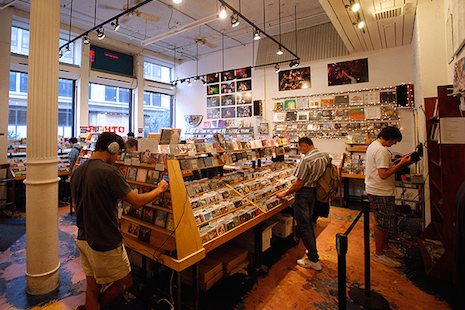
Other Music record store to close its doors in June
from Dangerous Minds:
Other Music opened its doors on East 4th Street in 1995, right across the street from the gargantuan downtown branch of Tower Records.After it opened, for a few weeks I obscurely thought that it must be an adjunct of Tower Records. It seemed perfectly plausible that Tower might open an annex called ‘Other Music’ across the street from one of its major locations. Plus the Internet wouldn’t have had good information on something like that back then, so I just didn’t know.
After a couple of visits, however, it became clear that something entirely else was going on at Other Music. They would always have the hip, newer stuff that was making the rounds online, like Clinic or Enon or Les Savy Fav, and would also focus on older material that wasn’t as prominent in the larger chain stores, like Neu! or Henry Cow. They did a pretty good job of making Tower look safe and provincial.
Of course, the 2000s weren’t kind to big-box retailers of music, and even though such an idea would have seemed absurd when it was starting out, Other Music outlasted Tower Records by a decade.
Today Other Music tweeted the sad news that it will be closing in a few weeks:
It's with heavy hearts that we announce that Other Music will be closing its doors on June 25. More details shortly. pic.twitter.com/u05bun8QY0
— Other Music (@othermusic) May 9, 2016
A week ago, Josh Madell, one of the owners of the store, commented, “We still do a ton of business—probably more than most stores in the country. It’s just the economics of it actually supporting us—we don’t see a future in it. We’re trying to step back before it becomes a nightmare.”Rather than assume a snobby attitude about the music you should have been up on before you entered the store (ahem—Kim’s Underground), Other Music always went the other way, eager to bring you new stuff you hadn’t heard before. Its shelves always had enthusiastic and informative note cards written by staff members explaining why this or that obscure album was worth your fifteen bucks.
Few establishments have enhanced the East Village like Other Music. For a good while there—certainly through the 2000s—they always had the best used CD racks. I’m very sorry to see it go.
In 1999 Other Music paid the Scottish musician Momus to write a song about the store. So he did. This is how it came out:
Tuesday, May 19, 2015
Technology's lost art: The ancient magic of the record label
from Dangerous Minds:
In our race to embrace new technologies much has been lost. During the 50s and 60s General Electric spokesman Ronald Reagan appeared regularly on American television declaring with godlike certainty “that progress is our most important product.” And we bought it. And we’re buying it still.
Until their recent resurgence, vinyl records were a thing of the past. Now it’s compact discs that are being phased out. DVDs and Blu-rays are next. The powers that be want us streaming data through the ether without the hassle or production costs of actually making something you can hold in your hand and own, not just store in a cloud somewhere. In our embrace of the new, faster, most convenient thing, we’ve lost a substantial amount of what we love about the things we love, the things that make our lives more beautiful. My Sonos streaming device is an ugly block of white plastic. My turntable, a Thorens with a beautiful wooden plinth, is a masterpiece of design and function, gorgeous to look at, soulful, unique. My record collection is not just, to my ears, a superior way to listen to music, it is a wonderland of marvelous sleeve art, label design and picture discs. All of which I can hold in my hands, all responding to gravity and easily handed off to a friend to appreciate as much as I do. No one ever comes into my home and asks to see my set lists on Deezer or flips through my Amazon cloud collection.
The phasing out of vinyl, CD, DVD, celluloid, happened so fast that a lot of people were caught by surprise. I own a vintage audio store and people are coming in on a regular basis to buy CD players because the local big box stores don’t sell them anymore. You might be able to find a shitty player that will shuffle dozens of CDs or some crappy all-in-one system. But a good single tray player with a decent digital audio chip is getting harder to find unless you move into expensive audiophile gear territory. If you told me even five years ago that CD players and CDs themselves would become collectible I would have laughed and said you were nuts. Guess what? Anyone want to buy a Suicide Commandos’ CD for $400. I got one.
The return of vinyl is wonderful for many of us. But the big three music corporations hate it. They’ve had to shift back to making stuff. And they have to pay a lot of people to make it. The new records sold in my store put scores of people to work, from the guys who make my record bins, to workers pressing the vinyl to the artists designing record jackets again. Add to that the truckers who move the vinyl, the folks in my store who sell it and homegrown turntable manufacturers like U-Turn who can’t keep up with production demands. All those people making livings thanks to vinyl. Not to mention, the musicians who now have more control over their product and profit when they produce their own records. Yes, a record costs much more than a CD to make or an MP3 to stream. But a record is something special to a bands’ fans. It is an artifact, a totem, something you hold close to your heart knowing that not everyone owns one of these slabs of black magic. With demand so high and current production so limited, every record made today is almost instantly collectible. You may be fine listening to iTunes or Amazon cloud, but vinyl is something you want to own. It is precious. It is art.
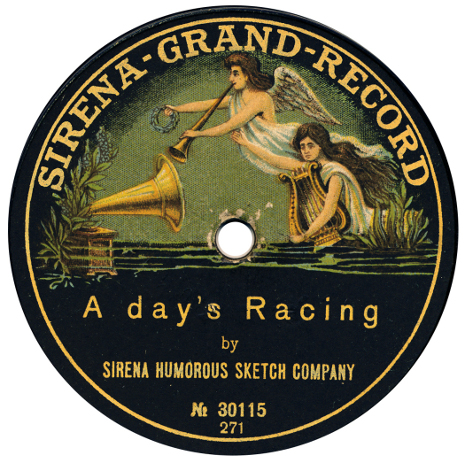
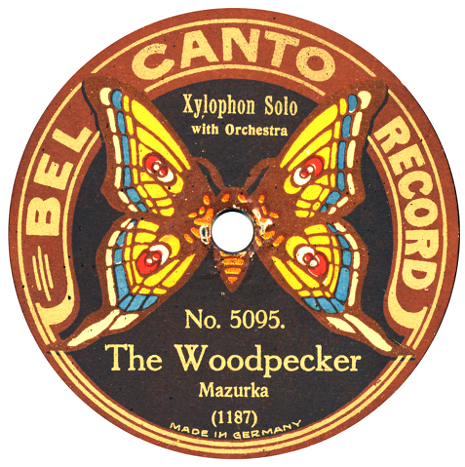
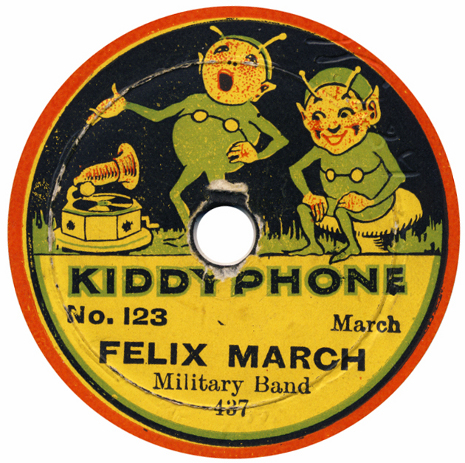
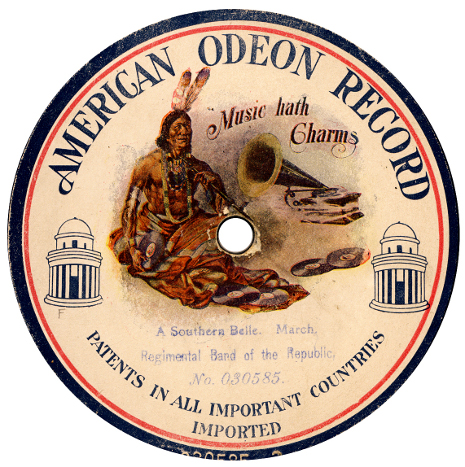
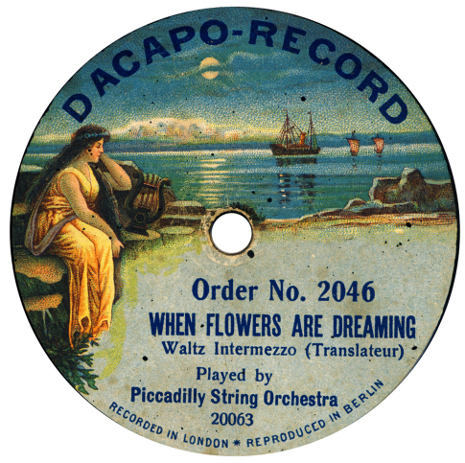
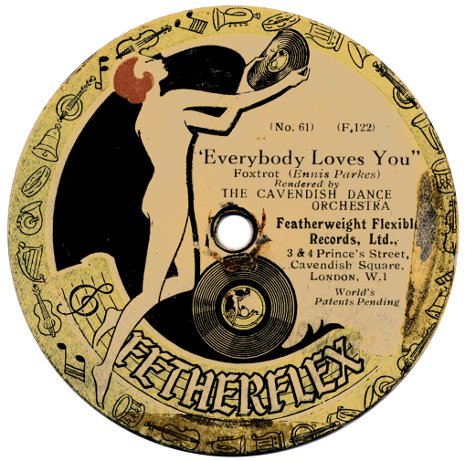
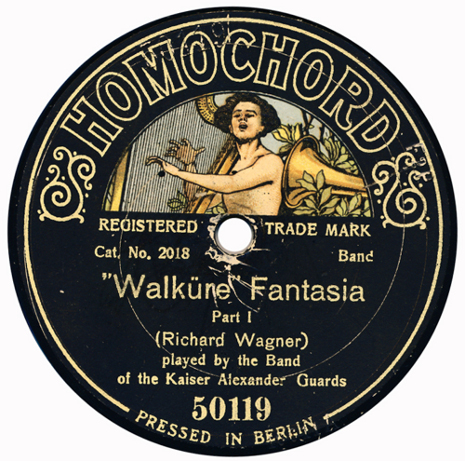
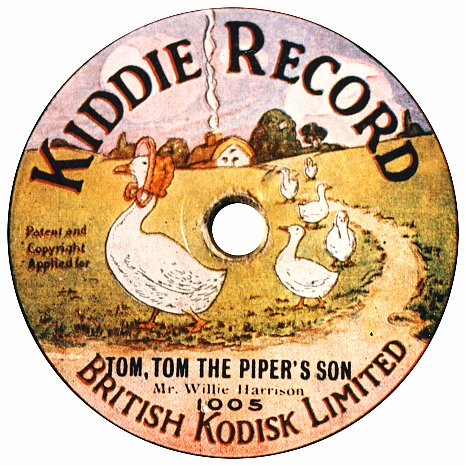
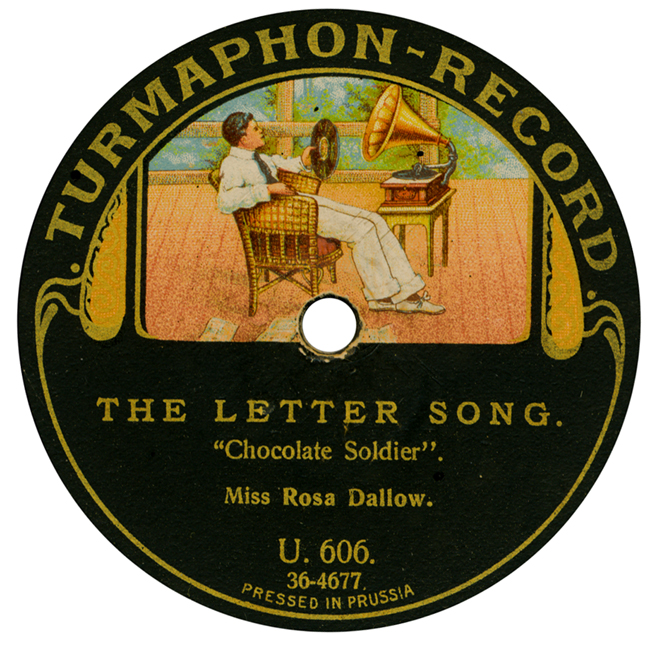
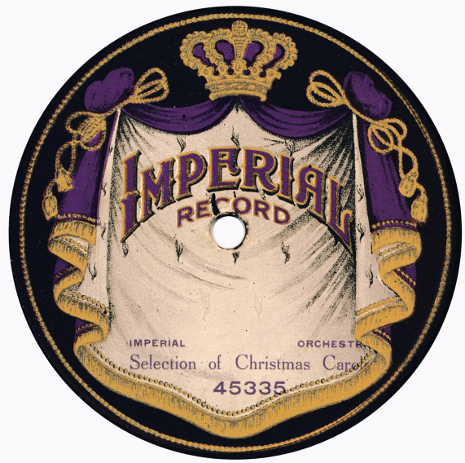
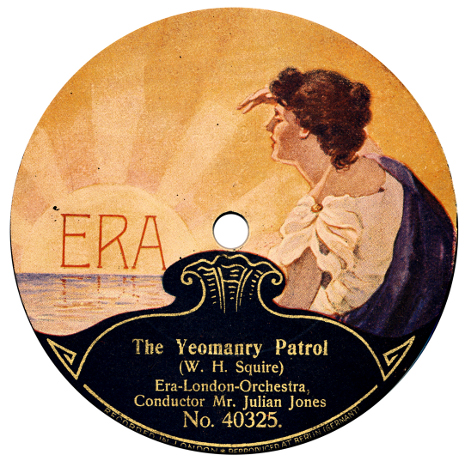
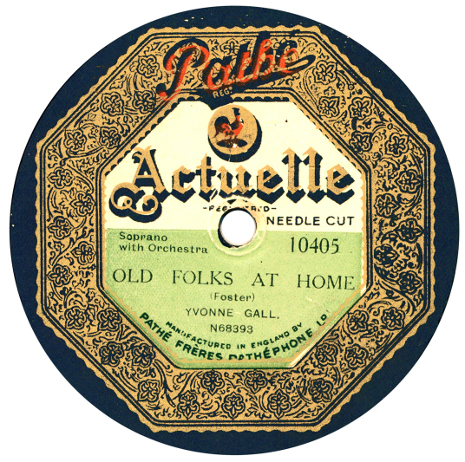
So that’s my vinyl rant. It was all leading up to sharing these beautiful 78rpm record labels produced in Britain between the years of 1898 and 1926. Enjoy them. And be happy that we may be seeing their like again, if not already.
More of these lovely labels can be viewed at Early 78s UK.


Thursday, June 24, 2010
CD on one side, vinyl record on the other
pretty interesting format...
Techno artist Jeff Mills produced this CD/5" vinyl single for "The Occurrence." One side of the disc is a normal CD, the other side plays on a normal analogue turntable.
The Vinyl And CD Release On One Disc From Jeff Mills
Axis Records (unlinkable Flash-blobs ahoy!) (via Make). Thanks BoingBoing.

Tuesday, March 30, 2010
To Have and To Hold: A Film About Vinyl Records
I see some friends in this trailer, and just wrote the director on his vimeo page, this looks like a worthwhile project. Don't see a lot of those these days . . .
Coming soon?
Add this one to your list of must see vinyl inspired documentaries and movies. Director Jony Lyle gives a quick teaser of his upcoming film entitled To Have & To Hold, which Lyle describes as “a ‘musicmentory’ to celebrate the age of vinyl records.”
The film promises enough archive footage, records rooms, music collections, pressing plants, and rare vinyl to satisfy even the most die hard physical music addicts. In addition to its irresistible collectible eye candy, To Have & To Hold, which is scheduled for a 2010 release, features interviews with such notable vinyl aficionados as Questlove, Chuck D, Bobbito Garcia, DJ Amir, Bruce Lundvall, Christian Marclay, and Paul Mawhinney.
To Have & To Hold - Taster Tape from Jony Lyle on Vimeo.
Thanks DangerousMindsWednesday, May 27, 2009
The Story of Rough Trade records
This is a very cool BBC documentary on the incredible Rough Trade records in London. Early example of the "Do It Yourself" culture and ethic.
I first went here in the spring of 1980 (after high school graduation). i was told by one of my English DJ friends who now lived in New York, to see a particular person and just buy what ever top few records they recommended. I came home with an early Crass 7" Bloody Revolutions/Persons Unknown, and an early Adam & the Ants record as well as a few bizarre others including Spizzenergi's "Where's Captain Kirk".
(thanks, to Joe Carducci who pointed this out in an e-mail today)
Subscribe to:
Posts (Atom)


