Thursday, September 17, 2015

Shepard Fairey has a new show opening in New York City this evening!


I went to a sneak preview last night over on 26th street and as usual Shepard get's to the nut and cracks it. Great work, great graphics, great (rarely subtle) political messages we can all appreciate.


ABC Breaking News | Latest News Videos

go here to the gallery website for the details.

The exhibition coincides with Fairey’s new monograph Covert to Overt, published by Rizzoli. A limited number of copies will be available for advance purchase at Jacob Lewis Gallery before the book’s release date. I think it's one of his best yet, great photos of his murals world wide like we've never seen in a book before. RESPECT.


Jacob Lewis Gallery is pleased to present On Our Hands, an exhibition of new paintings by Shepard Fairey. The exhibition will be on view September 18 – October 24, with a public opening reception September 17, 4-8pm.

On Our Hands is the first solo exhibition of Fairey’s paintings in New York City since 2010. In his new body of work, Fairey builds up the surface of his canvas in densely collaged relief, calling to mind a city wall layered with decades of distressed flyers. The paintings reflect on contemporary issues facing our global community: political corruption, environmental apathy and abuse of power. The exhibition is marked by a focus on corporate influence in government and the resulting inaction toward environmental concerns by the powers that be.

“I am incredibly honored to show at Jacob Lewis Gallery. I have known Jacob for years, and he has always maintained an insightful understanding of my aesthetics, techniques, and philosophies,” says Fairey on his inaugural exhibition at his representing gallery in New York. In cooperation with the gallery, a concurrent survey of Fairey’s newest print editions will be on view at Pace Prints one floor below.

Shepard Fairey first gained prominence while still a student at the Rhode Island School of Design, where he created his seminal “Andre the Giant Has a Posse” sticker. Fairey, taking notes from conceptual artist Barbara Kruger’s white-on red type design, transformed the original sticker into an internationally recognized symbol of the OBEY brand. Over the past two decades, Fairey has created indelible paintings, illustrations, fine art editions and murals critiquing the ever-changing political landscape. Influenced by Russian Constructivism, Chinese Communist propaganda and American advertising, Fairey’s work exemplifies a lifelong experiment in phenomenology and a simultaneously hopeful and damning call for independent thought in America.


Wednesday, September 16, 2015

James Cameron explains how you too can save the world

from Fortune magazine:
Oscar-winning director James Cameron is promoting a new way to fight climate change—eliminating meat and dairy from one’s diet.

When Oscar-winning Hollywood writer, director, and producer James Cameron isn’t making movies, he devotes his time to major environmental causes.

Cameron is speaking at the U.S.-China Climate Leaders Summit in Los Angeles on Sept. 15. During the summit, leading cities from both countries will share city-level experiences with planning, policies, and use of technologies for sustainable, resilient, low-carbon growth.

Cameron’s talk with Sam Kass, former White House senior nutrition policy adviser, is titled “Food for Sustainable Nations”. Cameron, who went completely vegan four years ago along with his family, will focus on food systems (consumption and production) and the relationship between food and climate change. Cameron explains how cutting out meat and dairy products can help lower carbon emissions in this exclusive interview with Fortune.

How did you get involved in the food systems aspect of fighting climate change?

I’m a child of the ‘60s and ‘70s and I’ve always had an environmental awareness, but over the last decade and a half I’ve been very focused on climate change and renewable energy. I was really starting to lose hope that we were going to be able to meet our emission goals just because of the lack of international cooperation and government inactivity. And one of the things that gave me the most hope was when I realized what an enormous contributor the animal agriculture was to greenhouse gases. It’s 14.5%. It’s greater than the entire transportation sector combined, not by much, but all the tailpipe and smokestack emissions from ships and jet engines and everything on the planet combined is about 13.5%. So this is an area where we could make a big immediate change just by empowering people to make a change in their lifestyle and their behavior. It doesn’t require an enormous technical rollout. It doesn’t require new innovation and new engine designs, electrification of the transportation system, or a massive rollout of renewable energy.

What role do you hope this summit plays in getting that global conversation started?

We spent 18 months and a significant amount of money looking into the numbers and the research. And the thing that became abundantly clear to us when we met with the experts who are working in nutrition and energy sustainability and climate change is that we can’t actually meet our emission goals if we don’t address animal agriculture, and that’s the thing that’s been left out of the conversation. Everybody’s focusing on the energy sector, which of course is huge, and to a lesser extent the transportation section, but they’re missing the second biggest single contributor to greenhouse gas emissions. This is a thermostat that we can turn down just by our personal choices. We can do it instantly.

What are some of the business imperatives when it comes to sustainable food?

I’m not going to tell business and innovators what to do. The answer is we need to do this for the survival of our civilization, and it’s going to cost us a lot more to try to fix the effects of climate change than to fix climate change. People don’t really understand that because they haven’t really made the connection between the impact of animal agriculture and climate. We’re in this big feedback loop where climate will effect food security among many things because of drought, desertification, saltification, loss of acreage and deltas, which are some of our most fertile areas because of sea water rise and things like that. It’s going to negatively impact our food supply and our food security at exactly the same time that we need to increase our food production by 70%. By 2050 we’re supposed to have 9 billion people on this planet. These two things are moving in the wrong direction. And yet the second biggest way we can control climate change is by reducing our reliance on meat and dairy.

What role does technology and innovation play in this situation?

When you look at the situation and realize that this is a survival level crisis, ultimately things are going to need to change. So you can either be on the leading edge of that, you can lean forward into it and look for the opportunities and the innovations, or you can sit back and try to clutch onto business as usual until you become extinct as a business. A classic example of that is Kodak, which held onto their position that film was best when everything went digital in movies. They flew that plane right down into the ground. Businesses need to look at a landscape that must change, food choices that must change, agricultural systems that need to be more sustainable, land use choices that need to be more weighted toward plant production than meat and dairy production; and either be part of the solution or get left behind.

What role do you see city-level government playing in this issue?

I agree with the principle that cities and regional governments could ultimately be more effective than even national governments. These are the principles that my friend Arnold Schwarzenegger espoused and went all over the world and got governors working together. The idea of mayors working together is critical. If you can reduce emissions through specific urban initiatives, also reducing particulate pollution from coal plants and from tailpipe emissions and all that, then that’s all a step in the right direction.

What’s your message to people out there when it comes to meat and dairy?

I don’t think we have to ask people to go cold turkey. We just have to ask them to be aware of how the choices that they make of what they put on their plate is having a direct impact on climate. Seventy-five percent of deforestation in the Amazon is for either pasture land or crop land for soy, which is primarily used as a feed stock for concentrated animal feeding operations. It’s all a big related thing, but it’s all very complex. It’s hard for people to understand, but the simple resounding message is you can be healthier and your planet can be healthier based on a very simple thing that you can do today. And you’ll also save money because eating a plant-based diet is just frankly cheaper. It’s cheaper to produce plants. It’s less carbon footprint, less water footprint, less money footprint and better for you. I keep waiting for the bad news to this story.

Tuesday, September 15, 2015

OCCUPY WALL STREET Lawsuit Aims To Stop The NYPD From Targeting Free Speech


from The Gothamist:
A new lawsuit filed in federal court last week aims to challenge a reality evident to anyone who has attended a large political gathering in Lower Manhattan over the past decade: lawful behavior is no safeguard against being arrested.

The lawsuit centers on more than 200 arrests made around the first anniversary of Occupy Wall Street in September 2012, when the NYPD "should have known that members of its police force would encounter individuals engaged in expressive speech activity."

Instead, the NYPD continued to arrest and harass protesters for seemingly no reason other than that they were protesting.

The lawsuit asserts that this is part of a "pattern, policy, and practice of the NYPD misapplying the disorderly conduct statute to peaceful protesters in New York City."

"The City of New York has continually failed to appropriately police the many non-violent and lawful expressions of speech, resulting in the continual breach of individual rights, the waste of judicial and civic resources, and the need for appropriate training policies, methodologies, and systems to address individuals conducting peaceful and legal expressive speech as protected under the First Amendment," the suit states.

Remember, it was the "white shirts," or NYPD commanding officers, who set the tone for how these protests would be policed: pepper-spraying a group of women standing on the sidewalk, sucker-punching a random man in a crowd of people, or in the case of former Chief of Department Joseph Esposito, the highest-ranking uniformed officer in the NYPD, body-checking a protester with his baton. (After retiring from the NYPD, Esposito was appointed by Mayor de Blasio your Commissioner of Emergency Management.)

This behavior eventually cost the city millions of dollars.

In addition to Esposito, Mayor Bloomberg, and former NYPD Commissioner Ray Kelly, the suit names other police officials who seemed to truly relish cracking down on protests, including Deputy Chief "This is New York City, you can't be making noise at night" James McNamara, and Deputy Chief Thomas Purtell, seen here tossing a live-streamer to the ground like he's facing the cameras at Summerslam.

Legal experts tell the New York Times that the suit "raised important questions" and noted that it's "well-written," but one expert believes that “These plaintiffs are going to have a really tough time making a case" against the City itself.

In an email, Wylie Stecklow, one of the lawyers representing the plaintiffs, responds that "my firm has spent the past few years litigating twenty different cases involving constitutional violations of rights of members of Occupy."

Steecklow adds that depositions of NYPD officials obtained in other suits would help the plaintiffs prevail: "These class representatives are in a very good position to move forward on their claims."

Those nine plaintiffs include former Episcopal bishop George Packard, and photographer Charles Meacham.

Meacham was arrested by Inspector Edward Winski, who has been named in many Occupy-related lawsuits against the City; this lawsuit cites a deposition in which Winski admits that he has never received any training on the First Amendment.

"He knows who I am. He's asked how I'm doing before," Meacham told us after his 2012 arrest. "He knows I'm a photographer. He'll say, 'Hey, where's your press pass? Oh that's right, you don't have one.'"

Meacham's charges were eventually dismissed.

You can read the entire complaint below.

OWS First Amendment Suit


Please, click on the link at top if you want to get all the links mentioned throughout the piece.

Monday, September 14, 2015

HENRY ROLLINS:
BEND OVER, AMERICA — HERE COMES PRESIDENT TRUMP

from his column in the LA WEEKLY


America is an angry country. It always has been. Those who came before us cleared out the locals by any means necessary, then sanitized the genocidal slaughter as they self-immortalized their deeds into the stuff of legend.

After the sun dried the corpses, we set upon each other. Our history is splattered in blood and steeped in unrestrained hostility toward all living creatures.

People in countries all over the world trip out on America. Not only do we make films the rest of the planet flocks to see — we are living in them as well. America is so larger-than-life, our reality kills millions of us each year.

Don’t get me wrong. I’m not complaining; I’m just saying that part of what the rest of the world considers to be exceptional about America is our ability to bring the pain over great distances at a high rate of speed, and our seemingly insatiable lust to do it again and again.

America has defined the size of the world. For now at least, things are as we make them.

Americans are hard on every possible thing in America, from our natural environment to city infrastructures. Our greatest contempt and top-shelf brutality, however, we reserve to unleash upon ourselves and one another.

Even after all the science, advances in medicine and technological breakthroughs, which have brought about possibilities that were once almost impossible to imagine, many of us long for the pungent ooze of a stagnant past. Ideas of equality and common decency often are seen as being weak or an abomination. Why? I don’t know. It’s one of those things that makes us exceptional.

When you think about it, some of the greatest examples of American music are, in many ways, blood diamonds. You think blues, gospel and soul came from everyone getting along and living comfortably? Billie Holiday’s tone came from all the hugs and free breakfasts? Jazz, America’s greatest single cultural export, came to be because Jelly Roll Morton didn’t spend most of his life being made to feel like a second-class citizen? To listen to this music, conscientious people might have to accommodate what they are unable to overlook and accept that which they cannot change.

Being an American is to understand where you come from and choosing whether you want to repeat the past or invent the future. A huge number of us have chosen the former. The proof is everywhere.

There are not just a few people opposed to same-sex marriage in America. There are millions and millions.
During the president’s recent visit to Oklahoma, protestors stood across the street from the hotel where he was staying, waving their Stars and Bars flags. Not racist; it’s a heritage thing.

Countless Americans see the recent efforts to neutralize Iran’s nuclear ambitions as mere Neville Chamberlain–esque, Kenyan trickster commie-islamofacism — the workings of an arrogant, Israel-hating tyrant who despises America and wants to open the borders for all his buds in ISIS to stream in by the busload. In fact, they’re probably already here, draining your wallet to buy lobsters, steak and extra Qurans with SNAP coupons, thus robbing your children of their subliterate future.

This is who we are. The world outside of America gets it. Some of them think we’re cool, others think we’re violent morons, but they all know we are not to be fucked with. We are armed, we are dangerous, and we will come over there.

Every country needs a leader. A leader who not only personifies the spirit of that country but one who epitomizes it. It can’t be Obama, right? Biggest American blunder of the 21st century! All that peacemongering and compromise. America does not negotiate with terrorists — and almost every country in the world is run by terrorists! (Not Canada, although we could beat their asses and take their shit by next weekend. We’d be treated as liberators!)

So who’s it gonna be for 2016? Hillary the crim (probably a lesbian) and her lying, adulterer husband? She personifies the greatest nation on Earth? She is a billboard for our values and dreams? No way! If elected, she’ll build a mosque on the front lawn of the White House on day one and start on the concentration camps the next! No! Not Hillary!

In a nation of hundreds of millions of people, there is one man born to lead. A man who stands head and shoulders above the rest. A lone alpha who burns incandescent in a vast wasteland of darkness.

When asked to serve in Vietnam, he said no and took a deferment. He took a few of them, actually, because he is his own man.

He got married. The merger didn’t work. She was fired. So was the next one. It’s business, not personal — like America!

He has overcome adversity. Like bankruptcy. And with an almost Michelangelo-like genius, he conquered the K2 challenge of his hair.

He is what America needs. A man with so much self-confidence that, if you put him in the Oval Office, some of it will no doubt trickle down to you.

Who is this man who will put all other world leaders in their place? The same man who just read a cellphone number, allegedly Lindsey Graham’s private line, out loud so the world could hear. (Hey, I laughed.) This man is America.

So bend over, relax and hold onto something solid, because here he comes — here comes Donald Trump 2016. And when he puts it in, you’ll know who your daddy is.

------------------

Look for your weekly fix from the one and only Henry Rollins right here every Thursday, and come back tomorrow for the awesomely annotated playlist for his Sunday KCRW broadcast.

Sunday, September 13, 2015

Sunday Science:
California Is About to Do Something Great That No State Has Ever Done Before

from MotherJones
"If California can do this, it could really be the beginning of the snowball."
—By Tim McDonnell


Back in January, California Gov. Jerry Brown (D) made a promise. His state, he said, would pursue a new package of climate goals that are the most ambitious in the nation (and among the most ambitious in the world). California was already a leader in efforts to slash greenhouse gas emissions and promote clean energy. Brown pledged to go further. By 2030, he declared, California would double the energy efficiency of state buildings; get half its electricity from renewables; and halve consumption of gasoline by cars and trucks.

At the time, all those nice-sounding goals were just words in a speech. But they could very soon become the law of the land. The state legislature is currently considering several bills (SB 350 is the most important) that would codify Brown's climate agenda. The legislation is widely expected to pass before the end of the legislative session next Friday, but not without a fight from the state's powerful oil lobby.

Before we get into the bills themselves, let's talk about California. Believe it or not, the state where America fell in love with cars and highways is now leading the nation, and the world, when it comes to climate action. And that matters, because California, the world's seventh-largest economy, is a world-class emitter of greenhouse gases. It ranks second for state emissions, behind Texas, and if it were its own nation, it would rank 20th globally, right between Italy and Spain. Still, it's remarkably clean for its size: On a per-capita basis, it ranks 45th among US states and 38th when compared with countries around the world. (Below, the bars represent total emissions and the dots represent per-capita emissions.)


California is also special because of how much of its emissions come from road transportation (cars, trucks, buses, etc.), which is why a major reduction in gasoline use would be so significant. Nationally, just 27 percent of greenhouse gas emissions are from transportation; in California, it's 37 percent. Another way to crunch those numbers: One-tenth of the nation's road transport emissions come from California. Unsurprisingly, California is also the biggest consumer of gasoline, accounting for one-tenth of the national gas market. As a result, it also has an infamously aggressive oil lobby—more on that in a minute.

California first stepped onto the national climate stage back in 2006 during the Arnold Schwarzenegger administration, with the passage of AB32, known as the Global Warming Solutions Act. That law sets a target of reducing the state's economy-wide carbon footprint to 1990 levels by 2020. Since the bill was enacted, gasoline consumption in the state is down 9 percent—double the nationwide decline. Total carbon emissions are also down, while GDP and population are both on the rise. Roll those things together and you get the most impressive number: The carbon intensity of the state's economy (that is, emissions per unit of GDP) is down 28 percent. The upshot is that California has become a proving ground for the notion that strong economic growth and climate action can go hand in hand:


That's where the current bills come in. SB 350 would bring the state's gasoline consumption down to about where Florida's is now, while setting new targets for clean energy and energy efficiency projects. There's also SB32, which would build on Schwarzenegger's targets and require the state to reduce greenhouse gas emissions 80 percent below 1990 levels by 2050 (to meet that target, emissions have to start falling about five times faster than they currently are). That would be the most aggressive state target in the country; nationally, the furthest President Barack Obama has gone is to aim for a 26-28 percent reduction by 2025 (and that's not enshrined in law, either). Both bills passed the state Senate in June by a wide margin; they're due for a vote in the Assembly within the coming week. If they pass, they'll head to Brown's desk for a signature.

Neither bill includes specific prescriptions for how to meet the targets. Those are left to the state's Air Resources Board (CARB), which would be required to turn in an enforcement plan by 2017. The gas consumption target would likely require some combination of new fuel efficiency standards for cars, incentives for alternative fuels and biofuels, cooperation with local planning agencies to improve public transit and make communities less car-reliant, and a push to get people to buy more electric vehicles. (California is already home to half of the roughly 174,000 electric vehicles on the road in the United States.)

"If California can do this, it could really be the beginning of the snowball," said Tim O'Connor, director of California policy for the Environmental Defense Fund. "This is how California can really shake up the national conversation on climate."

Combined, these efforts are expected to create up to half a million jobs, according to a recent University of California-Berkeley study, and draw billions in clean tech investments (for which California is already the undisputed national champ). The bills' supporters in the California capitol also say they will save millions of dollars in traffic-related public health costs and result in reduced energy bills.

The bills' other supporters include Obama; both the state's US senators and a majority of its congressional delegation; and a coalition of California businesses, large and small. But they also have some powerful enemies who are pushing back hard.

Because of the state's share of the gasoline market, and its robust oil and gas production industry, the oil lobby has long been the most powerful special interest in Sacramento. The biggest group, the Western States Petroleum Association, spent $8.9 million on lobbying last year. Now, Californians are getting blitzed by ads like the one below, from the so-called California Drivers Alliance (backed by WSPA, and representing "fuel users & providers"). The ad claims SB 350 will lead to gas rationing and is all about "limiting how far we can drive" and "penalizing drivers for using too much gas." The bill's sponsor, Sen. Kevin de Leon (D-Los Angeles), called the ad "absurd" and "fear-mongering."


"There's a significant amount of inertia protecting the industry," O'Connor said. "The lobby is putting its aim right at the center, at swing moderates" in the Assembly.

We'll have to wait and see how this pans out. But California has a strong history of leadership on climate policies—including carbon trading programs (it created the nation's first economy-wide cap-and-trade market in 2012) and clean vehicle standards—so the odds are pretty good.

"The governor has put his reputation on the line," O'Connor said. "It's hard to imagine 350 won't pass."

Friday, September 11, 2015

Iraq For Sale: The War Profiteers •
FULL DOCUMENTARY FILM • BRAVE NEW FILMS


This is the story of what happens to everyday Americans when corporations go to war. SUBSCRIBE: HERE
Watch our other feature length documentaries free: HERE

1:57 Blackwater Security is the largest security firm in Iraq, with more than three hundred working and risk taking employees.

Meet Jerry Zovko, one of the four blackwater agents who died in an under armored and under guarded patrol vehicle in Falluja, one of the most dangerous cities in the region at the time.

7:49 Blackwater Security pulls at all its political strings in order to avoid retribution for the very much avoidable Felluja deaths. Preventing investigations, and changing opinions.

13:30 Private organizations in Iraq continue to abuse their power, hurting and destroying the lives of prisoners and citizens alike, but not without making a killing in profits.

21:16 Private organizations pay more than the US military, promising “minimal supervision”.

26:06 Corporate greed strikes again. TITAN Services, the lead provider of linguists for America’s Iraq operation hired untrained translators from unreliable backgrounds -making TITAN indirectly responsible for countless avoidable deaths.

28:47 United States turns a convenient blind eye to the continued abuse and killing of Iraqi civilians by US private contractors.

33:50 Private contractors are taking the work–and by extension experience– of trained soldiers. So why are they being denied the training and equipment they need to stay alive and safe?

42:00 Seven people were killed in an attack on a Halliburton fuel convoy. A convoy that had been cleared for transport across a no-drive zone. Is that how KBR values human life?

48:17 Halliburton continues to skimp on health requirements, supplying the it’s men and women with contaminated water, and snuffing out all the attempts that have been made to warn those at risk of infection.

52:22 Halliburton skimps on necessary safety and sanitation measures for its troops while massively overcharging them, and by extension the U.S Government.

55:02 How does Halliburton legally steal from the american government and american citizens? By wasting our money in huge amounts, burning expensive equipment, vehicles and even oil in front of Iraqi citizens.

1:01:48 It has been proven that Halliburton steals huge amounts of money from the U.S, so why haven’t we taken action?

1:06:15 Even today, 12 years after the withdrawal of troops and the end of the Iraq war, war profiteers still exist, and they will not go down without a fight. They have money, power and influence.
If we want change, it’s going to take more than just awareness, it’s going to take action.

DONATE: https://bravenew.nationbuilder.com/do...

Set up a free screening in your community: http://www.bravenewfilms.org/screenings

SUBSCRIBE: http://bit.ly/1JUX3Xv

SIGN UP for email updates: http://bravenewfilms.org/signup
Set up a free screening or house party for any of our films free: http://www.bravenewfilms.org/screenings

Facebook: http://www.Facebook.com/BraveNewFilms
Instagram: http://www.Instagram.com/BraveNewFilms
Twitter: http://www.twitter.com/BraveNewFilms

Thursday, September 10, 2015

In Honor Of His Birthday This Week, Here's Some Real Talk From Bernie Sanders

from The Huffington Post:
Between his large crowds at campaign events and surging poll numbers, Sen. Bernie Sanders (I-Vt.) has so far been the biggest surprise in the race for the 2016 Democratic presidential nomination. In the past few months, Sanders has gone from "virtually having no chance" to causing concern for frontrunner Hillary Clinton's campaign.

A self-described democratic socialist who has a lot of ideas and a brash demeanor, Sanders can make some interesting statements. We've collected a few of his most intriguing and most provocative words on a wide range of issues, including marijuana and income inequality.

Here are some of the most notable things Sanders has said since announcing his White House run:

"We got to put young people to work, we got to give them an education, rather than putting them in jail," Sanders said in an interview on MSNBC's "The Ed Show."

"Ordinary people are profoundly disgusted with the fact that the middle class is being destroyed and income going to the top 1 percent," Sanders tweeted.

"Folks who do not like guns [are] fine. But we have millions of people who are gun owners in this country -- 99.9 percent of those people obey the law. I want to see real, serious debate and action on guns, but it is not going to take place if we simply have extreme positions on both sides. I think I can bring us to the middle," Sanders said in a CNN interview.

"It is insane and counter-productive to the best interests of our country, that hundreds of thousands of bright young people cannot afford to go to college, and that millions of others leave school with a mountain of debt that burdens them for decades. That must end," Sanders said during his campaign announcement.

"In the last 30 years there has been a massive -- we’re talking about many trillions of dollars being redistributed from the middle class to the top one-tenth of 1 percent. It is time to redistribute money back to the working families of this country from the top one-tenth of 1 percent," Sanders said on PBS's "Charlie Rose."

“I coughed a lot, I don’t know. I smoked marijuana twice -- didn’t quite work for me,” Sanders told Yahoo.

"So I do believe that we have to move toward a Medicare-for-all, single-payer system. I think it's not going to happen tomorrow, but that certainly should be the goal," Sanders said on ABC’s "This Week."

"We’ve got to demilitarize the police -- we don’t need tanks, you don’t need heavy military equipment in the communities of the United States. We gotta pay attention to the African-American communities, to poverty so these kids get the education and job training they need," Sanders told Yahoo.

"Well, no, I do not have dual citizenship with Israel. I'm an American. I don't know where that question came from. I am an American citizen, and I have visited Israel on a couple of occasions. No, I'm an American citizen, period,” Sanders said in an interview with a D.C. NPR affiliate.

"Please don't tell me that the United States of America, our great country, cannot guarantee health care to all people. Don't tell me that every person in this country should not be able to get all the education that they need regardless of their income," Sanders said in Portland, Maine.

"A major problem of our campaign finance system is that anybody can start a super PAC on behalf of anybody and can say anything. And this is what makes our current campaign finance situation totally absurd," Sanders said to the Burlington Free Press.

"Despite the central role that undocumented workers play in our economy and in our daily lives, these workers are too often reviled by many for political gain and shunted into the shadows," Sanders said at the National Association of Latino Elected Officials conference.

"If a bank is too big to fail, that bank is too big to exist," Sanders said in Denver, Colorado.

"Our goal as a nation is that if somebody works 40 hours a week, that person will not be living in poverty," Sanders said in Iowa.

"What I can tell you is this: We have far, far, far too many people in jail for nonviolent crimes, and I think in many ways, the war against drugs has not been successful, and I think we've got to rethink that," Sanders told Yahoo News' Katie Couric.

Wednesday, September 9, 2015

There is literally a US government conspiracy against vegan mayo

editors note: I've tried this stuff and it's great, no wonder the assholes who make a living from killing and abusing animals are fighting it.

from Quartz:
Hampton Creek, the food technology company, has apparently been the subject of much discussion at the American Egg Board—an egg research and promotion program overseen by the US Department of Agriculture.

Newly released documents show high-level members of the American Egg Board, a USDA employee, and an outside PR firm discussing strategies for dealing with Just Mayo, Hampton Creek’s plant-based mayonnaise substitute, the Associated Press first reported.

In an August 2013 email, Joanne Ivy, president of the American Egg Board, refers to Just Mayo as “a crisis and major threat to the future of the egg product business.” The email concluded with the line: “‘What are we doing at AEB with regard to this competing product??’ We need to have an answer!”

The records were disclosed in response to a Freedom of Information Act (FOIA) request made by Ryan Noah Shapiro, a public records expert at the Massachusetts Institute of Technology, and his lawyer, Jeffrey Light, who specializes in FOIA matters, according to the AP.
Representatives of the American Egg Board could not be immediately reached by Quartz to comment on the documents, but Ivy told the AP the board “bolstered efforts to increase the demand for eggs and egg products” amid the growing interest in egg substitutes, and that the actions it took are “common within the consumer products industry.”


Several of the emails obtained were posted online by Hampton Creek and food lawyer and activist Michele Simon. They indicate that the egg board came up with several tactics—some of them perhaps illegal, one critic charges—for dealing with Just Mayo.
Tactic #1: Get the FDA to handle it.

In January 2014, Roger Glasshoff of the USDA proposed challenging Just Mayo’s labeling claims with the US Food and Drug Administration. “I would forward the information to the FDA District Office responsible for the location where the product was marketed,” he wrote. Ivy responded with the green light.

The FDA issued a warning letter in August 2015. It declined to comment on its motivations to Quartz, but the letter listed violations including making unauthorized health claims and misleading consumers by using the term “mayo” along with a picture of an egg, when the product is actually not standardized, egg-based mayonnaise.

Update (Sept. 3, 2015, 2:20 p.m.): A USDA spokesperson told Quartz, “By law, USDA’s Agricultural Marketing Service (AMS) is charged with providing oversight, ensuring fiscal responsibility, program efficiency, and fair treatment of participating stakeholders. AMS does not condone any efforts to limit competing products in commerce… The National Shell Egg Supervisor in AMS [Roger Glasshoff] regularly fields questions from those seeking regulatory and labeling guidance. The National Shell Egg Supervisor has no role in the oversight of the American Egg Board. In this case, he fielded a call about a regulatory question and simply referred the inquirer to the correct regulatory authority. In reviewing documents, AMS has not discovered any inappropriate actions by the now retired National Shell Egg Supervisor that would fall outside of his responsibilities.”

Tactic #2: Get Just Mayo out of Whole Foods.

But that was only one piece of a multi-pronged strategy, the emails show. In December 2013, the American Egg Board also asked Anthony Zolezzi, an external sustainability contractor, to place a call with Whole Foods asking the grocery chain to remove Just Mayo from its shelves. Internal American Egg Board documents imply that he was paid for the service. Ivy wrote to a colleague, “I feel sure he wants to be paid for doing it. If it is that easy, I will contact Anthony and remind him to make the call unless his price is too steep.”
Whole Foods, which still sells Just Mayo, said it had no information regarding any such call.

Zolezzi was not immediately available to respond to Quartz’s inquiry. According to the AP, Zolezzi said he offered to help the egg board because he considered Just Mayo’s packaging to be misleading and doesn’t think removing eggs from people’s diet and replacing them with plant-based foods is a good idea.

Tactic #3: Pay a PR firm to get food bloggers to send out the message.

In January 2014, there were also discussions about a campaign to get bloggers to include promotions for eggs in their posts. An account executive at Edelman sent an email to the egg board telling them about the key, “USDA-approved” messages that these bloggers would “weave into their blog posts” to “encourage their readers to make a conscious decision to choose real and sustainable foods, like eggs, on their path to a healthier lifestyle.”

As Simon points out on her blog, EatDrinkPolitics.com, at least a few bloggers took the bait: She found posts on two food blogs that were “strikingly similar” in how they sang eggs’ praises, both mentioning the American Egg Board. (Here and here.) Fooducate, billed as a blog and app for healthy diets, let the board sponsor a post on its site. Some readers, calling it irresponsible, weren’t happy. Edelman was.
A contract for services outlines $43,000 paid to Edelman for its campaign.

Update (Sept. 3, 2015, 11:42 a.m.): A representative from Fooducate told Quartz that it is not “a co-conspirator against Hampton Creek” nor has it “been played by the American Egg Board.” The representative said, “We’ve been writing about the health benefits of eggs pretty much since we started Fooducate. … As part of our ad sales activities we reach out to healthy brands and commodity boards to spend their ad dollars to reach our audience. “

Edelman did not immediately respond to Quartz’s request for comment.

Tactic #4: Help a major corporation with its lawsuit.

But wait, there’s more: The egg board also worked behind the scenes with Unilever, the maker of Hellmann’s mayonnaise, to try to deal with the Just Mayo “crisis,” November 2014 emails from Ivy show. Unilever had filed a suit against Hampton Creek in October of that year alleging that Just Mayo, because it’s not made with eggs, isn’t actually mayonnaise. It withdrew the suit a few months later.

Unilever did not immediately respond to Quartz’s request for comment.
Tactic #5: Go to the mattresses.

And just for good measure, both an executive at food company Hidden Villa Ranch and an executive at the egg board made jokes—more than a year apart—about killing Hampton Creek CEO Josh Tetrick.

“In the meantime, you want me to contact some of my old buddies in Brooklyn to pay Mr. Tetrick a visit?” proposed American Egg Board executive Mitch Kanter in December 2013.

“Can we pool our money and put a hit on him?” asked Mike Sencer of Hidden Villa on Oct. 31, 2014.

Neither the American Egg Board nor Hidden Villa immediately responded to Quartz’s request for a comment on the emails.

According to Simon, a number of laws were likely broken in the American Egg Board’s attempt to quash its egg-free competitor. “Egg Board money is legally required to be spent on the promotion of eggs, not on tearing down a competitor,” she told Quartz.

----------------


My good friend Tara Brown add's "Attacking a startup that is trying to make a healthy food alternative is pathetic. And it's not just for vegans. Some people are allergic to eggs and some just don't like them.

Hampton Creek Foods CEO Josh Tetrick has called for a congressional inquiry into lobbying against his company. A petition calling on the White House to investigate the USDA for, among other complaints, “[p]aying for deceptive endorsements without disclosing their source” and “[l]obbying the FDA to go after Hampton Creek” had reached more than 8,400 signatures"

Read this in the Guardian: "US-appointed egg lobby paid food blogs and targeted chef to crush vegan startup "


Sunday, September 6, 2015

"We have a schizophrenic relationship with animals in that we love some ...and eat others"

The story of Woodstock Farm Sanctuary in two minutes.

Woodstock Farm Sanctuary is driven by the simple philosophy that kindness and respect to animals is our duty and that all the creatures that share this earth are here with us and not for us. Farm animals are feeling individuals who deserve to be treated with compassion.
My friend Andy who made this said:
"We have a schizophrenic relationship with animals in that we love some
...and eat others"

#TRUTH

She Was There For Me: The Story of Jenny Brown & Woodstock Farm Sanctuary from Woodstock Farm Sanctuary on Vimeo.


Support Animal Sanctuaries and STOP eating animals!

Saturday, September 5, 2015

The twisted history of the Happy Birthday song—and the copyright shenanigans that keep it profitable

From Boing Boing:
BY GLENN FLEISHMAN
I've obtained the 1922 book that demonstrates this classic song should rest in the public domain.


Mildred and Patty Hill rank among the most interesting progressive thinkers in the 19th century, and yet they are popularly remembered only for a copyright debate. Why is a song they didn't precisely write still a corporate moneyspinner, at least 122 years after they published a similar ditty?

The Hills wrote and published "Good Morning To All," which morphed into a more popular rendition: "Happy Birthday To You." A lawsuit filed in 2013 by a documentary filmmaker, Jennifer Nelson, who was working on a movie about the song's history, sought to get a court to determine that the copyright to the song asserted by its current owners, Warner/Chappell, expired in the 1920s, if it ever properly existed.

This suit was nearing its conclusion when a thrilling last-minute piece of evidence emerged from Warner/Chappell: an excerpt of a 1927 title called The Everyday Song Book produced by the piano-making firm, The Cable Company. The song, numbered 16, is called "Good Morning and Birthday Song" with the main lyrics under the score, and "optional" words below for "Happy Birthday." The ostensible copyright notice was blurred in the version supplied by the music company.

songbookNelson's lawyer noted it was not the first edition, and were able to get a library to dig up the 1922 version. The same version appears there without a legally required statement of copyright. I have obtained a copy of this 1922 edition from an online bookseller. It's a fascinating thing to see in print what has been in dispute for so long.

This would seem to be the end of the line for "Happy Birthday." The filmmaker should prevail; fees collected starting in 2009, within the statute of limitations at the time the suit was filed, should be refunded; and a clear future would be established for public-domain use.

But copyright is a crooked path.


THE REMARKABLE HILL SISTERS

The intricacies of copyright related to "Happy Birthday" need to take a momentary back seat to the song's two creators, who haven't been fully forgotten, but who deserve some space of their own.

Patty and Mildred were two of the six children of Rev. William Wallace Hill and Martha Jane Smith, raised in Anchorage, Kentucky. Unusual for his day, he insisted his four daughters have a profession and encouraged their advanced education. "My father believed that every girl should grow up with a profession. This was a radical philosophy everywhere fifty or sixty years ago, particularly in the South," Patty Hill recalled in an 1925 interview.

Patty became one of the leading lights in the development of American early-childhood education, a continuation and expansion of work done in Germany by kindergarten inventor Friedrich Froebel. Her development of what were known reasonably as the Hill Floor Blocks led a student, Caroline Pratt, to develop "unit blocks," which recently celebrated their 100th anniversary and are widely used in childcare today.

Mildred was an ethnomusicologist who was an expert in African-American music, as well as a musician and composer. She's considered the likely author of a remarkable essay published under the name Johann Tonsor in 1893 that predicted that African-American music would essentially become the music of America. (The work is of its time, titled "Negro Music," and is patronizing but admiring.)

When our American musical Messiah sees fit to be born he will then find ready to his hand a mass of lyrical and dramatic themes with which to construct a distinctively American music.

In 1887, the 19-year-old Patty joined the Louisville Training School for Kindergartners, a new enterprise in Kentucky that aimed to establish demonstration kindergartens and spread the practice of pre-school education for the poor. "The special desire was to reach little children who attended [an industrial school attached to a mission] although too young to sew," according to a 1907–1908 issue of The Kindergarten-Primary Magazine. Older children were taught the sewing and carpet-making trade.

Patty Hill graduated in 1889 and became principal of one of the kindergartens, and then in 1893, the head of the entire Louisville Free Kindergarten Association. In a measure of how progressive Hill's organization was, in addition to serving what would otherwise have been child laborers, in 1899 it began training "colored" teachers, who would teach black children. Only a handful of such kindergartens existed at that time.

As part of her work at the school, Patty enlisted her sister Mildred—who wasn't otherwise associated with the school—to compose songs that could be used to guide children through different tasks and phases of the days. Any parent is familiar with such songs today from daycare, and the Hills are a good part of their American origin. (Patty and her sister Mary, who was a teacher at the school, also worked together to develop "Typical Lessons for Mothers and Kindergartners," serialized in The Kindergarten for Teachers and Parents, such as "Rain—Part II" in an 1890 issue.)

Starting in 1889, Mildred and Patty essentially workshopped songs with kids. Mildred wrote the music and Patty the lyrics. (Some researchers maintain Mildred adapted an African spiritual for the music, but there's no trace of the syncopation or the unique scale.) They experimented with finding songs that children could memorize and sing easily at this young age; Mary also helped out. Patty said in a deposition in 1934:

[A draft of the song] would be written and I would take it into the school the next morning and test it with the little children. If the register was beyond the children we went back home at night and altered it and I would go back the next morning and try it again and again until we secured a song that even the youngest children could learn with perfect ease.

"Good Morning to All" was one of their first efforts, and it appeared as part of Song Stories for the Kindergarten published in 1893. In the deposition noted above, Patty said that they used many variants to the lyrics, including "Happy Birthday To You," but never wrote these out or published these. Patty was savvy about copyrights: she and her sisters told trainees to never write down the music or lyrics to the songs before the 1893 book appeared.

In 2015, unit blocks remain in wide use and "Happy Birthday To All" is a tune that perhaps billions of people know. Patty, who died in 1946, helped create and foster a change in thinking about teaching young children that benefitted hundreds of millions worldwide.

The Hill sisters had an impact. But the fact that an 1893 melody coupled with words sung but not put into print has remained in copyright without an effective challenge may finally be on the verge of changing.

A smoking gun in ostensibly overlooked files

When I was a young man studying graphic design at college, one of my professors, Alvin Eisenman, then the dean of the American approach to design, would mix art and practice with anecdotes about his career. One story stuck with me: Never sign off on a client's proof, he told us. Those who have seen Elf know what that means. Before a book or other item is printed, a pre-production version is created—a "proof"—that shows any flaws or problems.

When I had an offset printed book last year, I received a laser-printed copy produced by the same rendered output that would be used to create printing plates for the book. I signed each page and express shipped the bundle back. In Alvin's youth, it would have almost certainly been a proof pulled from a letterpress or similar plate using a "proofing press." Graphic designers typically examine these proofs, but it's also typical to put the onus on the client (or one's boss) to sign the sheets—whoever signs has responsibility, and the printer bears no expense for errors found that aren't marked.

Alvin told us he had once signed off on a book in the 1940s, and it was printed, and only then was it discovered that the copyright notice had been left off. Since March 1, 1989, any original work of creative expression in America receives the benefit of copyright protection as part of the act of creation. But before then, there's a long and complicated history as to what was needed. Until 1977 (and with some exceptions until 1989), "If the work did not include the word 'Copyright' or a © (a 'c' in a circle) and the name of the copyright owner, the work would enter the public domain," according to the Stanford University Libraries Copyright & Fair Use guide.

As a result, Alvin and a colleague spent a memorable number of hours with rubber stamps and a "boxcar full of books," ensuring that each received a manually applied notice before they were shipped to booksellers. This was a cautionary tale, and one that might play into the current state of the "Happy Birthday" lawsuit.

I won't recapitulate all the details, as they were discussed at length in 2013 across the media and again recently. The lawsuit is quite comprehensible for laypeople, and describes dozens of ways in which the copyright should be considered either invalidly claimed or lapsed besides the newly discovered work.

The brief recap is that although the music and lyrics to "Good Morning" have a clear copyrightable moment in 1893, the same music coupled with the "Happy Birthday" words does not. The lawsuit notes the appearance in print in the early 1900s in various sources of alternate words, but without being authorized specifically by the Hills—who ostensibly retained copyright to "Good Morning," not the Song Stories publisher—that doesn't necessarily diminish their claim.

In 1934, Jessica Hill sued over the performance of "Happy Birthday" as part of a 1933 Irving Berlin stage musical, but without referencing the lyrics—only earlier copyrights to "Good Morning." (Jessica inherited part of the rights from Mildred, who died in 1916.) In 1934 and 1935, Jessica sold rights to certain piano arrangements of "Good Morning" to the publisher of Song Stories, the Clayton F. Summy Company. Summy in turn filed a series of "republished musical composition" copyright registrations for "Happy Birthday," although only the last of which included the lyrics, and the lyrics weren't cited as part of the revisions that would justify a new registration.

The Warner/Chappell defense of the copyright that remains is that somehow, the 1893 music combined with lyrics that were already in wide use and published extensively, once put together in 1935 represent a new work. That idea may be indefensible enough, but there are many other flaws in how the song traveled from 1893 to 1935. (The original 1893 work and a revised 1896 version should have remained under copyright until 1921 and 1924; the lawsuit says a proper renewal wasn't filed. Even if it were, the last possible date of protection would have been 1924 plus 28 years: 1952.)

Warner/Chappell, part of Warner Music Group, has owned the rights (if any exist) since acquiring the previous owner in 1985. It has reaped on the order of $2 million per year since, and if it were to maintain that 1935 registration date, its ownership wouldn't expire until 2030—137 years after the first publication of the song's melody.

There's much, much more in the lawsuit, but the last-minute discovery may allow all of the other arguments to be ignored. Late in the process Warner/Chappell produced new documents from a variety of sources after receiving some new material from other parties and re-evaluating what it had already turned over. One of the pages was from the aforementioned The Everyday Song Book's 1927 edition.

Nelson's lawyers didn't immediately identify this as an issue because of a conveniently blurred bit of text where the copyright notice should have been. Warner/Chappell sputters about this in a recent filing: "And, to be clear, we did not notice the blurred text on the sheet music printed." Hey, nobody's accusing you!

The attorneys found a university library with a 1922 edition of the book—the same edition I now have a surprisingly crisp copy of sitting beside me—and the credit line was readable. Instead of including as it did on other copyrighted songs throughout the book a notice like, "Copyright, 1899, by A. Flanagan, Publisher," it says merely, "Special permission through courtesy of The Clayton F. Summy Co." It contains both the "Good Morning To All" and "Happy Birthday To You" lyrics.

Mark Rifkin of Wolf Haldenstein Adler Freeman & Herz, one of Nelson's lawyers, says, "The publication in 1922 without a copyright notice forfeits the copyright; it's just that simple."

Even if it had had a copyright notice, because it was published in 1922, the work would fall before the 1923 cutoff point at which a variety of absurd revisions and extensions were added to copyright duration. Works published in the U.S. before 1923 are all in the public domain; works published in 1923, if they had a proper notice and were renewed after an initial 28-year term, don't expire until 2019.

Warner/Chappell's filing says that Summy lacked permission in 1922 to grant such copyright, only obtaining it until 1935. However, Rifkin tells me that this is "not the only instance we found where the song was reprinted with permission from Summy"; they found many instances from 1901 through 1924.

If Summy lacked the right, even if it had granted it to The Cable Company, then the song's appearance in the book wouldn't harm the Hills' ownership. And yet lacking the right, it's difficult to imagine this and other books were distributed without complaint, as Patty Hill was likely to see them or be told of them as they were used in her field. And she and Jessica were ready to sue the moment the song was performed in a musical.

It all seems rather tendentious when you read the current lawsuit and source documents, including a lengthy deposition in the 1935 suit. The Hills regularly sang "Happy Birthday" to Mildred's music, the lyrics were widely reproduced in print, and Sammy had and exercised various rights on behalf of the Hills at various times.

The entire case rests on the notion that Patty and Mildred never allowed the "Happy Birthday" lyrics to be combined with Mildred's music in any published form until 1935, and that those lyrics were original to them.

THE SONG MAY HAVE FEET, BUT THE GAME'S UP

"Happy Birthday" is fortunately an outlier in the copyright world. There isn't another popular song like it with as long and murky a history, nor any other work. The closest situation are the persistent efforts by a group called the Conan Doyle Estate to extract licensing fees for use of the Sherlock Holmes characters in new fiction. (The estate represents Conan Doyles who didn't descend from Arthur directly—his children were without issue—and who repurchased the rights from a charity to which his last child donated them.)

All but 10 later Holmes stories were published in America before 1923, but the estate aggressively pursued fees for any representation of Holmes or other characters under the notion that even if specific facts or character traits exhibited in the final 10 works aren't present, Holmes as a literary figure depends on the full corpus. (The Holmes' stories are in the public domain in the UK and many other countries under a different copyright regime that counted 50 years from Conan Doyle's death.)

The "estate" lost at trial, lost in appeal (with a wonderful opinion by Judge Richard Posner), and the Supreme Court opted to not hear further arguments. And yet it persists.

The final determination about when "Happy Birthday" lost its copyright protection will be made by the judge in the case, who, after some back and forth filings and possibly an in-court hearing in the next week, will probably issue his opinion between the end of August and the end of September, says Rifkin.

It would be nice to close the book on "Happy Birthday," but it doesn't close the book on copyright absurdity. An abundance of material from 1923 is poised to enter the public domain in 2019 unless a further taking of the public interest occurs, as the Sonny Bono Copyright Term Extension Act did in 1998, adding an unnecessary 20 years to the existing 50 years' protection past an authors' death.

Rather than sing "Happy Birthday" on January 1, 2019, we should sing another variation of the song: "Good-bye to you."

SOURCES

Google Books and university libraries are wonderful sources of contemporary information on this topic, because so much material related to education was published in the time periods affected and nearly all of the pre-1923 material (and some beyond) that's been scanned is freely available for viewing and download. Many are linked in the article above.

Robert Brauneis wrote a magisterial account of the Hill family and the song's history, as well as tracing the roots and winding path of its copyright in "Copyright and the World's Most Popular Song" (October 2010). I relied on some of his primary research (particularly for the 1925 quotation from an unpublished interview), although much of it can also be confirmed through contemporary accounts in journals, newspapers, and books. Some of his work has since been further elaborated on in the "Happy Birthday" lawsuit filing.

PUBLISHED 8:49 AM FRI, AUG 7, 2015
COPYRIGHT, COPYRIGHT EXTENSION, HAPPY BIRTHDAY

ABOUT THE AUTHOR

Glenn is a veteran technology journalist based in Seattle who contributes heavily to Macworld, including as a columnist and co-host of its podcast. He writes about science and technology regularly for Economist, Boing Boing, Fast Company, MIT Technology Review, and other publications. He's been blogging since 2001 at his Glog. In October 2012, Glenn won Jeopardy! twice. He tweets — a lot — @glennf.


please click through to the original article for more "links" etc.


Friday, September 4, 2015

Noam Chomsky: What Bernie Sanders' Campaign Is Doing to the Democratic Party


With video from the time Sanders brought Chomsky to Vermont.

By Zaid Jilani / AlterNet

The linguist and political analyst Noam Chomsky is one of the most quoted people in the world, and one of the globe's most prominent thinkers. Although he has a sizable following, his work is rarely seen in mainstream media, and he has only been called to testify before Congress once (during the Vietnam War).
Yet Chomsky finally has a mutual admirer in the political system and he happens to be out-polling every GOP contender.
In May 1985, then-Burlington mayor Bernie Sanders brought Noam Chomsky to Vermont to talk about the U.S. military intervention in Latin America. “At a time when many intellectuals...find it more comfortable to be silent and to go with the flow as it were, it is comforting to find on occasion individuals who have the guts to speak out about the important issues of our time, and certainly Professor Chomsky has been the person to do it,” Sanders said.
A friend of mine emailed Chomsky recently to ask about the Sanders campaign. This is what Chomsky said:
"I'm glad that Sanders is running. A good way to bring important ideas and facts to people. His candidacy might also press the Dems a little in a progressive direction. In our system of bought elections he has scarcely a chance of getting beyond the primaries, and even if by some miracle he were elected he wouldn't be able to do anything, lacking any congressional representatives, governors, etc. As far as I can see he's a thorn in the side of the Clinton machine, which is not a bad thing."
A few months ago, the Guardian asked Chomsky about Sanders, and received a similar response. When Sanders heard about Chomsky's response, he said he was “not as pessimistic as Noam....He’s right, we live in an increasingly oligarchic form of society, where billionaires are able to buy elections and candidates, and it is very difficult, not just for Bernie Sanders but for any candidate who represents working families. But I think the situation is not totally hopeless, and I think we do have a shot to win this thing.”
Watch Chomsky's address to the people of Burlington, VT:

Thursday, September 3, 2015

Sky Ladder using Fireworks!


Stairways into Heavens...

“Sky Ladder,” a 1650 feet high pyrotechnic artwork by Cai Guoqiang, a Chinese contemporary artist currently living and working in New York City. Cai is best known for using gunpowder in his spectacular works. #VideofromChina

Source: http://purplesim.com/index.php/2015/0... (Havai Fişeklerle Gökyüzüne Merdiven Uzatmak!)

For details on how he actually did it: click HERE.

Wednesday, September 2, 2015

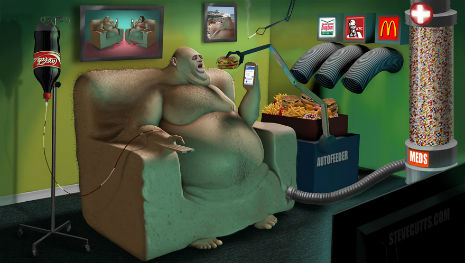
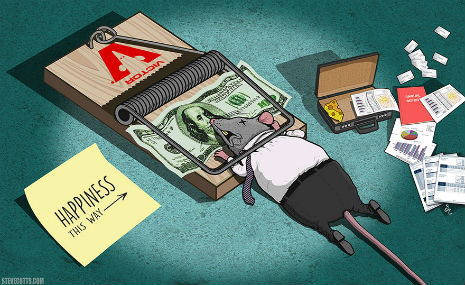
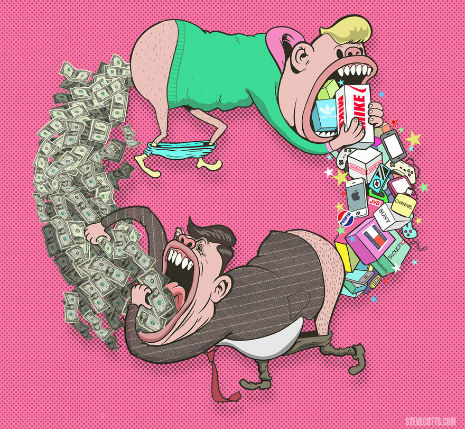
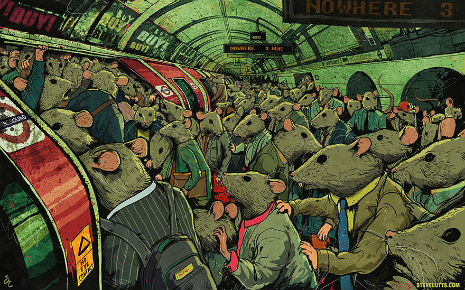
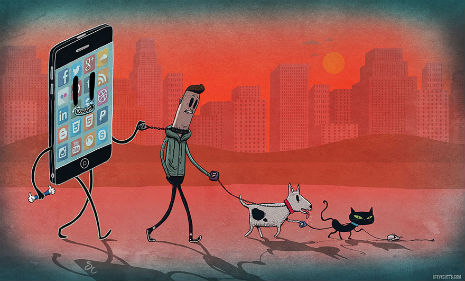
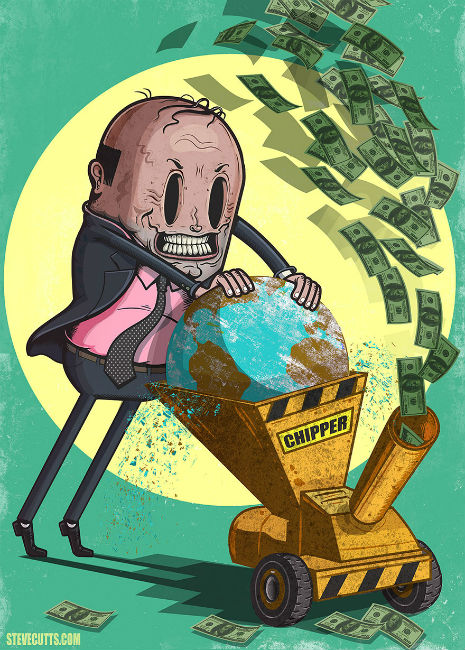
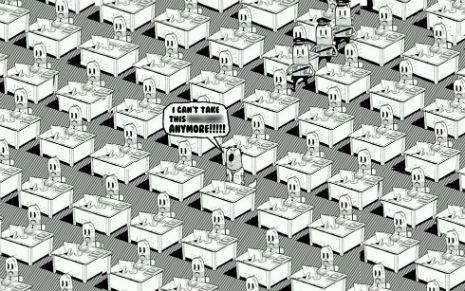
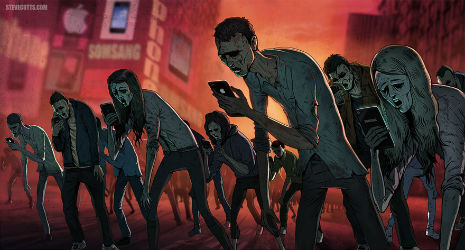
The Sad Truth: Nauseatingly profound illustrations of what the world is turning into

From Tara McGinley at Dangerous Minds:


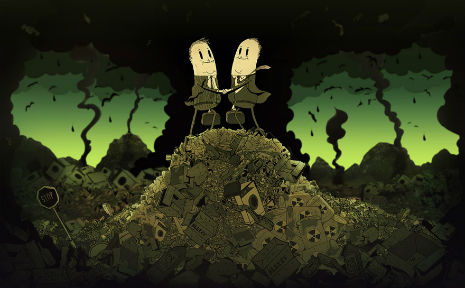
Everything that’s bleak about the modern world is wrapped-up like a perfect, little package with these illustrations by London-based artist and animator, Steve Cutts. Rampant consumerism. Shitty jobs. Environmental devastation. Disinformation. Nonsense. Billionaire psychopaths. Overcrowded cities—all present and accounted for. We’ve featured Cutts’ work here on DM before with his dark animation about the current lives of ‘80s cartoon characters.

If a picture paints a thousand words, these pieces are Molotov cocktails for the mind.


via Bored Panda

Tuesday, September 1, 2015

FUCK GUNS:
"We’re now averaging more than one mass shooting per day in 2015"


from The Washington Post:

Aug. 26 is the 238th day of the year. And with the fatal shooting in Virginia today — in which a gunman shot himself after killing two reporters and wounding one more person — plus the shooting of four during a Minneapolis home invasion, the number of mass shooting incidents has risen to 247 for the year.
These numbers are compiled by the moderators of the GunsAreCool subreddit, a sarcastically named community that tracks gun violence in America. They define "mass shooting" as any single incident in which at least four people are shot, including the gunman. The tracker comes in for some criticism because its definition is broader than the FBI's definition, which requires three or more people to be killed by gunfire. But the broader definition is nonetheless a useful one, because it captures many high-profile instances of violence — like the recent Lafayette theater shootings — that don't meet the FBI's criteria.


Some gun rights advocates — like John Lott of the Crime Prevention Research Center — object that the broader definition includes a lot of gang killings and domestic disputes that the average person wouldn't necessarily consider a "mass shooting." But there's an uncomfortable assumption here that some crime victims' lives should be valued differently — or are less worthy of  attention — than others.
A more expansive definition of "mass shooting" underscores the extent to which firearms make it relatively easy to hurt large numbers of people in a very short time. With a gun, you're able to inflict bodily harm on a person once they're in your line of sight. With something like a knife or your hands, you need to get right up close to a person.
There's no easy fix to gun violence in this country. As gun rights proponents are quick to point out, municipalities with strict gun laws, like Chicago and D.C., see more than their fair share of gun crime. But it's nevertheless a fact that the level of gun violence we see in the U.S. is like nothing seen in other wealthy Western nations.

Monday, August 31, 2015

start the week correct:
Japan: Schooled about Stool
Osaka wows faecal-focused learners


this is insane.
While going to the toilet is often flushed aside as a crass topic for children's education, Osaka has warmly embraced the topic of toilet-tutelage, dazzling faeces-focused learners at the ‘Toilet? The exhibition is a faecal roll-coaster ride of stool-related information and attractions, giving guests the opportunity to slide down an over-sized toilet over three metres high, wear faecal-fashioned hats, and learn from singing, interactive toilets. People visiting the museum also get the chance to examine various types of excrement, both human and animal, in all their glorious shapes, sizes and smells.

Sunday, August 30, 2015

Welcome to Dismaland: A First Look at Banksy’s New Art Exhibition Housed Inside a Dystopian Theme Park

the official website of DismalLand

and this from from Colossal


WESTON-SUPER-MARE — Inside the walls of a derelict seaside swimming resort in Weston-super-Mare, UK, mysterious construction over the last month—including a dingy looking Disney-like castle and a gargantuan rainbow-colored pinwheel tangled in plastic—suggested something big was afoot. Suspicion and anticipation surrounding the unusual activity attributed to fabled artist and provocateur Banksy has reached a Willy Wonka-esque fervor. Well, if Banksy’s your bag, continue fervoring. If not, there’s more than a few reasons to continue reading.

The spectacle has since been revealed to be a pop-up art exhibition in the form of an apocalyptic theme park titled Dismaland (“The UK’s most disappointing new visitor attraction”) that will be open to the public for five weeks.


The event has all the hallmark details of a traditional Banksy event from a shroud of ultimate secrecy (the event area was plastered in notices designating it as filming location for a movie titled Gray Fox) to general themes of apocalypse, anti-consumerism, and anti-corporate messages. However there’s one major deviation: the emphasis of Dismalanded is largely on other artists’ work instead of Banksy himself.

So just what’s hidden inside the walls of this derelict seaside resort? A demented assortment of bizarre and macabre artworks from no less than 50 artists from around the world including Damien Hirst, Bill Barminski, Caitlin Cherry, Polly Morgan, Josh Keyes, Mike Ross, David Shrigley, Bäst, and Espo. In addition, Banksy is showing 10 artworks of his own.

Dismaland also has artworks by numerous artists featured here on Colossal over the last few years including pieces by Escif, Maskull Lasserre, Kate McDowell, Paco Pomet, Dietrich Wegner, Michael Beitz, Brock Davis, Ronit Baranga, and others. From the event’s official brochure:
Are you looking for an alternative to the soulless sugar-coated banality of the average family day out? Or just somewhere cheaper. Then this is the place for you—a chaotic new world where you can escape from mindless escapism. Instead of a burger stall, we have a museum. In place of a gift shop we have a library, well, we have a gift shop as well.

Bring the whole family to come and enjoy the latest addition to our chronic leisure surplus—a bemusement park. A theme park who’s big theme is: theme parks should have bigger themes…

This event contains adult themes, distressing imagery, extended use of strobe lighting, smoke effects and swearing. The following items are strictly prohibited: knives, spraycans, illegal drugs, and lawyers from the Walt Disney corporation.

In addition to art there are a few rides, completely impossible fair games, interactive artworks, random live performances and unexpected spectacles happening throughout the day. The entire exhibition is staffed by morose Dismaland employees who seem completely uninterested in being helpful or informative. Getting in requires an uncomfortably awkward NSA-esque screening, and even trying to find the exit required a near herculean effort.

I had the honor of helping curate a particularly fun part of Dismaland: a program of 24 short films shown on a massive outdoor cinema that will play on a loop day and night. Films include shorts by Santiago Grasso & Patricio Plaza, Kirsten Lepore, The Mercadantes, Ze Frank, Adrien M. & Claire B., Black Sheep Films, and Don’t Hug Me I’m Scared.

Dismaland is open to the public from August 22 through September 27th, 2015 and information about pre-booked and at-the-gate tickets is available here. There’s also a series of events including a show by Pussy Riot and Massive Attack on September 25th.

I think it goes without saying, but if you have the means, get to the UK.
-----------


I would love to go see this! - GEF

- This post originally was supposed to post last sunday, but there was a mix-up and it didn't go live till a few days later, so here's the rewind. Hope you enjoy it.