Showing posts with label Fela Kuti. Show all posts

Sunday, May 22, 2016

Fela Kuti’s jazzy, pre-Afrobeat party music

from Dangerous Minds


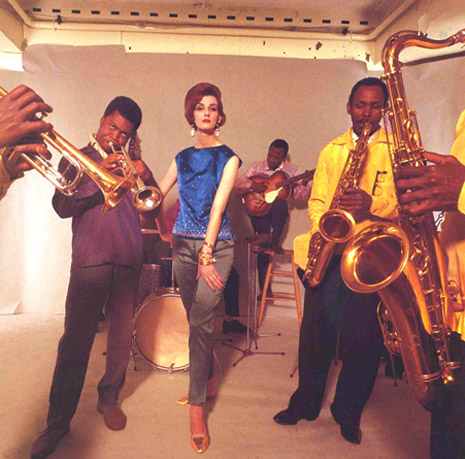
Before the completion of his political radicalization, the great Nigerian creator of Afrobeat music Fela Kuti was a purveyor of another acutely African music called Highlife. Highlife was, at the time, a dance music that married African percussion and Western-style horn and guitar sections, creating a specifically Nigerian/Ghanan jazz sound. Around the 1930s, the style spread through the continent, and a modernized version remains popular today. From The Encyclopedia of the African Diaspora:

In 1930, Sibo, a Kru man, established a brass band in Ghana that played both African and European music; in Nigeria about the same time, the Calabar Brass Band moved to Lagos. Bothe events established the roots of highlife music in the two countries. Generally, as the music and its accompanying highlife dance spread across West Africa, each region maintained its ethnic specificity by composing songs in the local language, and some bands, especially the multinational ones, created compositions in English or pidgin English. Typical highlife songs covered topics ranging from love to social, philosophical, and the occasional political commentary.

Several factors contributed to the decline of highlife music. One major factor was the wave of independence sweeping through colonial Africa in the 1960s and 1970s. As countries attained independence, they lost vital connections they once shared through the British colonial system. Each new nation turned inward, focusing on developing independently. Closely related to this were the political unrest in Ghana and Nigeria. The 1965 coup d’etat that swept President Nkrumah from power also stifled his favored projects, including the state patronage of highlife music. The Nigerian Civil War (1969-1971) had an even more devastating impact because many of its prominent musicians were located in Biafra where the war raged the most. Finally, there was the widely, internationally popular soul music with its strong appeal to the younger generation, and West African youths proved to be no exception. Suddenly, highlife was no longer hip; it slipped into the memory lane of the middle-aged.
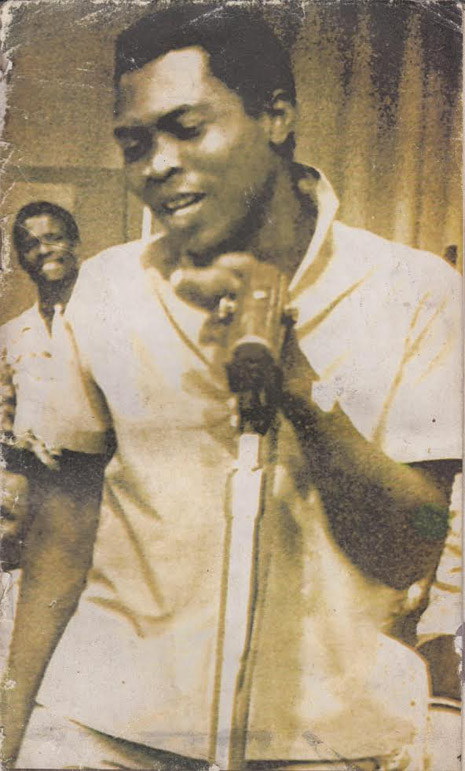
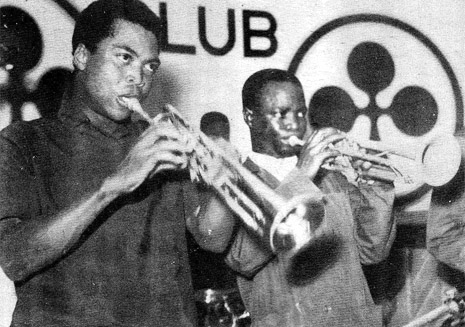


Photos circa 1966, give or take.

During the 1960s, after returning to Nigeria from his formal music studies in London, Fela led a Highlife band called Koola Lobitos. The band, like the music itself, was a mix of Africans and Westerners, and Kuti experienced success in the form. He was plentifully recorded, but little of that documentation made it to the west (an insanely thorough discography of those years can be seen at this link, revealing a massive trove of tantalizingly rare Fela records). The best record we’ve had of those years was The ‘69 Los Angeles Sessions. The tracks were recorded, like it says on the box, in 1969, in Los Angeles, under time duress as the band had been reported to the INS as being in the country without work permits!

But entirely legal or not, it was during his US visits that Kuti encountered the Black Power movement and books like Black Man of the Nile, which sped his already growing politicization, transforming him into the active revolutionary, wildly innovative and prolific musician, and controversial figure (he was also a prolific polygamist) who became famous in the ‘70s for the captivating, hypnotic chimera of Highlife, funk and free jazz he called Afrobeat.

Kuti’s Afrobeat phase was long and amply documented, lasting the rest of Kuti’s life (he passed in 1997 of AIDS-related Kaposi’s sarcoma)—in fact, all of his Western releases are legitimately streaming for free, if you’ve got any curiosity to sate—but new compilation from Knitting Factory of his Koola Lobitos years aims to fill in the gaps in Westerners’ knowledge of his early years. Highlife-Jazz and Afro-Soul (1963-1969) was released last week, and while the collection contains some overlap with the 1969 sessions release, plenty of it has been mostly unheard in the West. Check out the genre anthem “It’s Highlife Time” and the almost Stax-y “I Know Your Feeling.”


Given that we’re talking about Fela and this weekend is (ugh) Record Store Day, we’d be remiss if we neglected to mention one of this year’s pitifully few genuinely interesting RSD releases—a 10” single of “I Go Shout Plenty” b/w “Frustration.” The songs were recorded in 1976, for an intended 1977 release, but the Nigerian government’s infamous and shocking attack on Kuti’s communal home, during which his mother was killed by defenestration, waylaid that and other Kuti releases. Both songs eventually made their way onto releases in the 1980s.


Wednesday, February 12, 2014

Dozens of Fela Kuti albums available for free streaming

from Dangerous Minds:


A Metafilter user going by the wonderful handle “flapjax at midnite” has alerted the world to the existence of a Bandcamp page full of complete Fela Kuti LPs. 48 of them, in fact, which I don’t believe is even his complete discography.

If you’re unfamiliar, good lord take this opportunity! Fela (1938-1997) was an inestimably important African artist who began making music in the late ‘50s, and in the ‘60s pioneered a compelling fusion of psych-rock, funk, jazz, and traditional Nigerian music that he dubbed “Afrobeat.” His music dealt with themes of social justice, which, as he was a Pan-African and a Socialist, got him in major and repeated deep shit in the repressive milieu of Nigeria. The mid ’70s album Zombie, for example, was a blistering attack on the Nigerian military, whose response to the insult included fatally defenestrating his mother in a brutal raid on the Lagos commune in which he, his family, and his band lived. The 1989 release Beasts of No Nation—the recording that served as my introduction to his work—was a lengthy and stunning piece he wrote after being freed from a stint in prison on a politically motivated and trumped up currency smuggling charge.


Now, as heroic as his political struggles were, the man was not unproblematic. It’d be plain wrong to lionize him for his musical innovations and political engagement while leaving out that he was a polygamist who could be disturbingly misogynistic.

There are plenty of good entry points into Fela’s work, but among my favorites is the absolutely KILLER Live With Ginger Baker. The Cream drummer’s African sojurn is a story unto itself, and had no small impact on the development of that continent’s rock music in the ’70s.


Lastly, here’s some great footage from Catalonian television in the ‘80s, mixing interview material with a live concert, a combination which imparts a good sense of the man and his work.

Sunday, December 25, 2011

Happy Holidays!


BONUS: Pee-Wee's Christmas Special Full Episode Pee-Wee's Playhouse

Tuesday, September 13, 2011

Fela Kuti and band performing live in 1984

Fela is always fantastic in my book, an inspiration for all times. Dig him and his crew.

African funk magus Fela Kuti and band performing live at the Glastonbury Festival in 1984. The 70 minute film also features a candid interview where Fela talks about discovering his African identity in post-colonial, racist England and how this eventually led to his involvement in Nigerian politics. He also talks about how ideas of “democracy” inspired the song “Teacher Don’t Teach Me Nonsense”, an incredible, 40 minute-plus version of which closes the show:

Thanks, DangerousMinds

Sunday, May 15, 2011

Lagos Party: Two days in Nigeria
with Africa's biggest music stars

From DangerousMinds:


Dangerous Minds pal Rod Stanley, the editor of the mighty Dazed and Confused magazine, and photographer Chris Saunders recently made a trip to Nigeria and returned with a short film about the country’s vibrant musical scene:
At the end of last year, Dazed travelled to Lagos, Nigeria, for the third annual MTV Africa Music Awards, an event that had drawn performers from all over the continent, as well as a few international names such as Chuck D, Eve and Rick Ross. The real stars for me on this trip though were all the African performers that we spoke to, photographed and partied with while we were there – people like Uganda’s party boys Radio & Weasel, Nigeria’s first lady of R&B Sasha, Angola’s colourful kuduro crew Cabo Snoop, and the Democratic Republic of Congo’s fashion-mad Fally Ipupa.

Many of them told stories of how a lack of a royalty system and widespread music piracy are hampering the development of their music industry, and how they see themselves as a pioneers laying the groundwork for the generation that will follow them. This short film introduces all of the above and more, with some of their music videos and the insanely hectic atmosphere of the city of Lagos itself.
Photo gallery at Dazed Digital.

Tuesday, November 30, 2010

Fela Kuti - Music Is The Weapon

Another incredible short music Documentary!

I've mentioned Fela Kuti on this blog at least three times in the last year and a half. So indeed i'm a fan. It was just brought to my attention that this great eye opening documentary was now on line for everyone to see for free. I first saw it over 10 years ago on a VHS tape. Here it is for you now.

"This documentary provides a vivid look at the life, music and travails of Fela Anikulapo Kuti pre-1982 (when the movie was shot). A musical genius, Fela depicts the true image Nigeria,a country flowing with milk and honey, with the majority of its citizens living in poverty. A critic of the national government, he was a victim injustice - numerous beatings, false imprisonment, destruction of property(including but not limited to the burning of his houses and master recordings), and he always rose again! Needless to say that all of what he ranted about, then, are even more prevalent today. This is a 'must-watch' piece by all people who value freedom."

Thanks, Doug.

Tuesday, September 21, 2010

New set of Fela reissues out: "Zombie" (free MP3 download here!)

from our friend Xeni at BoingBoing

Knitting Factory Records this week released a third set of Fela reissues in an ongoing series. The portion out this week is titled Zombie, after Fela's well-known track of the same name, which you can download here as an MP4. Seriously, it's okay, we have permission! Go on and download that classic afrofunky track!

This set includes material originally released from 1976 through 1980.

This period of Fela's storied career saw his Kalakuta Republic increasingly under siege from the Nigerian government, and the clear rise of his vitriol as it fermented into scathing musical diatribes. (...)

Tracks such as "Authority Stealing" and the international hit "Zombie" are great examples of Fela's unfiltered outpouring of raw anger towards the oppressive Nigerian government. Interestingly, the 1976 album Upside Down features the vocals of Sandra Isadore - the American woman who introduced Fela to the Black Power Movement. Music Of Many Colours is collaboration with American vibraphonist Roy Ayers.

I would add that significantly, it was during this same period that Fela's Kalakuta Republic compound burned to the ground (February 18, 1977) after a thousand armed soldiers attacked its residents. During that assault, Fela's mother was thrown from a window by soldiers. She fell into a coma, and died two months later.

The titles that are being released are: Zombie (1976), Upside Down (1976), Music of Many Colours (1980), Stalemate (1977), Fear Not For Man (1977), Opposite People (1977), Sorrow, Tears and Blood (1977), Shuffering & Shmiling (1978), No Agreement (1977), V.I.P. (1979), Authority Stealing (1980).

Thursday, March 4, 2010

Fela Kuti on my Birthday


Yesterday was my birthday, and a family friend got us some great tickets to see a show on Broadway that I must admit is the only show i've ever wanted to see on Broadway, It was a perfect birthday event. If you don't know about Fela Kuti you must go and read and listen to everything you can about him. I finally got tuned in and turned on to him about 12 years ago. Just a few years after he died. He was incredible, and this tribute on Broadway was fucking great. My wife took these shots outside the theater before we went in to the matinee.

Below i'm going to try to find a few good samples of his music. Do yourself a favor, read on, and dig a bit into the crates yourself, I own at least a dozen of his albums.

1st Fela song I ever heard, got the album on my birthday from Ian Mackaye 12 years ago:


more cool stuff:


a favorite collaboration


I also was lucky enough to see his son Femi Kuti perform here in New York several times in the last decade. Inspired by some of the greatest shows in the last 20 years, I shot some great photos (a few below) of him that I included in the FUCK YOU TOO update. (which by the way is another of our titles that are only available direct now.)