Showing posts with label Earth. Show all posts
Showing posts with label Earth. Show all posts
Tuesday, January 29, 2019
MUST WATCH AND LISTEN:
Greta Thunberg, 15, Condemns the World’s Inaction on Climate Change
SHARE THIS WITH EVERYONE


Saturday, February 10, 2018
Monday, October 30, 2017
School of Life Monday :
Earthrise
Earthrise is the most famous photograph in the history of the world. It was taken by astronaut Bill Anders on the 24th December 1968, during the Apollo 8 mission and for the first time showed us what our planet looks like from space. Its vulnerability and beauty gave rise to a new global consciousness. We should take care to pin it to the fridge and apply its lessons to our lives.
Wednesday, August 17, 2016
One of the Best Explanations
For Why We Haven't Found Alien Life
from Gizmodo


So far, the only examples of sentient life we’ve found are right here on our own planet. It’s not for lack of trying, though—we’ve sent out spacecraft deep into our solar system and, so far, still remain alone. What if the problem isn’t where we are looking, though, but when?
A forthcoming study in Journal of Cosmology and Astroparticle looks at the possibility that life as we know it may not require a star similar to our sun but could emerge on planets orbiting much smaller, weaker stars. If we do allow for the possibility of life around non-sunlike stars, then it turns out that the universe is likely to be much more habitable in the distant future than it is today.
“It’s natural for us to think that we are the most common form of life, simply because that’s the only one that we know of,” lead author of the paper, Harvard University’s Avi Loeb, told Gizmodo. “Therefore, people assumed that being next to star like the sun was the most likely place for life to emerge.”
If you throw out the assumption that we need a sun-like star, though, then there’s a whole new class of stars—smaller and less powerful than the sun, but far more common—that suddenly start to look like good candidates. They’re called low mass stars.
Although these stars throw out less light and heat than our powerful sun, they still emit enough to create potentially habitable zones that could support liquid water on close-orbiting rocky planets. Not only are these types of stars more common in the universe than sun-like stars, but they also have much considerably longer lifespans of more than 1,000 times that of the sun.
Using this information, Loeb calculated that it was much more likely for life to have emerged in the distant future around one of those low mass stars than to have emerged in our time on a sun-orbiting planet like Earth.
“If you allow low mass stars to have life, just like we find here on Earth, then the probability of life emerging in the future 10 trillion years from now is one thousand times bigger to find life,” noted Loeb.
And yet, we are not orbiting a low mass star, trillions of years in the future. We are here and now, orbiting our Sun—and this is the only place we’ve ever found sentient life. That suggests an intriguing explanation. Perhaps we are simply searching way too soon.
In other words, we may be alone in the universe right now. But that’s only because we showed up long before life really started to get going. If this hypothesis is the correct one, then the real explosion of life in the universe hasn’t yet happened—and likely won’t happen for trillions of years after us.
There’s also a second, alternate explanation that would account for all the facts. Perhaps there’s something about low mass stars which, even in zones that are technically habitable, suppresses life from ever forming.
“We still keep the notion that, perhaps, we are at the center of the biological universe, that we are really the only ones or special in that regard, or in terms of intelligence,” Loeb said. “If it turns out that we are rare and early on in the game then that would be really surprising to me because, so far, whenever we look we have found that we are not special and we are not the center of the universe.”
Figuring out which of these two possibilities are correct hinges on the question of whether low mass stars can indeed support life. We won’t necessarily have to wait several trillions of years to find out, though. Instead, Loeb suggests that the answers could be found in the next decade or so.
By sampling the atmospheres of planets around nearby low mass stars, researchers can search for biomarkers that would suggest whether these planets are capable of supporting life. If they keep finding atmospheres devoid of signs that they are capable of supporting life, then it’s likely that something about these low mass stars—perhaps their frequent solar flares or some other attribute—renders the planets orbiting them sterile.
If, however, they find that these planets do appear able to support life then it may be that the lack of other life in the universe is simply because we showed up too soon to see any of it.
Sunday, July 5, 2015
11 Thought Provoking Images Show What Humans Are Really Doing To The Planet
from Collective Evolution:
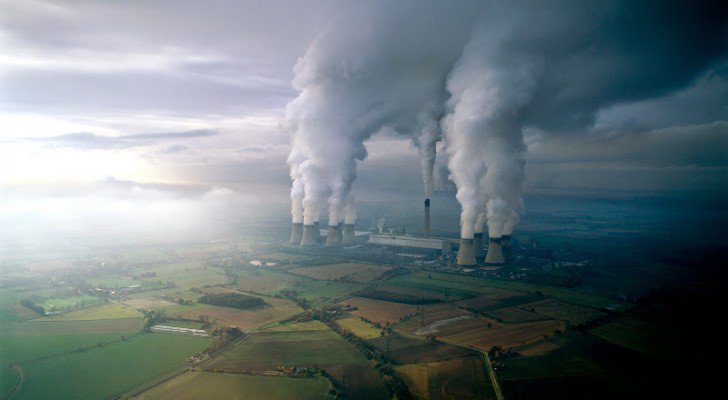
Go to school, get a job, pay your bills, and try to put yourself in a position to earn enough money to be able to live – this is our current human experience. But while we’re busy focusing on how to survive, our planet is being trashed at an exponential rate.
Is it possible to create a human experience where we don’t destroy the planet? Is it possible for everybody to have their basic necessities met without the use of money? Is it possible to create a “system” where money is not even needed? We believe so, but there still seems to be a harsh resistance to this type of thinking, despite the tremendous amount of options that exist to change our world.
For example, we could use hemp and other biodegradable non-toxic ingredients to manufacture our products – products that don’t harm the environment, but actually help to heal it. No more plastic, no more deforestation. Hemp can also be used to generate energy and boasts over 50,000 other uses, but this crop is still illegal in many places.
Again, hemp is just one small example out of many with big implications. There exist a number of problems that urgently need to be addressed, and the fact that a handful of corporations pretty much own the entire planet and all its resources doesn’t help, but things are changing, there is still good out there. Imagine if these corporations came together and pooled all of their resources to change the world. What a difference that would make. We need a shift in consciousness to save the planet, a network that is not driven by greed, fear, and ego, but one that is driven by a common goal: the betterment of our planet and the well-being of all life on Earth.
This is absolutely possible to achieve, and sometimes I feel that because this is such a simple idea in essence, people don’t believe it. It’s not uncommon for many to refer to economics, business, finance, the very system that enslaves us; it’s hard for many to imagine a world without money or to understand how that world would even function in practice. I believe this simply comes from an ignorance of solutions that are out there and the way our world works in general. Self-education is the key to making change happen.
I’ve said this before and I will say it again, working in this field for a number of years now and being interested in it for even longer, the progress we’ve made as a human race is astounding. Anybody who pays attention to this type of thing can clearly see that. At the same time, we have a long way to go, and there are many steps for the human race to take, but we are indeed heading in the right direction.
These are just a few pictures to get you thinking, and they’ve been floating around the internet for a while. We apologize if you’ve already seen them, but we definitely wanted to archive them on our website as they do provide some valuable food for thought.


Tuesday, February 17, 2015
What Would Happen To Earth If All Humans Disappeared?
From IFLScience.com (I Fucking Love Science)


Snap! You’re gone.
If this happened to every human on Earth at the exact same time, what consequences would ensue? This thought experiment not only explores the impact humanity has on the planet, but also the incredible resilience of nature.
So what would transpire? First of all, power plants would run out of fuel and electrical fences would cease to work, releasing nearly 1.5 billion cows, 1 billions pigs and 20 billion chickens into the wild. Roadways would turn into rivers, wood houses would catch on fire, concrete buildings would crumble, and yet, one thing would remain—our plastic
Tuesday, October 7, 2014
Into The Streets
(People's Climate March + Flood Wall Street)
Into the Streets (People’s Climate March + Flood Wall Street) from meerkatmedia on Vimeo.
Over 400,000 people took to the streets of Manhattan as a unified front against climate justice inaction. Diverse perspectives converge as a popular movement unfolds.
Directed by Meerkat Media Collective
meerkatmedia.org/
Monday, September 8, 2014
Tuesday, January 14, 2014
Some incredible time lapse photography from Earth
This film follows the ancient cycle of sunset, to night, to sunrise. A continuous loop of perpetual movement that has been unbroken since the dawn of time, and the only true constant in our lives.
[Below] Photographer Ron Risman taught a group of newbies how to create timelapse photography. Here are the dramatic results of the four-day workshop.
Moab, Utah is not only home to hundred's of natural arches, it's also home to incredibly dark skies - making it an ideal spot to capture footage of the night sky. In October 2013 a group of photographers got together for a workshop event called Timelapse Moab, where they learned how to capture timelapses and more importantly, timelapses of the night sky.
thanks, Boing Boing
Friday, November 8, 2013
NASA's Kepler spacecraft sends home data suggesting odds of space life are better than we thought
from our friend Xeni at Boing Boing

READ:

READ:
Dennis Overbye, in the New York Times: "Astronomers reported that there could be as many as 40 billion habitable Earth-size planets in the galaxy, based on a new analysis of data from NASA’s Kepler spacecraft."
Friday, December 14, 2012
40th anniversary of the Blue Marble photo

Last week was the 40th anniversary of the "Blue Marble," the iconic photo taken by the crew of the Apollo 17. More on the photo and its impact at LIFE.com and Wikipedia. Here's NASA's original caption:
View of the Earth as seen by the Apollo 17 crew traveling toward the moon. This translunar coast photograph extends from the Mediterranean Sea area to the Antarctica south polar ice cap. This is the first time the Apollo trajectory made it possible to photograph the south polar ice cap. Note the heavy cloud cover in the Southern Hemisphere. Almost the entire coastline of Africa is clearly visible. The Arabian Peninsula can be seen at the northeastern edge of Africa. The large island off the coast of Africa is Madagascar. The Asian mainland is on the horizon toward the northeast."Thanks, Boing Boing
Thursday, September 6, 2012
The profound beauty of the night sky
“At the dead hour of the night, when the world is hushed in sleep and all is still; when there is not a sound to be heard save the dead beat escapement of the clock, counting with hollow voice the footsteps of time in ceaseless round, I turn to the Ephemeris and find there, by calculations made years ago, that when that clock tells a certain hour, a star which I never saw will be in the field of the telescope for a moment, flit through and then disappear. The instrument is set; the moment approaches and is intently awaited—I look—the star mute with eloquence that gathers sublimity from the silence of the night, comes smiling and dancing into the field, and at the instant predicted even to the fraction of a second, it makes its transit and is gone. With emotions too deep for the organs of speech, the heart swells out with unutterable anthems; we then see that there is harmony in the heavens above; and though we cannot hear, we feel the ‘music of the spheres.’” — Matthew Fontaine Maury, in an 1849 presentation to the Virginia Historical Society. Maury was superintendent of the U.S. Naval Observatory.Thanks, BoingBoing
Read more about Maury and other retro scientists in Caren Cooper's guest posts at the Scientific American blogs.
Monday, August 20, 2012
What your hamburger really costs [VIDEO]
from Grist
THIS IS A VERY GOOD VIDEO, OBVIOUSLY I DON'T AGREE 100% WITH THE LINE "WE DON'T HAVE TO GIVE UP MEAT TO CHANGE OUR IMPACT" BECAUSE I THINK WE ALL SHOULD GIVE UP MEAT, BUT THIS IS AT LEAST A START FOR THOSE WHO STILL EAT MEAT.
The Hidden Cost of Hamburgers, the latest animated short from the Center for Investigative Reporting (CIR) — the folks who brought you last summer’s The Price of Gas — takes a big-picture look at the web of problems associated with industrial beef production. The video hits all the most important points, but what’s most noteworthy is the actual number the reporters arrived at when calculating the hidden — or externalized — costs of the average burger: $1.51 (or $72 billion for the 48 billion burgers Americans eat every year).
On the CIR website the video’s co-reporter Sarah Terry-Cobo explains how she and co-reporter/producer Carrie Ching arrived at this number with an environmental consulting firm called Route2 Sustainability. The annotation reads:We looked at a range of ways beef is produced and came up with an average that is close to how a cow would be raised in Fresno, Calif.: about 1 pound of greenhouse gases per ounce of beef, or about 6½ pounds of greenhouse gases per quarter-pounder. We looked at studies that showed the health costs of treating overweight people and associated illnesses, such as high blood pressure, stroke and diabetes — that’s about 75 cents per burger. Then we looked at how much water it takes to produce a pound of beef — that’s about 50 cents per burger. We also looked at the price of a ton of carbon — that’s remarkably small for the U.S., less than one-hundredth of a penny. But in the European Union, because it has a functioning carbon market, the price would be about a nickel per burger. Daniel Lopez Dias, the lead economist on the calculations, notes that these figures are conservative and don’t include effects from air and water pollution, effects of low wages that slaughterhouse workers receive and the high risk of injury they face, or general effects of urban sprawl.
THIS IS A VERY GOOD VIDEO, OBVIOUSLY I DON'T AGREE 100% WITH THE LINE "WE DON'T HAVE TO GIVE UP MEAT TO CHANGE OUR IMPACT" BECAUSE I THINK WE ALL SHOULD GIVE UP MEAT, BUT THIS IS AT LEAST A START FOR THOSE WHO STILL EAT MEAT.
Saturday, July 28, 2012
Views from the International Space Station
Every frame in this video is a photograph taken from the International Space Station. All credit goes to the crews on board the ISS.
I removed noise and edited some shots in photoshop. Compiled and arranged in Sony Vegas.
Music by John Murphy - Sunshine (Adagio In D Minor)
itunes.apple.com/us/album/sunshine-music-from-motion/id297702863
Image Courtesy of the Image Science & Analysis Laboratory,
NASA Johnson Space Center, The Gateway to Astronaut Photography of Earth
eol.jsc.nasa.gov
thanks, presurfer
Wednesday, February 15, 2012
The oldest thing in the world

The oldest living thing on Earth is a massive "meadow" of sea grass growing in the Mediterranean between Spain and Cyprus. It's somewhere between 100,000 and 200,000 years old and reproduces by cloning itself. Also, it's being killed by climate change.
thanks, BoingBoing
Tuesday, January 31, 2012
NASA Releases "Most Amazing High-Definition"
Photo of Earth, from Space

Earlier this week NASA released a so-called 'Blue Marble' image of Earth captured by the VIIRS instrument on NASA's most recently launched Earth-observing satellite, the Suomi NPP. The composite image above "uses a number of swaths of the Earth's surface taken on January 4, 2012." Larger sizes here (hello, new computer desktop image!)
Thanks to Xeni at BoingBoing
Monday, November 14, 2011
Probably The Most Beautiful Images I've Ever Seen Of Our Planet
Earth | Time Lapse View from Space | Fly Over | Nasa, ISS
Notes from the Vimeo page where the video was found:
Notes from the Vimeo page where the video was found:
Note: Still couldn't find any appropriate, reliable source describing
the technical setting for this footage. The same applies to any specific
information about the responsible person in charge of the photographs.
Please let me know, if you have any information, links or the like.
Time lapse sequences of photographs taken with a special low-light 4K-camera
by the crew of expedition 28 & 29 onboard the International Space Station from
August to October, 2011. All credit goes to them.
HD, refurbished, smoothed, retimed, denoised, deflickered, cut, etc.
Music: Jan Jelinek | Do Dekor, faitiche back2001
w+p by Jan Jelinek, published by Betke Edition
janjelinek.com | faitiche.de
Editing: Michael König | koenigm.com
Image Courtesy of the Image Science & Analysis Laboratory,
NASA Johnson Space Center, The Gateway to Astronaut Photography of Earth
eol.jsc.nasa.gov
Shooting locations in order of appearance:
1. Aurora Borealis Pass over the United States at Night
2. Aurora Borealis and eastern United States at Night
3. Aurora Australis from Madagascar to southwest of Australia
4. Aurora Australis south of Australia
5. Northwest coast of United States to Central South America at Night
6. Aurora Australis from the Southern to the Northern Pacific Ocean
7. Halfway around the World
8. Night Pass over Central Africa and the Middle East
9. Evening Pass over the Sahara Desert and the Middle East
10. Pass over Canada and Central United States at Night
11. Pass over Southern California to Hudson Bay
12. Islands in the Philippine Sea at Night
13. Pass over Eastern Asia to Philippine Sea and Guam
14. Views of the Mideast at Night
15. Night Pass over Mediterranean Sea
16. Aurora Borealis and the United States at Night
17. Aurora Australis over Indian Ocean
18. Eastern Europe to Southeastern Asia at Night
Thursday, June 16, 2011
Time Lapse Video Of The Earth's Rotation
Filmed at the European Southern Observatory's Very Large Telescope located in the Atacama Desert, Chile, by Stephane Guisard and Jose Francisco Salgado.
Friday, March 25, 2011
Incredible video of Aurora Borealis
Norwegian landscape photographer Terje Sorgjerd spent one week around Kirkenes and the Norway-Russia border, in -25 Celsius temperature, to make this magnificent time-lapse video of the Aurora Borealis.thanks, BoingBoing
Thursday, December 24, 2009
60 satellite images of Earth
(perhaps Santa's perspective tonight)
Webdesigner depot has 60 incredible satellite photos of Earth.
(from Boing Boing Via The Presurfer)
Looking at nature from different perspectives can create stunning compositions for your photographs. This couldn't be more true than when we look at our planet from outer space and appreciate the reality of its beauty from such an incredible and rarely seen perspective.Go here and check them out, and click on them to see really large with more info and great resolution.Dasht-e Kevir – The Dasht-e Kevir, or valley of desert, is the largest desert in Iran. It is a primarily uninhabited wasteland, composed of mud and salt marshes covered with crusts of salt that protect the meager moisture from completely evaporating.
Garden City, Kansas – Center pivot irrigation systems create red circles of healthy vegetation in this image of croplands near Garden City, Kansas.
Campeche – Named after the ancient Mayan Province of Kimpech, the state of Campeche comprises much of the western half of Mexico’s Yucatan Peninsula. Rivers in southern Campeche drain into the immense Terminos Lagoon, the entrance to which is protected by a long barrier island, Isla Del Carmen.
Coahuila, Mexico - This desolate landscape is part of the Sierra Madre Oriental mountain range, on the border between the Coahuila and Nuevo Leon provinces of Mexico.
Bogda Mountains - The Turpan Depression, nestled at the foot of China’s Bogda Mountains, is a strange mix of salt lakes and sand dunes, and is one of the few places in the world that lies below sea level.
The images in this compilation are from the Landsat 7 satellite and were created to introduce the general public to the Landsat Program. Various combinations of the eight Landsat 7 spectral bands were selected to create the vivid RGB composites.


(from Boing Boing Via The Presurfer)
Subscribe to:
Posts (Atom)


