Showing posts with label Environment. Show all posts

Tuesday, February 18, 2020

LIGHTNING: Globally
estimates range from 6,000 to 24,000 deaths per year

Africa, a Thunder and Lightning Hot Spot, May See Even More Storms
By Shola LawalFeb. 10, 2020


from the New York Times:
Africa is experiencing bigger and more frequent thunderstorms as global temperatures rise, according to researchers at Tel Aviv University.

The continent already has many of the world’s lightning hot spots, with storms that can be extremely destructive and, sometimes, deadly. This month, for example, a conservation group reported that four rare mountain gorillas had been electrocuted by lightning in Mgahinga National Park, Uganda. In a calamitous episode in 2011, a lightning strike on an elementary school in the same country killed 20 children and injured nearly 100.

Mass casualties like that are rare. But meteorologists wondered at the time whether thunderstorms were becoming more common in Africa in the era of climate change.

The answer, according to the new research, published in January in the American Meteorological Society’s Journal of Climate, is yes. An increase in temperatures in Africa over the past seven decades correlates with bigger and more frequent thunderstorms, the researchers found.

If the finding holds up, that could mean more fatalities and more economic damage. “Lightning is the No. 1 killer when we talk about weather in tropical countries,” said Colin Price, professor of Atmospheric Sciences at Tel Aviv University and the study’s lead author.

There is no organized data for lightning casualties that covers all of Africa, but a 2018 study of eight countries put the number of deaths at about 500 per year. Globally, estimates range from 6,000 to 24,000 deaths per year.

Africa faces elevated risk for reasons that go beyond the relatively high frequency of storms on the continent.

Poor urban design and infrastructure, for example, can worsen flooding during heavy storms, according to Alistair Clulow, a professor of agrometeorology at the University of KwaZulu-Natal in Durban, South Africa. That, in turn, can make lightning strikes more deadly because water conducts electricity.

Rural communities also face risks. Farmers and herders work in the open, which makes them more vulnerable during storms. Houses in rural areas often lack plumbing or wiring that can act as grounding against lightning strikes.

Global data on the economic impact of thunderstorms is patchy, but a 2008 assessment by the National Lightning Safety Institute in Louisville, Colo., placed the annual costs in the United States at $5 billion to $6 billion. That includes forest fires and damage to structures from lightning strikes, and flooding from heavy rains.

Dr. Price and his co-author, Maayan Harel, looked at 2013 thunderstorm data from the World Wide Lightning Location Network, determined which climate-related variables had the most influence on storms and then used those variables to build a model that created a simulated history of thunderstorm activity over Africa from 1948 to 2016.

The project took seven years. Their next study will look at thunderstorms in Southeast Asia, another tropical hot spot.

Because of data limitations and differing methodologies, there is no consensus, for now at least, on how climate change will affect thunderstorms, or whether more thunderstorms would necessarily mean more lightning strikes.

A study in Nature Climate Change in 2018, for instance, forecast a decrease in lightning as the world warms. One of the authors of that paper, Declan L. Finney, a meteorologist at the University of Leeds, said it was important to keep an open mind about how predictions could change as scientists refined their methods.

“There’s still a lot of uncertainty, but this work is useful in contributing to that discussion,” Dr. Finney said of the new study.

Researchers agree, though, that simple measures like developing systems to warn people of impending thunderstorms and installing grounding systems in buildings could go a long way in avoiding deaths and injuries. Thunderstorm patterns can’t be changed, Dr. Price said, “but we can give people protection.”

go to original article for links.

Tuesday, May 14, 2019

Bill Nye driven to F-bomb rant by climate change
'The planet is on fire': [video]

from The Guardian:The beloved science educator and children’s show host appeared on Last Week Tonight to help explain carbon-pricing
Bill Nye is done messing around. Look out, because while you might not typically associate angry talk with the normally-mild-mannered “Science Guy” Nye, when it comes to the threat of global climate change, he has – understandably, perhaps – lost his patience. And how.

The beloved science educator and television personality, best known for his children’s program Bill Nye the Science Guy, appeared on Last Week Tonight with John Oliver on Sunday in a segment on the plan to fight climate change, and started throwing the F-word about – a lot. (The plan is sponsored by the US House of Representatives’ Alexandria Ocasio-Cortez and the longtime environmental advocate and Senator Ed Markey, and is known as the Green New Deal.)

The non-binding resolution, as Oliver pointed out in the segment, has been especially polarizing, and is regularly ridiculed in bad faith by Republicans, despite the scale of the climate-based issues it merely suggests might be a good idea to address, such as carbon-pricing.

In a short bit, Nye appears to explain why that concept might help.

“When something costs more, people buy less of it,” Nye says in a makeshift science lab, cutting to the chase. He goes on to explain why burning less fuel in our cars or burning less coal might help prevent fires, floods, and crop failures. And then he says, because Oliver is a “42-year-old man who needs his attention sustained with tricks, here’s some fucking Mentos in a bottle of Diet Coke”, an experiment with mints and soda that appears to delight the host.

After explaining the idea being carbon taxes, and the difficulty politicians have getting people to accept the idea of a new tax, Nye returns for another experiment to cut through all the talk.

“By the end of this century, if emissions keep rising, the average temperature on Earth could go up another four to eight degrees,” Nye says, losing his patience. “What I’m saying is the planet is on fucking fire,” he says while taking a torch to a globe.

“There are a lot of things we could do to put it out. Are any of them free? No, of course not. Nothing’s free, you idiots. Grow the fuck up. You’re not children any more. I didn’t mind explaining photosynthesis to you when you were 12. But you’re adults now, and this is an actual crisis, got it? Safety glasses off, motherfuckers.”


Sunday, April 28, 2019

SUNDAY SERMON:
To stop global catastrophe,
we must believe in humans again

from The Guardian:by Bill McKibben

We have the technology to prevent climate crisis. But now we need to unleash mass resistance too – because collective action does work
Because I am concerned about inequality and about the environment, I am usually classed as a progressive, a liberal. But it seems to me that what I care most about is preserving a world that bears some resemblance to the past: a world with some ice at the top and bottom and the odd coral reef in between; a world where people are connected to the past and future (and to one another) instead of turned into obsolete software.

And those seem to me profoundly conservative positions. Meanwhile, oil companies and tech barons strike me as deeply radical, willing to alter the chemical composition of the atmosphere, eager to confer immortality.

There is a native conservatism in human beings that resists such efforts, a visceral sense of what’s right or dangerous, rash or proper. You needn’t understand every nuance of germline engineering or the carbon cycle to understand why monkeying around on this scale might be a bad idea. And indeed, polling suggests that most people instinctively oppose, say, living forever or designing babies, just as they want government action to stabilise the climate.

Luckily, we have two relatively new inventions that could prove decisive to solving global warming before it destroys the planet. One is the solar panel, and the other is the nonviolent movement. Obviously, they are not the same sort of inventions: the solar panel (and its cousins, the wind turbine and the lithium-ion battery) is hardware, while the ability to organise en masse for change is more akin to software. Indeed, even to call nonviolent campaigning a “technology” will strike some as odd. Each is still in its infancy; we deploy them, but fairly blindly, finding out by trial and error their best uses. Both come with inherent limits: neither is as decisive or as immediately powerful as, say, a nuclear weapon or a coal-fired power plant. But both are transformative nonetheless – and, crucially, the power they wield is human in scale.

Before we can best employ these technologies, we need to address the two most insidious ideas deployed in defence of the status quo. The first is that there is no need for mass resistance because each of us should choose for ourselves the future we want. The second is that there is no possibility of resistance because the die is already cast.

Choice is the mantra that unites people of many political persuasions. Conservatives say, “you’re not the boss of me”, when it comes to paying taxes; liberals say it when the topic is marijuana. The easiest, laziest way to dispense with a controversy is to say: “Do what you want; don’t tell me what to do.”

If “let anyone do what they want” is a flawed argument, then “no one can stop them anyway” is an infuriating one. Insisting that some horror is inevitable no matter what you do is the response of those who don’t want to be bothered trying to stop it, and I’ve heard it too often to take it entirely seriously.

I remember, for instance, when investigative reporters proved that Exxon had known all about global warming and had covered up that knowledge. Plenty of people on the professionally jaded left told me, in one form or another, “of course they did”, or “all corporations lie”, or “nothing will ever happen to them anyway”. This kind of knowing cynicism is a gift to the Exxons of the world. Happily, far more people reacted with usefully naive outrage: before too long, people were comparing the oil giants with the tobacco companies, and some of the biggest cities in the US were suing them for damages. We don’t know yet precisely how it will end, only that giving them a pass because of their power makes no sense.

Innovation doesn’t scare me. I think that if we back off the most crazed frontiers of technology, we can still figure out how to keep humans healthy, safe, productive – and human. Not everyone agrees. Some harbour a deep pessimism about human nature which I confess, as an American in the age of Donald Trump, occasionally seems sound.

Of all the arguments for unhindered technological growth, the single saddest (in the sense that it just gives up on human beings) comes from the Oxford don Julian Savulescu. In essence he contends that, left to themselves, democracies can’t solve climate change, “for in order to do so a majority of their voters must support the adoption of substantial restrictions on their excessively consumerist lifestyle, and there is no indication they would be willing to make such sacrifices”. Also, our ingrained suspicion of outsiders keeps us from working together globally. And so, faced with the need to move quickly, we should “morally bio-enhance” our children or, more likely, use genetic engineering, so they will cooperate.

I hope Savulescu seriously underestimates the power of both technology and democracy – of the solar panel and of nonviolence. I believe we have the means at hand to solve our problems short of turning our children into saintly robots – which, in any event, wouldn’t do a thing to solve climate change, given that by the time these morally improved youths had grown into positions of power, the damage would long since have been done. And I’m convinced Savulescu is wrong about people’s selfishness presenting the main obstacle to solving climate change: around the world, polling shows that people are not just highly concerned about global warming, but also willing to pay a price to solve it. Americans, for instance, said in 2017 that they were willing to see their energy bills rise 15% and have the money spent on clean energy programmes – that’s about in line with the size of the carbon taxes that national groups have been campaigning for.

The reason we don’t have a solution to climate change has less to do with the greed of the great, unengineered unwashed than with the greed of the almost unbelievably small percentage of people at the top of the energy heap. That is to say, the Koch brothers and the Exxon execs have never been willing to take a 15% slice off their profits, not when they could spend a much smaller share of their winnings corrupting the political debate with rolls of cash. If you wanted to “morally enhance” anyone, that’s where you’d start – if there are Grinches in need of hearts, it’s pretty obvious who should be at the front of the line.

But let’s not win that way. Let’s operate on the assumption that human beings are not grossly defective. That we’re capable of acting together to do remarkable things.

• Bill McKibben is an envorinmentalist, author and journalist

This is an edited extract from Falter: Has the Human Game Begun to Play Itself Out? by Bill McKibben

Tuesday, April 2, 2019

Impossible Whopper


from CNN:
Burger King is testing out an Impossible Whopper. This is why
New York (CNN Business)Burger King has a plan to bring in new customers and encourage existing ones to buy more often: Vegetarian Whoppers.

The burger chain announced on Monday that it is testing out Impossible Whoppers, made with plant-based patties from Impossible Foods, in 59 locations in and around St. Louis. If all goes well, Burger King will roll out the Impossible Whopper nationally.

With the Impossible Whopper, Burger King hopes to "give somebody who wants to eat a burger every day, but doesn't necessarily want to eat beef everyday, permission to come into the restaurants more frequently," Chris Finazzo, president of Burger King North America, told CNN Business. It's also a way to encourage vegan and vegetarian eaters to check out Burger King.

The chain has been trying to figure out a way to add a plant-based burger option to its menu for about a year, Finazzo said.

"There's a lot of interest in plant-based burgers," he noted.


Going meatless provides health benefits. The Impossible Whopper has slightly fewer calories than the original, beef-based Whopper, and is very low in cholesterol and has zero trans fats.

"What [customers] don't want to give up on is flavor," Finazzo said.

The Impossible Whopper is supposed to taste just like Burger King's regular Whopper. Unlike veggie burgers, Impossible burger patties are designed to mimic the look and texture of meat when cooked. The plant protein startup recently revealed a new recipe, designed to look and taste even more like meat. That version is being used in Burger King's Impossible Whoppers.

Other fast food and fast casual items are also appealing to eaters with dietary restrictions or preferences. Taco Bell said in January that it's testing out a vegetarian menu board in stores, and Chipotle (CMG) recently expanded its line of diet-based bowls to include vegan and vegetarian options. "Lifestyle bowls" launched earlier this year with Whole30 and double protein meals in addition to the keto and paleo bowls.

Those promotions highlight items already on the menu at Taco Bell and Chipotle. The Impossible Whopper is new, and it costs more to consumers and to the restaurant. Buyers will pay about $1 more for an Impossible Whopper than a regular Whopper, Finazzo said, which will "more than offset the cost" of the Impossible protein.

Impossible products are served at nearly 6,000 US restaurants — including White Castle and Fatburger locations — right now, but the Burger King partnership is a "milestone" for the company, said Impossible Foods COO and CFO David Lee.

"Burger King represents a different scale," he said. Lee noted that as the company matures, it should be able to reduce costs for clients like Burger King.

"The only thing we need to be affordable and at scale versus the incumbent commodity business is time and size," he said.

Friday, February 8, 2019

A Huge Climate Change Movement Led By Teenage Girls Is Sweeping Europe. And It’s Coming To The US Next.

from Buzzfeed:
Students are going on strike around the world to demand action on climate change, in a movement led almost entirely by teenage girls.

LONDON — A huge student protest movement led almost exclusively by teenage girls and young women is sweeping Europe, and it's on the brink of breaking through in the US.

So far this year, tens of thousands of high school–age students in Belgium, Germany, and Sweden have boycotted class and protested against climate change. The loose movement’s inspiration, a 16-year-old girl who began a solitary picket last year outside the Swedish Parliament in Stockholm, has compared the protests to the March for Our Lives movement organized by the Parkland teens in the wake of a shooting at their school that left 17 dead.

In the latest mass climate strikes, large crowds took to the streets in The Hague on Thursday, in the largest such protest in the Netherlands so far. The teens leading the climate strike across the border in Belgium were in Leuven, the country’s eighth-largest city, where they told BuzzFeed News they had 12,000 people on the streets in one of many actions across the country.

A climate march last weekend in the Belgian capital, Brussels, drew more than 100,000 people, and one of the country’s environment ministers resigned this week after falsely claiming intelligence services had told her the protests were a plot against her.

The protests are injecting a new urgency into the debate around climate change, and calling attention to a lack of action by governments. They are also a sign of the new political power of young women, especially in Europe. Climate strikes have also been organized by students in Australia, and US organizers are planning to participate in an international day of action on March 15.

Jamie Margolin, the 17-year-old founder and executive director of Zero Hour, a group working on the March 15 protest in the US, told BuzzFeed News that climate activism has given young women like her a chance to be heard.

“There aren’t very many spaces that I can be in charge of, and what I’m going to say is going to be heard,” Margolin said. Her group is led largely by young women of color, which she said should come as no surprise, because people who are already vulnerable are going to be disproportionately hit by climate change. A 2014 report by the World Health Organization outlined that women are more likely to be harmed in the kinds of natural disasters made more likely by global warming, bear greater responsibility for getting access to water, energy, and other basics of domestic life, and often are shut out of opportunities when resources decline.

“If you’re a victim of a system of oppression, you’re more affected by the climate crisis — that goes for women,” she said. “Nobody is going to hand us this. We have to step up and raise our voices.”


Some of the most dramatic protests have come in Belgium. For the past four Thursdays, mass walkouts by students have taken place, and at the heart of those actions is a 17-year-old called Anuna De Wever.

De Wever and her best friend, Kyra Gantois, filmed a video and posted it online; they called on students to protest in early January. They expected only a handful of people to turn up, but were stunned to find a crowd of around 3,000. The protests have now grown as large as 30,000 on Thursdays across the country, with even larger protests on the weekend.

“When we started it, Kyra and me, we thought it would be just 20 people,” De Wever said in a phone interview with BuzzFeed News from her home in Antwerp. “I’m so thankful to my generation that they really care about it.”

De Wever was inspired to act after seeing the video of another teenager, Greta Thunberg from Sweden.

Thunberg was 15 when she launched a solitary protest last September by boycotting school every Friday and picketing in front of the Swedish Parliament to demand the country meet obligations under the Paris climate accords.

Thunberg, who has Asperger's syndrome, has become a celebrity since. She addressed global climate talks last December, the World Economic Forum in Davos in January, and has given her own TED Talk. She has an Instagram with more than 250,000 followers where she posts pictures of world leaders, protests, and her dog. From the very beginning, she called for young people to follow her example.

“We are on a school strike for the climate. … We urge everyone to do the same wherever you are,” she said in the video about her climate strike that first popularized the protests in September. “Sit outside your Parliament or local government building until your nation is on a safe pathway to a below two-degree warming target.”

De Wever told BuzzFeed News that as well as Thunberg’s video, two things happened this winter that made her feel like she had to take action: The first was Belgium’s decision not to embrace ambitious steps to cut carbon emissions in December. The second was the realization that she would not be 18 before the spring elections in both Belgium and for the Parliament of the European Union. By the time an election came where she would actually have a say, the chance to rein in climate change could be almost gone forever.

The latest report from the Intergovernmental Panel on Climate Change, released last October, said the world would see catastrophic impacts from climate change, such as rising seas and coral reefs dying, even if countries managed to limit warming to just 1.5 degrees Celsius, which is the most ambitious target under the existing climate accords. The report also said countries needed to act even faster than they’ve previous agreed to.

This seems basically impossible especially as the US, one of the largest emitters of greenhouse gases, is actually increasing its emissions. President Donald Trump has rolled back many climate directives and policies, as well as vowed to withdraw the US from the Paris agreement.

It’s shocking, De Wever said, that adults should have to be reminded by high school students that they’re making decisions that will shape their entire lives.

“Your political games, they’re very funny and all, but you’re the influences of our future,” she told BuzzFeed News. She said the protests, now in their fifth week and drawing tens of thousands in cities across Belgium, have given her a voice that’s “better than voting.”

Her protests have met a considerable backlash; there have been death threats online now being investigated by police, her mother told BuzzFeed News. (In a lengthy Facebook post, Thunberg wrote this month that she had seen “enormous amounts of hate” about her.)

One of Belgium’s environment ministers, Joke Schauvliege, claimed the country's intelligence service had told her the protests were a “setup” and not “spontaneous actions of solidarity with our climate.” Schauvliege later resigned after admitting that the security services told her no such thing.

De Wever told BuzzFeed News that her concern about climate change grew directly out of gender advocacy. De Wever, who was assigned female at birth, identified as a boy throughout primary school, and now identifies as gender-fluid and prefers female pronouns. This experience made her comfortable challenging basic assumptions about the world that older people often treat as unchangeable, which she said is also true of the feeling that the steps to stop climate change are out of reach.

“Being gender-fluid by a young age ... how I see the world is a bit different,” she said. “I don’t look at the mainstream and what they think. I start to have my own values, own principles, and I think about what’s not going right in this world and what can I do and improve it instead of just closing my eyes to it — that really scares me.”

De Wever became passionate about climate change while attending a youth conference associated with the United Nations Commission on the Status of Women in 2016. There she learned that women often suffer disproportionately during natural disasters compared to men, and so were likely to be hurt the worst by climate change.

De Wever’s mother, Katrien Van der Heyden, told her about Thunberg’s video in their kitchen one evening last December. She watched it that night, and then announced the following morning she would make a video of her own with her best friend.

“I have to be very honest about this — at this point in time I didn’t think it would amount to anything,” said Van der Heyden, who now acts as her daughter’s de facto press secretary. “I thought, It’s a nice little project. She’s going to be making that little movie with her friends; it’s educational, much better that just staying at home watching Netflix — I underestimated my daughter.”

Van der Heyden, a 51-year-old sociologist who specializes in gender equity, said she also underestimated the whole young generation.

As far as she could recall, she said, “It’s the very first time in Belgium that a [mass movement was] started by two women and not about feminist rights.” When the protests drew tens of thousands, Van der Heyden said, she was stunned to see as many boys as girls in the crowds, and yet no one ever challenged the leadership of the female organizers.

“We, as women leaders, have been pushed aside by men. We were told we can only be leaders [on women’s issues],” she said. Van der Heyden said that when she sees boys in the crowd shouting her daughter’s name at the rallies, “Every time I’m moved to tears.”

“The whole mansplaining mechanism has really disappeared in that generation,” she said.

But the decision-makers on climate remain overwhelmingly men. When the UN touted a new focus on gender in the Polish climate talks last year, the best it could come up with was that “more than half” of the working groups hammering out the accord had “female representation of 38 per cent or more.”

These protests have been a shot in the arm to well-established environmental protests, said Luisa Neubauer, a 22-year-old from Berlin who led the call for the climate strike in Germany. She’d already been active in Germany’s pitched battle over coal mining, which recently has involved environmental activists occupying sites slated for coal mining in the ancient Hambach Forest.

Neubauer — whose Twitter bio reads, “not a German Greta. We are tens of Thousands” — said that the Thunberg’s example was inspiring to get more women to speak up in the German movement. Though Germany’s chancellor, Angela Merkel, is one of the world’s longest serving and most powerful political leaders, Germany actually lags behind many other European countries in gender equality.

“I’ve been raised in a world where the people leading were men,” Neubauer said. “And if you wanted to make it as a woman, then you had to either look like Angela Merkel or participate in Germany’s Next Top Model.”

Nike Mahlhaus, a 25-year-old activist with the German environmental group Ende Gelände (Land’s End), said her organization had battled for years to get women’s voices into the environmental discussion. It made a deliberate decision to make women spokespeople because media outlets constantly gravitated toward male activists. So often online, she said, she finds herself facing off online with older men whose views get accepted as common sense while she has to defend herself from attacks of being radical or unhinged.

“The men who comment there are the white middle-aged men who keep this system running by thinking that there is no other option,” Mahlhaus said. “It hurts to realize that they have the power to define what is radical and what is reasonable, what is appropriate and what is insane, who we have to respect and who not.”

In many places, these young women’s protests have been treated with outright scorn. Some of the ugliest came from Australian Prime Minister Scott Morrison and his cabinet — which has just five women out of 21 ministers — after a climate strike in November.

“Kids should go to school. … We do not support our schools being turned into parliaments,” Morrison spat during a speech in the House of Commons. Resource Minister Matt Canavan said kids who care about climate should focus on science class during an appearance on 2GB radio, adding, “The best thing you’ll learn about going to a protest is how to join the dole queue.”

Despite the huge scale of recent environmental protests in many countries, they have not produced anywhere near the levels of political attention of smaller protests dominated by older people. The Yellow Vest protests in France, a movement dominated by middle-aged activists who rallied in opposition to a hike in the tax on gasoline, are still driving French politics.

A French minister skipped out on the December climate talks in Poland because of the protests, and French President Emmanuel Macron announced he would reverse the tax, which was introduced to combat global warming. But an environmental protest last week drew more than 80,000 people to the streets of Paris alone, larger than the latest Yellow Vest protest. But it received little attention in French media.

“We really need to do something — the younger generation understand it more,” De Wever told BuzzFeed News. “We are called young and naive, but maybe being naive is what we need right now. We can look at the planet without being locked in the system.”

“This system is just wrong,” she said. “It discriminates against people. We’re not taking care of this planet.”


Wednesday, January 16, 2019

How do we get people to care about climate and energy?

from Treehugger

We can't. We have to paint a bigger picture. And we can learn from what the Well people are doing.

The Passivhaus Institut promotes "a building standard that is truly energy efficient, comfortable and affordable at the same time." It has been around since 1996. Regular readers will know that I am a big fan of it, but have often complained that energy efficiency isn't enough. There are now over 3,000 Passivhaus certified designers and consultants, and there are 4547 buildings in the Passivhaus Institute Database.

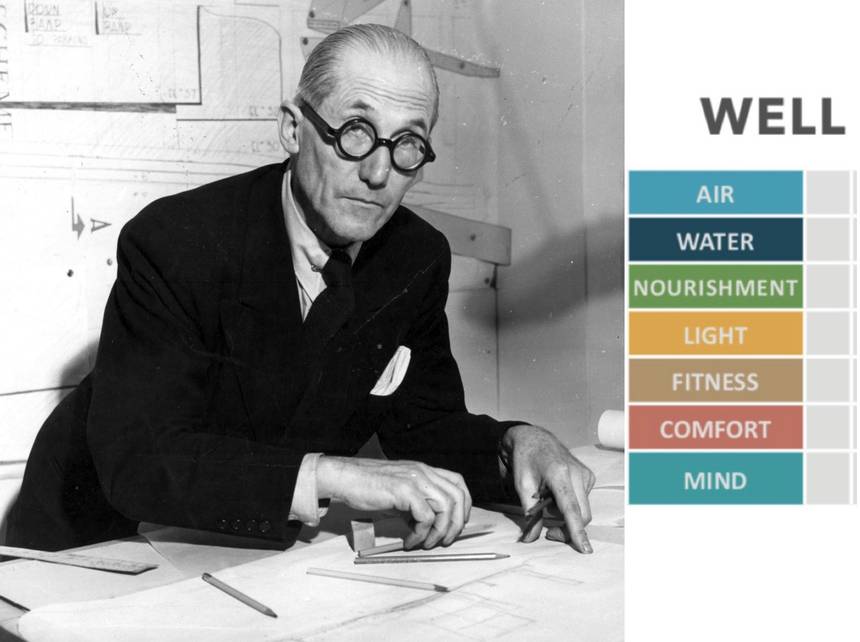
The Well Building Standard covers a bigger field of interest. It is "focused exclusively on the ways that buildings, and everything in them, can improve our comfort, drive better choices, and generally enhance, not compromise, our health and wellness."


The Well Building Standard started in 2014 and now has 6416 certified professionals and registrants. There are 220 million square feet in 1094 projects. It started with commercial space and is moving into residential real estate around the world. It does not even mention energy efficiency in the entire standard; it's all about health and wellness. Why is it growing like mad, when other building standards, like the Passivhaus, grow so much more slowly? Why, in a time when we have 12 years to cut our carbon footprints in half, do people care so much more about circadian lighting and healthy food?


We have noted many times before that it is hard to get people to deal with the serious issues of climate. I recently wrote that people don't want to talk about it, don't want to read about it, aren't going to vote to do anything about it. Paraphrasing Upton Sinclair, their lifestyle depends on them not understanding climate change. As the Shelton Group found in their survey, the biggest motivator for energy conservation was to save money, and the last was to preserve the quality of life for future generations. Given that energy prices are low, there is not a whole lot of incentive for people to spend serious money to burn less.

Dan Gartner, writing in the Globe and Mail, points out that "climate change doesn’t dominate elections. It doesn’t dominate headlines, airtime, and social media. It doesn’t dominate consumer choices." It is because of the way our minds work:
Scientists have informed me that when I drive my gasoline-powered car, the car emits carbon dioxide into the air, which makes the atmosphere an ever-so-slightly more efficient heat-trapping blanket. If I multiply my car’s emissions by one billion cars and thousands more greenhouse-gas sources and seven billion people and 150 years of industrialization, the total is big trouble. I know this. We all do.

But the last time I got in my car, drove and got out, there was no perceptible change. I suffered no harm. No one did. The same is true of the time before that. And the time before that.
He calls it the problem of “psychological distance.”

In its early days, the Well Standard had a few touches of pseudoscience, including vitamin-infused water and aromatherapy shower heads. They are gone now, but there are still many aspects of Well that are out there on the edge and are described as a bit flaky. They may be backed by real science but they are not exactly life and death issues. Or as Deepak Chopra says about Wellness Real Estate (separate from the Well Standard but based on the same principles):
So why do we separate the human organism from where we live? Pure air, pure water, acoustics, and Circadian lighting are the first steps. For years green building has focused on environmental impact. Not on the human biological impact. That is what we are doing here.
But those of us who actually care about environmental impact can learn from all this. In a presentation to Passivhaus Portugal recently, I looked at what features of the Well standard are already covered by Passivhaus and what features could be co-opted.

Air

Passivhaus has this one nailed, with its requirement for Heat Recovery Ventilation and filtering. Air quality is becoming a serious health crisis in cities and people are finally getting seriously concerned; in London, people are apparently moving out of town. Passivhaus could own this. Chie Kawahara described living through the recent California fires in her Passivhaus Midori Haus:

The tightly sealed enclosure, about 10 times tighter than conventionally built houses, keeps random air from coming in from random places. The heat recovery ventilator provides us with continuous filtered fresh air. Only during these extended bad air quality days do we need to pay special attention to our ventilation system to keep our indoor air clean.

Comfort

Comfort is complicated, but is a prime feature of Passivhaus, with its thick blanket of insulation and high-quality windows; when walls are as warm as the air then you do not feel cold. Elrond Burrell has been pitching this for years, writing in Passivhaus; Comfort, Comfort, Comfort, Energy Efficiency that the standard for airtightness (0.6 air changes per hour) makes the house completely draft-free. Since the windows are so good, designed to have interior surfaces that are within 5°F of interior temperature, there are no drafts off the glass like there are in most conventional houses. More: The three most important things about passive houses are comfort, comfort and comfort.

Noise

Again, those walls and windows significantly reduce exterior noise; Passivhaus designs are extremely quiet. As I noted after touring Jane Sanders' Passivhaus townhouse in Brooklyn,
For someone living in New York City, perhaps the biggest benefit of building to Passive House standards is that it is incredibly quiet inside. Bergen is a busy street, with buses and trucks going by at all hours. However the high-quality triple glazed windows plus the thick blanket of insulation really cut the noise; you could see buses go by and really could not hear a thing.

Light

Windows are a source of both heat loss and heat gain that have to be taken into account, so they are very carefully designed and placed in Passivhaus buildings. The important thing about Passivhaus quality windows is that you or your dog can sit right beside them and not feel cold. Juraj Mikurcik describes "the luxury of being able to sit next to the large glazed window without feeling uncomfortable."

But wait, there's more!

These are four very important issues that Passivhaus designers can pitch to clients, as well as energy savings. But Well looks at other categories that Passivhaus designers have to think about too. Water is obviously important. Fitness, Nutrition and even Mind, which covers things like beauty and biophilia.

The real lesson from Well is that people care more, as Chopra notes, about their own biological human impact than they do about environmental impact. Otherwise Well wouldn't be growing like mad and Gwyneth Paltrow wouldn't be a multimillionaire.

The Passivhaus Institute may base all their decisions on rigorous science, but people want more than just energy efficiency, and they don't actually understand comfort, and Passivhaus designers don't do a great job of explaining it. So while Passivhaus addresses serious issues, they are psychologically distant. Health and wellness, on the other hand, are very close.


Le Corbusier famously said that good architects borrow, and great architects steal. (He stole the phrase from Picasso). I believe that we have to do some serious stealing learning from the Well people, who recognize that people care a lot more about what is going on inside their homes and their bodies than they do about what is going outside. I used to say it was because we are selfish and self-centred, but Dan Gartner says otherwise;
So why is our concern about climate change so small relative to the threat? The problem is not that we are ignorant or selfish. The problem is how we think.
Gartner says that "learning to accept that may help save us." Perhaps it is time for those who care about climate and energy to recognize this, learn from it, and deliver more. To paint a bigger picture. There is a lot to learn from what the Well people are doing, they know their audience. I have been trying to get a handle on this since I started on TreeHugger and focused on promoting green building, but I am not sure we know ours.


go to original article to see more source information and a few more images.

Tuesday, December 18, 2018

Court cites Dr Seuss's The Lorax
in rebuke to US Forest Service

from The Guardian:


Federal court in Virginia says officials were trusted to ‘speak for the trees’ as it tosses out pipeline permit
A federal court in the US has cited the classic Dr Seuss children’s book The Lorax as it lambasted the US Forest Service for granting an energy company permission to build a natural gas pipeline across two national forests.

“We trust the United States Forest Service to ‘speak for the trees, for the trees have no tongues’,” the three-judge panel of the fourth US circuit court of appeals in Virginia wrote this week as it threw out the permit.

The government agency had granted permission for the Atlantic Coast pipeline to be built through the George Washington and Monongahela national forests and have a right of way across the Appalachian Trail, NPR reported.

The Lorax, written in 1971, chronicles the efforts of the titular small, furry creature to save a forest of “Truffula trees” from the capitalist predations of “the Once-ler”, who is seeking to chop them all down in the name of industry.

The book is seen as a clarion call for the environmental movement and has previously come under attack from the logging industry.

WATCH THE ORIGINAL "LORAX" TV BROADCAST :

Wednesday, October 24, 2018

I’m suing the U.S. government for causing the climate change crisis #YouthVGov

from Boing Boing:

My name is Kelsey Juliana and I’m suing the United States government for causing and accelerating the climate change crisis. I’m 22 years old and I’ve been a climate advocate for more than half of my life.

The constitution guarantees all Americans the right to life, liberty, and property. But how is anyone supposed to live a life of freedom amid a climate crisis? My own government is violating my constitutional rights by its ongoing and deliberate actions that cause climate change and it’s not right.

I, along with 20 other young people from around the country, filed a lawsuit against the federal government in 2015, called Juliana v. United States


We’re not asking for money. Instead, we’re asking the Court to order the government to develop and implement a National Climate Recovery Plan based on the best available science.

This plan should end the reign of fossil fuels and quickly decarbonize our atmosphere so that we can stabilize our climate system before it’s too late.

The longer we go without climate recovery, the more we risk allowing our climate to spiral completely out of control.


All of the expert witnesses in our lawsuit say that we are currently—already—in the “danger zone” and an “emergency situation” with only 1°C of planetary heating. Allowing the planet to heat up any more is not safe for our species, as well as so many others. And according to the Trump administration’s most recent environmental impact statement, the planet could heat as much as 7°F before the end of this century.

We cannot allow this to happen because we simply will not survive.

We originally filed our lawsuit against the Obama administration. That administration tried to have the case dismissed, but the judge ruled in our favor and found that we should be allowed to go to trial.

In 2017, the Trump administration inherited the lawsuit and it has done everything in its power, employing every conceivable tactic, to deny my fellow plaintiffs and me our right to present our case in court. This administration is so fiercely attempting to silence our voices.

At this point, every level of the federal judiciary—the U.S. District Court, the Ninth Circuit Court of Appeals, and the Supreme Court—has denied the Trump administration’s efforts to have the case thrown out. Yet it will not halt its efforts to avoid standard legal procedures and confront us, the nation’s youth, in court.

Just last week the Trump administration asked the United States Supreme Court to again circumvent the ordinary procedures of federal litigation and stop our case from going to trial.

Our trial is officially scheduled to begin on October 29, 2018 in Eugene, Oregon
, but it is currently on hold while the Supreme Court considers the Trump administration’s new request.

What we’re asking for could change everything.

My fellow plaintiffs and I want you with us as we fight for our right to be heard at trial to confront the United States government for knowingly violating our constitutional rights. Supporters will hold rallies in every state around the country on October 29, so if you can’t be with us in Eugene, find your local rally here.

Get regular updates by following @youthvgov on social media.

You can learn more about this case and get regular trial updates by tuning in to the No Ordinary Lawsuit podcast here.

Lastly, if you have the means, click here to make a donation to Our Children’s Trust, the nonprofit organization that supports our lawsuit and many others like it around the country.

Wednesday, October 17, 2018

Earth’s population is skyrocketing. How do you feed 10 billion people sustainably?

from The Washington Post:

The human population has reached 7.6 billion and could number 9 billion or 10 billion by midcentury. All those people will need to eat. A sobering report published Wednesday in the journal Nature argues that a sustainable food system that doesn’t ravage the environment is going to require dramatic reforms, including a radical change in dietary habits.

To be specific: Cheeseburgers are out, and fruits and veggies are in.

The 23 authors of the report, hailing from Europe, the United States, Australia and Lebanon, reviewed the many moving parts of the global food system and how they interact with the environment. The authors concluded that the current methods of producing, distributing and consuming food aren’t environmentally sustainable and that damage to the planet could make it less hospitable for human existence.

A core message from the researchers is that efforts to keep climate change at an acceptable level won’t be successful without a huge reduction in meat consumption.

“Feeding humanity is possible. It’s just a question of whether we can do it in an environmentally responsible way,” said Johan Rockström, an earth scientist at the Potsdam Institute for Climate Impact Research in Germany and a co-author of the study.

The report comes on the heels of a warning from the U.N. Intergovernmental Panel on Climate Change that global leaders need to take unprecedented action in the next decade to keep the planet’s average temperature from rising more than 1.5 degrees Celsius above preindustrial levels.

Global warming has typically been linked to the burning of fossil fuels, but food production is a huge and underappreciated factor, and the new report seeks to place food in the center of the conversation about how humanity can create a sustainable future.

“Everybody knows that energy has something to do with climate — we need to transform our energy system. There’s very few people who realize that it’s just as, and maybe more, important to transform our food system,” said Katherine Richardson, director of the Sustainable Science Center at the University of Copenhagen in Denmark. Richardson, who was not part of the team producing the new study, added, “the food system is broken and needs to be fixed if we have any hope of feeding 9 to 10 billion.”

Already, half the planet’s ice-free land surface is devoted to livestock or the growing of feed for those animals, Richardson said. That’s an area equal to North and South America combined, she said. Rain forests are steadily being cleared for cropland. And the demand for food is increasing faster than the population: Rising income in China and many other formerly impoverished countries brings with it a higher demand for meat and other forms of animal protein. Some 70 percent of the world’s fresh water is already used in agriculture, and the demand for that water will intensify.

The Nature report, titled “Options for keeping the food system within environmental limits,” contends that, without targeted changes, pressures on various environmental systems will increase 50 to 90 percent by 2050 compared with 2010. There’s no simple solution, the authors write, but rather “a synergistic combination of measures” will be needed to limit the environmental damage.

One obvious measure is a change in diets. Researchers say meat production, which includes growing food specifically to feed to livestock, is an environmentally inefficient way to generate calories for human consumption. Moreover, ruminants such as cows are prodigious producers of methane as they digest food, and methane is a potent greenhouse gas. The report says greenhouse-gas emissions from the global food system could be reduced significantly if people reduce red-meat consumption and follow a diet built around fruits, vegetables, nuts and legumes.

To limit greenhouse-gas emissions, “we won’t get very far if we don’t seriously think about dietary changes to a more plant-based diet,” said Marco Springmann, lead author of the report and a senior researcher at the Oxford Martin Program on the Future of Food.

He said that what is good for the planet is good for the eater. For most people eating a typical Western diet, eating less meat will generally mean better health.

The report is agnostic on whether the world should adopt genetically modified organisms (GMOs) in the food supply. The report also does not take a position on population growth. Although birthrates have declined dramatically in many countries — to levels far below the replacement rate — the global population continues to rise. A 2015 U.N. report estimated that the population would reach 9.7 billion by 2050.

Decades ago, the prospect of so many human beings crowding the planet inspired predictions of widespread famine. The “green revolution” in agriculture changed the equations. Still, the food is not evenly distributed. About 3 billion people are malnourished today and 1 billion of them suffer from food scarcity, according to Rockström.

At the core of this research is the argument that Earth has several limits, the “planetary boundaries,” that can’t be exceeded without potentially dire consequences. These boundaries — which involve factors such as climate change, loss of biodiversity, deforestation, atmospheric aerosols (smog), stratospheric ozone depletion and the supply of fresh water — define the “safe operating space” for humanity. Proponents of the hypothesis say that human civilization has thrived in the geological epoch known as the Holocene, covering a period of roughly 11,700 years since the end of the last ice age, but that damage to the environment could put humanity into an existential crisis.

“You can imagine a scenario in which contemporary society starts to unravel” because of degradation in the environment, said Will Steffen, an emeritus professor of Earth-system science at the Australian National University and a proponent of the planetary-boundaries hypothesis. “So it’s a long fuse, big bang.”

He noted that there is a movement in Australia to promote the consumption of kangaroo meat, since kangaroos are not ruminants and don’t have the same ecological footprint.

“It’s a gamier taste, but it’s also a much leaner meat. It takes more talent to cook it to make it easy to chew and digest,” he said, before quickly adding, “I don’t like the thought of the poor little guys getting shot.”
Read more:

Scientists: Human activity has pushed Earth beyond 4 of 9 ‘planetary boundaries’

Spaceship Earth: A new view of environmentalism

A former omnivore comes out as vegetarian


Saturday, June 2, 2018

Avoiding meat and dairy is ‘single biggest way’ to reduce your impact on Earth

from The Guardian

Biggest analysis to date reveals huge footprint of livestock - it provides just 18% of calories but takes up 83% of farmland

Avoiding meat and dairy products is the single biggest way to reduce your environmental impact on the planet, according to the scientists behind the most comprehensive analysis to date of the damage farming does to the planet.

The new research shows that without meat and dairy consumption, global farmland use could be reduced by more than 75% – an area equivalent to the US, China, European Union and Australia combined – and still feed the world. Loss of wild areas to agriculture is the leading cause of the current mass extinction of wildlife.

The new analysis shows that while meat and dairy provide just 18% of calories and 37% of protein, it uses the vast majority – 83% – of farmland and produces 60% of agriculture’s greenhouse gas emissions. Other recent research shows 86% of all land mammals are now livestock or humans. The scientists also found that even the very lowest impact meat and dairy products still cause much more environmental harm than the least sustainable vegetable and cereal growing.


The study, published in the journal Science, created a huge dataset based on almost 40,000 farms in 119 countries and covering 40 food products that represent 90% of all that is eaten. It assessed the full impact of these foods, from farm to fork, on land use, climate change emissions, freshwater use and water pollution (eutrophication) and air pollution (acidification).

“A vegan diet is probably the single biggest way to reduce your impact on planet Earth, not just greenhouse gases, but global acidification, eutrophication, land use and water use,” said Joseph Poore, at the University of Oxford, UK, who led the research. “It is far bigger than cutting down on your flights or buying an electric car,” he said, as these only cut greenhouse gas emissions.

“Agriculture is a sector that spans all the multitude of environmental problems,” he said. “Really it is animal products that are responsible for so much of this. Avoiding consumption of animal products delivers far better environmental benefits than trying to purchase sustainable meat and dairy.”

The analysis also revealed a huge variability between different ways of producing the same food. For example, beef cattle raised on deforested land result in 12 times more greenhouse gases and use 50 times more land than those grazing rich natural pasture. But the comparison of beef with plant protein such as peas is stark, with even the lowest impact beef responsible for six times more greenhouse gases and 36 times more land.

The large variability in environmental impact from different farms does present an opportunity for reducing the harm, Poore said, without needing the global population to become vegan. If the most harmful half of meat and dairy production was replaced by plant-based food, this still delivers about two-thirds of the benefits of getting rid of all meat and dairy production.

Cutting the environmental impact of farming is not easy, Poore warned: “There are over 570m farms all of which need slightly different ways to reduce their impact. It is an [environmental] challenge like no other sector of the economy.” But he said at least $500bn is spent every year on agricultural subsidies, and probably much more: “There is a lot of money there to do something really good with.”

Labels that reveal the impact of products would be a good start, so consumers could choose the least damaging options, he said, but subsidies for sustainable and healthy foods and taxes on meat and dairy will probably also be necessary.

One surprise from the work was the large impact of freshwater fish farming, which provides two-thirds of such fish in Asia and 96% in Europe, and was thought to be relatively environmentally friendly. “You get all these fish depositing excreta and unconsumed feed down to the bottom of the pond, where there is barely any oxygen, making it the perfect environment for methane production,” a potent greenhouse gas, Poore said.

The research also found grass-fed beef, thought to be relatively low impact, was still responsible for much higher impacts than plant-based food. “Converting grass into [meat] is like converting coal to energy. It comes with an immense cost in emissions,” Poore said.

The new research has received strong praise from other food experts. Prof Gidon Eshel, at Bard College, US, said: “I was awestruck. It is really important, sound, ambitious, revealing and beautifully done.”

He said previous work on quantifying farming’s impacts, including his own, had taken a top-down approach using national level data, but the new work used a bottom-up approach, with farm-by-farm data. “It is very reassuring to see they yield essentially the same results. But the new work has very many important details that are profoundly revealing.”

Prof Tim Benton, at the University of Leeds, UK, said: “This is an immensely useful study. It brings together a huge amount of data and that makes its conclusions much more robust. The way we produce food, consume and waste food is unsustainable from a planetary perspective. Given the global obesity crisis, changing diets – eating less livestock produce and more vegetables and fruit – has the potential to make both us and the planet healthier.”

Dr Peter Alexander, at the University of Edinburgh, UK, was also impressed but noted: “There may be environmental benefits, eg for biodiversity, from sustainably managed grazing and increasing animal product consumption may improve nutrition for some of the poorest globally. My personal opinion is we should interpret these results not as the need to become vegan overnight, but rather to moderate our [meat] consumption.”

Poore said: “The reason I started this project was to understand if there were sustainable animal producers out there. But I have stopped consuming animal products over the last four years of this project. These impacts are not necessary to sustain our current way of life. The question is how much can we reduce them and the answer is a lot.”


Saturday, May 12, 2018

How an overweight 40-year-old became a top ultra-athlete


After shortness of breath from climbing the stairs at home, Rich Roll, the author of "Finding Ultra," decided to change his lifestyle. Dropping 60 pounds in six months, this out-of-shape dad became an ultra-endurance athlete at 39.


Tuesday, January 23, 2018

China built the ‘World’s biggest air purifier’
– and it’s actually working

from Inhabitat

What has been called the world’s largest air purifier by its operators is now up and running in the Chinese city of Xian in Shaanxi province. The 100-meter (328 feet) tall tower has already improved the local air quality, lead scientist Cao Junji told the South China Morning Post, adding that it could prove to be a valuable tool in the country’s fight against urban air pollution. “The tower has no peer in terms of size … the results are quite encouraging,” he said. Greenhouses covering the size of half a soccer field surround the base of the tower, into which polluted air is pulled. The smog is heated in the greenhouse by solar energy, then rises through the tower, passing through several layers of cleaning filters.


Cao stresses that the results are only initial while further details will be released in the spring. A comprehensive scientific assessment of the tower’s effectiveness is also forthcoming. Nonetheless, what is known is promising. While there have been other similar smog-removing towers, many of which were powered by coal-fueled electricity, the Xian tower is unique in its very limited electricity needs. “It barely requires any power input throughout daylight hours. The idea has worked very well in the test run,” said Cao. While locals have marveled at the tower’s size, it is in fact a miniature version of smog-removing towers that Cao and his team hope to install throughout China’s dense, massive cities. The full-size version could reach as high as 500 meters (1,640 feet) while the surrounding greenhouses could cover nearly 30 square kilometers (11.6 square miles).


Via South China Morning Post

Saturday, January 6, 2018

Here's Why You Should Turn Your Business Vegan In 2018

from Forbes.com


No longer relegated to the fringes of society where for so long it was mocked for being ‘weird’ or ‘extreme’, veganism is going mainstream. Finally recognized for its positive impact on sustainability and animal welfare without the need to sacrifice taste or style, vegan living is starting to become the norm.

The continued proliferation of vegan and plant-based business stories and developments that have occurred during the past year demonstrate that this movement is just getting started in making its mark – and entrepreneurs are leading the way.

Here are some of the key reasons you should consider veganizing your business in 2018:

The numbers speak for themselves

Sales of plant-based food in the US went up by 8.1% during the past year, topping $3.1 billion, according to research carried out by Nielsen for the Plant Based Foods Association (PBFA) and the Good Food Institute.

Plant-based dairy alternatives are expected to represent 40% of the combined total of dairy and dairy alternative beverages within three years, up from just 25% in 2016, according to research firm Packaged Facts. The company predicts new types of dairy-free milks to find wider audiences in 2018, including barley, hemp, pea, flax and quinoa.

Vegan cheese has taken off in a big way, with the global market estimated to be worth just under $4 billion by 2024, growing at a compound annual growth rate of 7.6% from 2016 to 2024, according to a report by research firm Bharat Book.

The humble pea is revolutionizing the plant-based sector as global revenues of pea protein are estimated to be worth $104 million by 2026, according to Future Market Insights.

While plant-based milk sales grew 3.1%, cow’s milk sales declined 5% and are projected to drop another 11% through 2020, according to Mintel. Market Watch reports that Dean Foods, the largest supplier of dairy milk in the US, recently posted a third-quarter net income of just $1.4 million, down from $14.5 million in the same period a year ago. This downward trend is not confined only to the US: Australia’s largest supplier of dairy products, Murray Goulburn, announced a 22% drop in milk sales in the past financial year. Meanwhile Elmhurst, one of the longest-running dairies on the US east coast, decided in 2017, after 92 years, to cut its losses and switch to producing solely plant-based milks.

The egg industry is starting to feel the pinch too. Shares in Cal-Maine Foods, an egg producer since 1969 in Jackson, Mississippi in the US, saw its shares drop 7% in July this year, after the company reported its first annual loss in more than 10 years. CEO Adolphus Baker blamed the growth in popularity of egg alternatives.

Finally, the global meat substitutes market is expected to garner a revenue of $5.2 billion by 2020, registering a compound annual growth rate of 8.4% during the forecast period 2015-2020, according to Allied Market Research.

These key developments and players are signs that this market will continue to grow

Competition is heating up in the race to produce plant-based burgers that look, feel and taste like their animal-based counterparts, even to the point of ‘bleeding’ red juice. American startups Impossible Foods and Beyond Meat continue to lead the way. The Impossible Burger is currently served at more than 150 eateries in the US, while the Beyond Burger, whose investors include Bill Gates, Leonardo DeCaprio, Twitter co-founders Biz Stone and Evan Williams, and meat company Tyson Foods, is available in more than 5,000 grocery stores across the US as well as on menus at selected restaurants such as the Veggie Grill Chain. In December 2017, Beyond Meat released its Beyond Sausage which it claims mimics the taste and texture of pork, but with less fat and sodium and higher protein than traditional sausages. On the other side of the pond, three companies in the UK, two of which are backed by Gates, are working on bringing their vegan burgers to market. British startup Moving Mountains claims it will be the first to get its B12 Burger into stores there.

Hampton Creek continues to innovate with its plant-based versions of egg products, including mayonnaise and its newest release Just Scramble, a vegan egg made from mung beans which the company says saves at least 65% more fresh water than conventional egg products and emits 24% fewer greenhouse gases.

Vegan cheese brand Kite Hill secured $18 million investment from General Mills and is on a mission to have its products sold in the dairy cases in more supermarkets across the US

Miyoko’s Kitchen has rebranded to simply Miyoko’s, named after its founder, vegan cheese pioneer Miyoko Schinner. The company recently opened its new, larger premises in Petaluma, California after receiving $6 million from JMK Consumer Growth Partners, and will be ramping up its production in 2018.

According to CB Insights, at least seven of the 15 most well-funded food and beverage startups are plant-based.

‘Vegan butcher’ was named a top new job trend for 2017 by Time Money.

Plant-based fast food is on the increase. As well as McDonald’s rolling out a vegan burger in its stores in Sweden and Finland, vegan chains Veggie Grill, Plant Power Fast Food and by Chloe. opened more locations throughout 2017 and are set to do the same in 2018.

The ‘grab and go’ market in the UK saw cafĂ© chain Pret a Manger make its pop-up, plant-based Veggie Pret store in central London permanent, open a second location in east London and announce a third one for 2018. British department store chain Marks & Spencer introduced two vegan sandwiches, and iconic US plant-based meat brand Tofurky launched its range of four vegan sandwiches in the UK.

Daily Harvest, a New York-based subscription service specializing in frozen, plant-based, one-step-prep foods, secured $43 million investment from Lightspeed Venture Partners and VMG Partners who join existing celebrity investors Gwyneth Paltrow and Serena Williams.

Plant-based was noted by Organic Authority as the biggest trend at trade show Natural Products Expo West in Anaheim, California this year, while the UK held its first ever vegan trade show VegFestUK Trade at Olympia in London

Even animal agriculture industries are taking notice

Plant-based meat substitutes is one of the “six greatest ag challenges for 2018,” according to Chuck Jolley, the president of the Meat Industry Hall of Fame.

Germany’s agricultural minister Christian Schmidt called for a ban this year on the labeling of plant-based proteins as vegan ‘meat’. Schmidt has a problem with products with names such as ‘vegetarian schnitzel’ and ‘curry sausage’, arguing that they are “completely misleading and unsettle consumers”.

In the US the Dairy Pride Act, a bill introduced by Senator Tammy Baldwin of Wisconsin and Congressman Peter Welch of Vermont earlier this year, calls on the FDA to stop plant-based dairy alternatives from being labeled as ‘milk’.

Rather than resist the inevitable, smart animal agriculture businesses are getting in on the plant-based revolution by buying or investing in plant-based brands. Tyson Foods, the top US meat producer, increased its investment in Beyond Meat this year, after initially having taken a 5% stake. Canada’s largest meat distributor Maple Leaf Foods bought popular plant-based brands Field Roast and Lightlife Foods. Nestle acquired Sweet Earth Foods (which was founded by a former Burger King board chairman). Dean Foods struck an investment and distribution deal with plant-based milk and yoghurt startup Good Karma. Japanese pharmaceutical company Otsuka bought plant-based cheese brand Daiya. Danone, a multinational food company with a focus on dairy, completed its purchase of plant-based pioneer WhiteWave (becoming DanoneWave), and Saputo, Canada’s largest dairy processor, is on the lookout for an opportunity to buy a plant-based milk company.

In Denmark Naturli Foods created a plant-based minced meat which has been taken on by the country’s largest retailer Dansk Supermarked Group. The product, which translates as ‘Minced Veggie’, will be sold in the supermarket chain’s 600 stores in the new year. Meanwhile, Dutch meat company Zwanenberg Food Group, which has been in business since 1929, is shifting half its focus on to plant-based proteins with the aim of 50% of its turnover to come from non-meat products such as vegetarian snacks, soups and sauces.

International finance group Rabobank said that recent growth in plant-based and clean meat should serve as a “wake-up call to the animal protein sector” and encouraged the meat industry to invest in alternative proteins. Rabobank also estimates that within five years alternative protein could represent a third of protein demand in the EU.

Campbell Soup Company left the Grocery Manufacturers Association and joined the Plant-Based Foods Association and Walmart encouraged its suppliers to create more plant-based products.

Responding to these developments, Bruce Friedrich, executive director at the Good Food Institute, said: “The growth of the plant-based sector in 2017 exceeded even my optimistic projections. The news from the meat industry itself was especially encouraging and 2018 is sure to continue the accelerating growth of plant-based meat.”

But wait, it’s not just all about food

While the plant-based food sector is experiencing tremendous growth, interest in animal-free products is being piqued in other sectors too. Vegan fashion is cited as a major trend for 2018 in The Future 100 Report by global research firm J. Walter Thompson Intelligence. We’ve seen the creation of alternatives to leather made from pineapple waste, apple peels, mushrooms, kombucha and wine as well as the first biofabricated leather brand and vegan silk.

Luxury car manufacturers are responding to the demand for cruelty-free materials, with Tesla reported to have removed animal-based leather as an option for its seats and Bentley exploring alternative materials to leather to cater for high-wealth ethical consumers.

Joshua Katcher, instructor of fashion at Parsons The New School and founder of men’s fashionwear store Brave Gentleman in New York, is most excited about biofabrication. “This coming year 2018 will definitely be about celebrating visionary solutions to some of the fashion industry’s most calamitous impacts: animal skins and hairs,” he said. “I also think we’ll see a lot of innovation around mycelium (fungus) textiles from companies like Mycoworks and entirely new ways of making synthetics from recycled and biodegradable materials like 10XBeta’s recycled C02 polyurethane-leather and Mango Materials’ biopolyester made from bacteria.”

Beauty brands are removing animal products from their formulations and even condom makers are recognizing this growing market and making their products vegan. The Green Condom Club in Switzerland, Hanx, a luxury brand created by a female gynecologist in the UK, and Australian brand Hero Condoms, all launched this year

Next-level high-tech products include 3D printed vegan cheese, candies and pizza crusts.

It’s a brave new business world, one in which growing numbers of consumers will continue to demand sustainable and ethical products. If you’re about to start a business, it’s worth making your products vegan-friendly from the start. If you already have a business, consider veganizing it by removing any animal-based ingredients or components (this includes bee products, wool and silk). Going a step further by gaining certified vegan status from the Vegan Society (UK) or Vegan Action (US) will help to set your brand apart from those that merely pay lip service to ethics.

The plant-based revolution is here to stay. Make sure you don’t get left behind.

Katrina Fox is the founder of VeganBusinessMedia.com, author of Vegan Ventures: Start and Grow an Ethical Business and host of the Vegan Business Talk podcast.


Monday, October 30, 2017

School of Life Monday :
Earthrise

Earthrise is the most famous photograph in the history of the world. It was taken by astronaut Bill Anders on the 24th December 1968, during the Apollo 8 mission and for the first time showed us what our planet looks like from space. Its vulnerability and beauty gave rise to a new global consciousness. We should take care to pin it to the fridge and apply its lessons to our lives.